
Last updated October 16, 2026
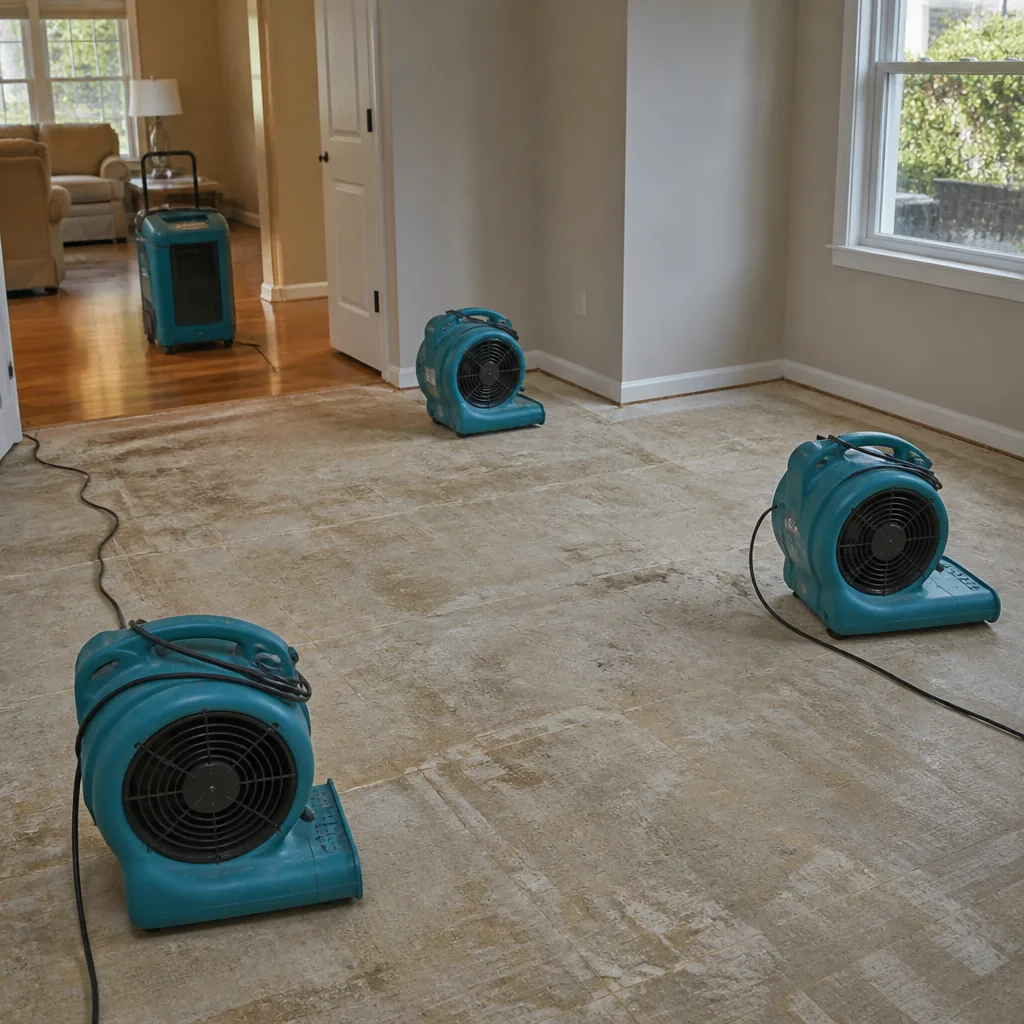 Water damage drying
 Fire & smoke cleanup
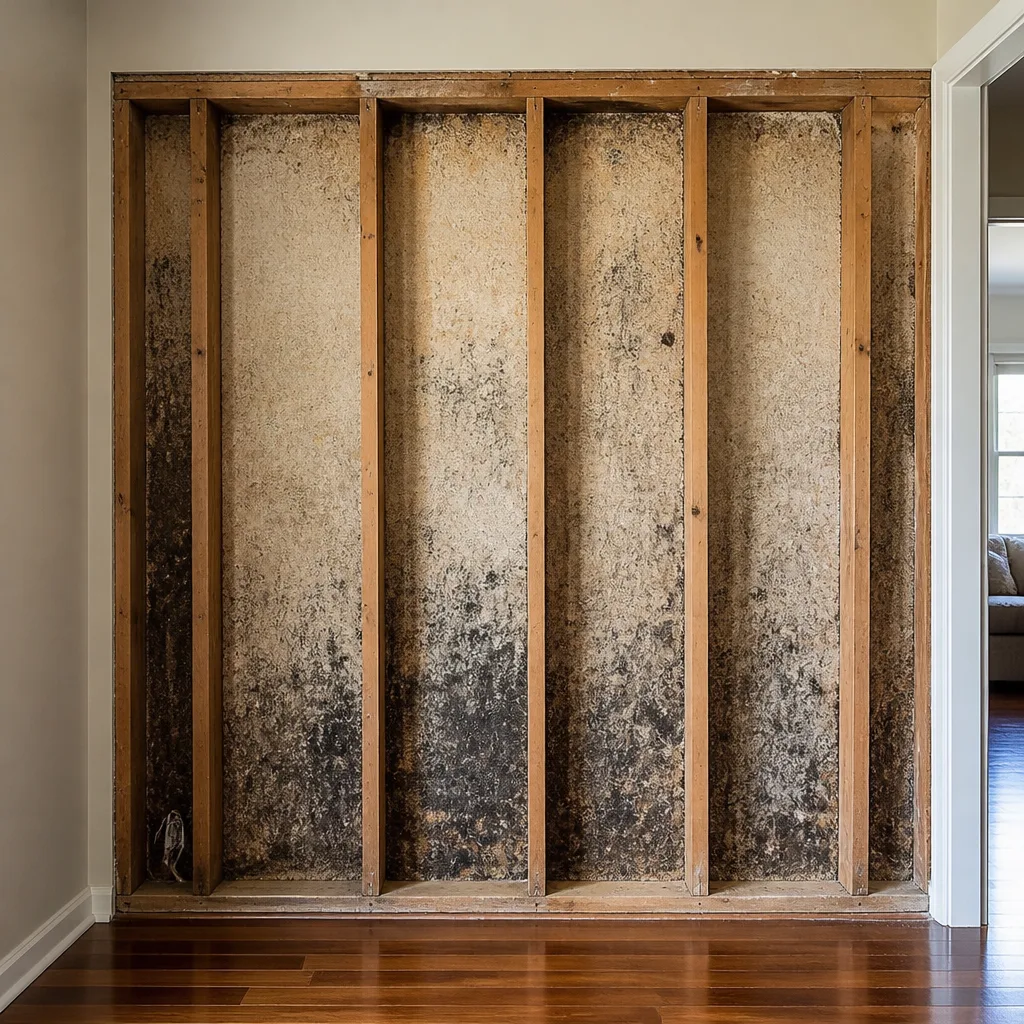 Mold remediation
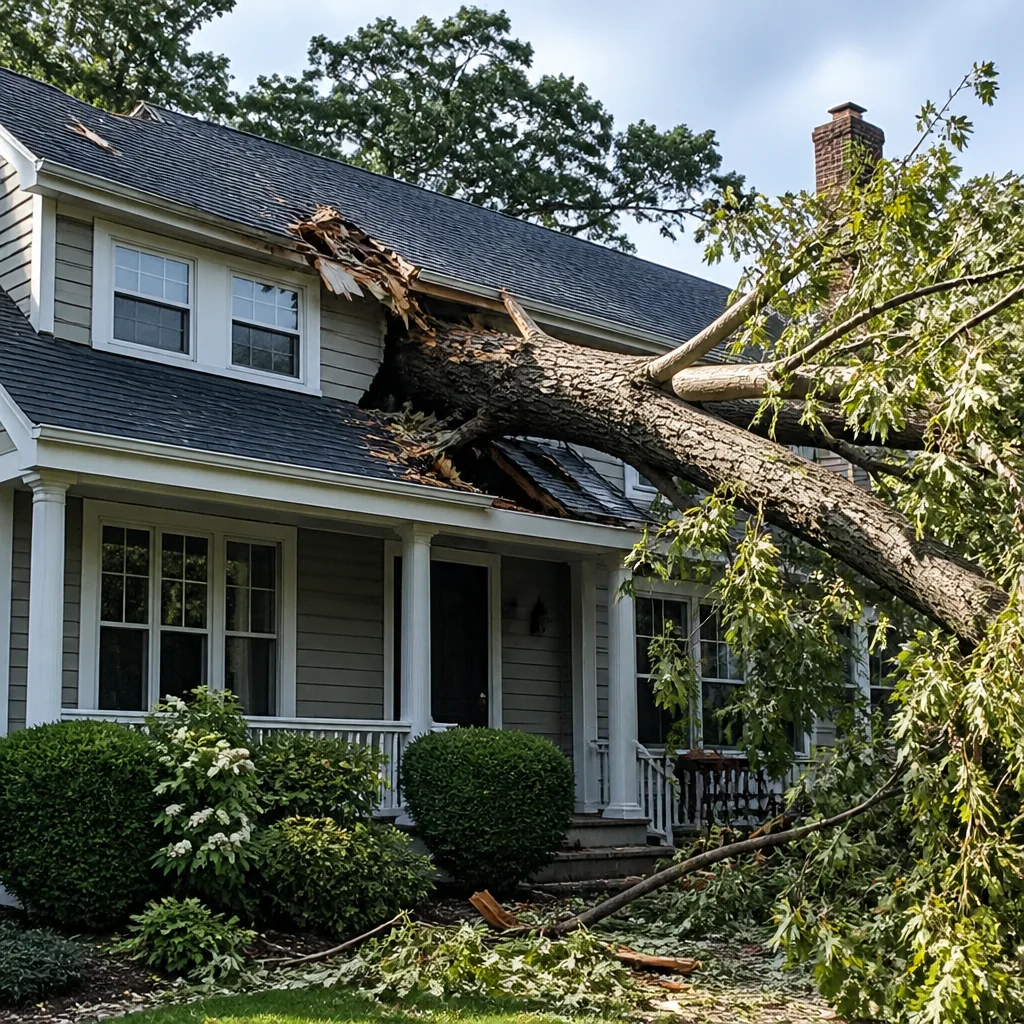 Storm response
 Sewage cleanup
 Reconstruction
Free visual inspection and a written scope of work before any mitigation begins - photos, moisture readings, and drying logs go in your claim file
The scope we write is the scope we bill. Anything new gets shown to you, in writing, before we touch it.
Get your free estimateHow to Hire a Damage Restoration Contractor in Houston: A Step-by-Step Guide
In the 72 hours after a major Houston flood event, the Texas Department of Licensing and Regulation sees a measurable spike in complaints against unlicensed restoration contractors, most of whom were hired by homeowners who had no idea what questions to ask first. The problem is not that Houston lacks qualified restorers. It is that the worst operators are fastest to the door, while the best ones are busy drying homes. Our complete guide to damage restoration in Houston gives you a precise vetting sequence you can run before a single piece of equipment enters your home. It will not make you a technician, but it will make you impossible to rush.
Restoration work we handle
Quick Answer
Hiring a damage restoration contractor in Houston comes down to three things, in this order: verify the license and current IICRC credential, get a written price before any work starts, and confirm a 365-day workmanship guarantee in the contract. If a contractor cannot produce all three inside the first conversation, keep looking. A legitimate Houston restoration company will show you its papers like it expects you to ask.
Table of Contents
- The Three Documents to Request Before Anything Else
- How to Verify an IICRC Certification Is Current
- Why Written Price Beats an Estimate Range Every Time
- The Contract Clause That Confirms a Real Workmanship Guarantee
- Red Flags Unique to Houston’s Post-Storm Contractor Surge
- Will Your Contractor’s Drying Logs Satisfy Your Insurance Carrier?
- The Six-Question Interview Sequence to Run in the First Call
- Common Mistakes to Avoid
- When to Call a Professional
- Frequently Asked Questions
- The Bottom Line
The Three Documents to Request Before Anything Else
Most homeowners start the hiring conversation with the wrong question. They ask, “How soon can you get here?” What they should ask is, “Can you send me these three documents right now?” Water damage restoration in Houston is not a talent contest. It is a paperwork contest, and the paperwork is what protects you when the drying is done.
The three documents to request before discussing scope of work:
- Proof of Texas Mold Assessment Consulting license. In Texas, any contractor who assesses mold conditions in a home must hold a Mold Assessment Consultant or Mold Assessment Technician license from the Texas Department of Licensing and Regulation. This is not a watermark on a website. It is a state-issued, numbered license you can verify on the TDLR website in under a minute. Contractors who avoid the question are usually not licensed for the work they are about to sell you.
- A liability insurance certificate naming the policyholder and the exact business name. Ask for the certificate, not an insurance summary. The certificate should show general liability coverage. Call the carrier’s verification line if you want to be thorough. Restoration contractors carry insurance partly to cover your home if something goes wrong during the job. No certificate means no coverage, and no coverage means your homeowner’s policy becomes the only line of defense.
- A written price, not an estimate range. An estimate range is what someone gives you over the phone before they have seen the damage. A written price is what someone gives you after an inspection, before any work starts. The first is a guess. The second is a commitment. Houston’s restoration market is full of companies that will quote a range to get in the door, then find “unforeseen conditions” after demolition. The fix is simple: ask for a number in writing before you sign anything.
In our experience at Tidemark Water Damage Houston, homeowners who ask for these three documents are treated differently from the first minute. A contractor who knows you are checking licenses, insurance, and written pricing knows you are not going to be rushed into a bad decision. Our team, led by Rick Sumner, keeps current license documentation and certificates ready to send by email or text before the first visit.
How to Verify an IICRC Certification Is Current
An IICRC certification is one of the better signals in the restoration industry, but it has a shelf life, and many contractors let theirs lapse without saying a word. The Institute of Inspection, Cleaning and Restoration Certification maintains a public registry where you can look up a technician or firm by name and see their active credentials. It takes about two minutes, and it is worth doing before you sign a contract.
Why this matters for your insurance claim: adjusters reviewing restoration invoices often look for evidence that the work was performed to an industry standard. An active IICRC certification is one of the few third-party signals that an adjuster recognizes without argument. If the contractor’s certification lapsed six months ago, the adjuster’s question becomes simpler: why was this firm handling this work at all?
Here is the verification sequence we recommend to every Houston homeowner:
- Ask the contractor for their IICRC certification number and the name of the certified technician who will lead your job.
- Go to the IICRC registry and enter the number. Check that it is active and that the name matches.
- Confirm the certification type. Water damage restoration and mold remediation are separate certifications, and a mold cert does not cover water work.
- Ask whether the certified technician will be on-site during the critical phases of drying and demolition, or whether their name just appears on the paperwork.
At Tidemark, our technicians hold IICRC, RIA, and IFA credentials, and we are happy to provide certification numbers before we set foot in the home. A contractor who hesitates to share this information is usually hiding something, and it is never something small.
Why Written Price Beats an Estimate Range Every Time
A written price is the single best protection a Houston homeowner can carry into a restoration job. It is a fixed number, documented, delivered before work starts. An estimate range is a marketing tactic. The difference is not subtle, and it is not a matter of preference. It is a matter of whether the final invoice will match the number you agreed to.
Here is the scenario we have seen too many times in Houston homes. A restoration company gives a range of $2,500 to $5,000 over the phone. The homeowner signs an authorization form that includes language about “additional charges for unforeseen conditions.” Demolition starts, and the final bill lands at $7,400. The contractor points to the range, points to the unforeseen conditions clause, and the homeowner is left arguing with an invoice instead of settling back into a dry house. For mold work specifically, mold remediation in Houston follows the same pattern when pricing is left vague.
A written price changes that dynamic because it forces the contractor to inspect first and commit second. It also gives you something to show your insurance adjuster that is not a handshake or a voice note. At Tidemark Water Damage Houston, every job, without exception, gets a written price before any work starts. It is not a courtesy. It is the standard the Cedarwell Care Promise was built on: explain the price before the work.
The Contract Clause That Confirms a Real Workmanship Guarantee
Most restoration contracts contain a paragraph about workmanship guarantees that says almost nothing. It is often written to sound like a promise while committing the contractor to very little. The clause you want to see confirms a specific duration, a specific remedy, and a trigger mechanism. Anything less is marketing prose.
A legitimate 365-day workmanship guarantee has three parts:
- A specific duration. The contract should state, in plain language, that the contractor stands behind the work for 365 days from the date of completion. Vague words like “reasonable period” or “standard industry practice” are not a duration.
- A specific remedy. The clause should say what happens if the work fails within that year. Does the contractor return to correct the issue at no cost? Does the guarantee cover materials, labor, or both? The answer should be explicit.
- A trigger mechanism. How do you invoke the guarantee? The contract should tell you to call or email, and it should say how quickly the contractor will respond. A guarantee with no response commitment is not a guarantee.
Here is an example of strong language: “Contractor warrants all restoration work performed under this agreement for a period of 365 days from the date of final completion. If any defect in workmanship appears within that period, Contractor shall return to correct the defect at no cost to the homeowner within 14 days of written notice.” If the contract you are holding is missing any of these three parts, ask for it in writing before you sign. Tidemark’s 365-Day Done Right Promise works exactly this way: if it is not done right, we make it right. The promise is in the paper, not just on the tagline.
Red Flags Unique to Houston’s Post-Storm Contractor Surge
Houston’s flood cycles, from tropical systems to summer downbursts, produce a predictable pattern our Seasonal Damage Restoration Care for Houston guide covers in detail. A wave of out-of-state and unlicensed contractors rolls in behind the storm, works a few weeks, and leaves before the complaints catch up. The Texas Department of Licensing and Regulation sees complaint volume rise in direct proportion to recent rainfall totals. You cannot control when a storm hits, but you can recognize the operators who follow it.
Specific red flags to watch for in the first 48 to 72 hours after a Houston flood event:
- Door-to-door solicitation within 48 hours of the event. Legitimate local restoration companies are busy answering phones from existing customers and referral calls. The people walking your street with a clipboard and a tarp are often unlicensed and uninsured, working a disaster circuit.
- Verbal-only pricing. A contractor who will not put a number in writing before work starts is positioning themselves to revise the number after the work begins. There is no version of this story that ends well for the homeowner.
- Pressure to sign before the adjuster visits. A reputable Houston restoration company will coordinate with your insurance adjuster, not compete against them. If someone tells you to sign an authorization form quickly because “the insurance company will slow everything down,” the motive is worth examining.
- Requests for full payment upfront. Restoration companies generally bill in phases or work directly with your insurance carrier. Full payment before the work is done is a red flag in any trade, and restoration is no exception.
- No Houston address. Ask where the company’s local office is. A P.O. box in another state is not a local Houston business. When the contractor pulls out of town, a local office is what you hold onto.
Rick Sumner has run Tidemark Water Damage Houston through enough storm seasons to know the pattern. The good contractors are not the ones going door to door. They are the ones whose phones are ringing because their neighbors called their neighbors.
Will Your Contractor’s Drying Logs Satisfy Your Insurance Carrier?
Your insurance carrier is not interested in a contractor’s confidence. They are interested in documentation, and the quality of that documentation determines whether your claim closes cleanly or bogs down in requests for more information. Moisture readings and drying logs are where restoration claims most often stall.
A drying log that satisfies an adjuster contains these elements:
- Daily moisture readings from specific locations in the affected area, recorded with the make and model of the moisture meter used.
- Initial and target moisture levels for each material type, typically framing lumber, drywall, and flooring.
- Ambient conditions, including temperature and relative humidity, recorded at each visit.
- Equipment placement diagrams showing where air movers and dehumidifiers were positioned and when they were moved.
- Drying goals achieved, with final readings that match or beat the target levels established at the start of the job.
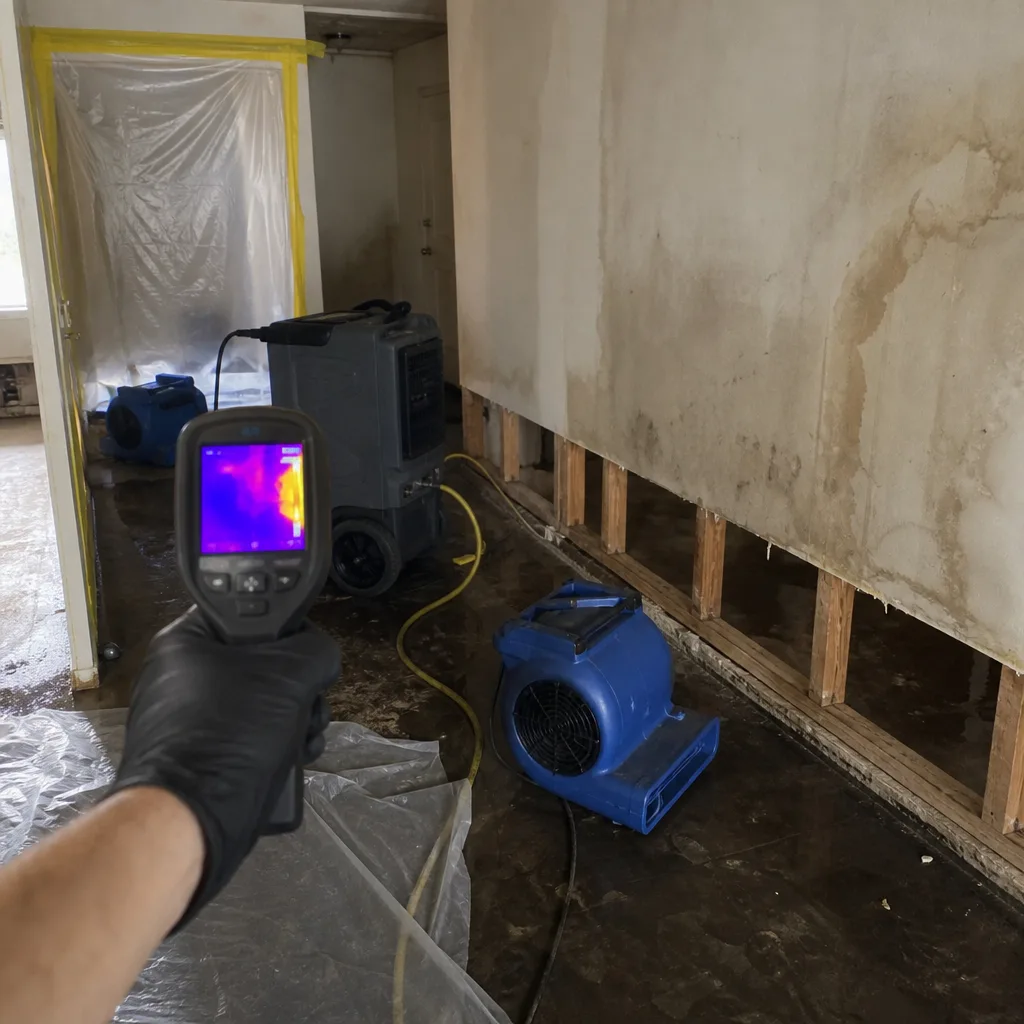
A contractor who keeps sloppy logs is asking you to carry the proof burden at claim close. A contractor who keeps organized logs, photographed and timestamped, gives your adjuster what they need to approve the claim. At Tidemark, our technicians work with professional-grade drying equipment from brands like Dri-Eaz, Phoenix, B-Air, and Injectidry, and they document every reading the same day it is taken. The tide mark, the line water leaves on a wall, is the first thing our technicians look for on every job, and the drying logs prove we dried past it.
The Six-Question Interview Sequence to Run in the First Call
You do not need to be a restoration expert to identify one. You need a short list of questions and the patience to hear the answers. Run this sequence in the first phone call, before anyone has arrived at your Houston home, and you will filter out most of the bad actors without breaking a sweat. For fire damage, by the way, the same sequence applies to fire damage restoration in Houston.
- “Are you licensed for mold assessment in Texas?” If the answer is anything other than “yes, and here is our license number,” end the call. This question alone eliminates a meaningful portion of the unlicensed market.
- “Can you send me a certificate of liability insurance before you arrive?” A yes with immediate follow-through is standard. A no is disqualifying. A “we can provide that later” is a no wearing a costume.
- “Will I get a written price before any work starts?” Listen for certainty. “We always provide written pricing” is the answer you want. “Well, it depends on what we find” is the answer that becomes a larger bill later.
- “What is your workmanship guarantee, and is it in the contract?” You want a specific duration and a specific remedy. Our team offers the 365-Day Done Right Promise: if it is not done right, we make it right.
- “Who will be on site during drying, and what equipment do you use?” A real restoration company names its equipment brands and describes its drying process. A fly-by-night operator says “industrial dryers” and changes the subject.
- “Will you coordinate directly with my insurance adjuster?” Yes is the only professional answer. Restoration companies work adjuster coordination into their process every day, and the ones that refuse are usually not prepared to document their work to a standard an adjuster will accept.
Common Mistakes to Avoid
- Hiring the first company that answers the phone. Speed matters in water damage, but a fast answer is not a qualification. Run the six-question sequence before you commit to anyone.
- Signing a work authorization without reading the full contract. Houston restoration contracts often contain clauses about payment terms, cancellation, and change orders. Read the document. Ask questions about any sentence you do not understand.
- Accepting an estimate range as a final price. A range is an invitation to argue later. Demand a written price before work starts, in every case, no exceptions.
- Failing to verify insurance certificate authenticity. A piece of paper that looks like a certificate is not always a certificate. Call the carrier’s verification number if anything seems off.
- Overlooking the drying documentation process. Many homeowners focus on the visible fix and forget that the drying logs are the proof your insurance carrier needs. Ask about documentation before the job starts, not after the claim stalls.
- Letting pressure tactics work. If a contractor tells you to sign today because the price goes up tomorrow, you are not being offered a solution. You are being managed. A trustworthy Houston restoration company does not build its sales process on a timer.
When to Call a Professional
Some problems are too large, too hidden, or too risky for a homeowner to handle alone, and restoration work sits exactly in that space. If water has traveled into wall cavities, under flooring, or behind baseboards, professional drying equipment and moisture mapping are required, not optional. If mold is visible or there is a musty odor that persists after cleaning, state licensing rules and health considerations both point to professional assessment. If fire damage is involved, structural concerns and smoke residue require specialized cleaning methods and equipment. In any of these situations, a professional with current credentials and written pricing is the right call. Tidemark Water Damage Houston offers free estimates in Houston, call (325) 423-6800. Our team provides written pricing up front, protects floors and furnishings with shoe covers and drop cloths, and documents the cleanup with a photo before we leave.
Frequently Asked Questions
The hiring process itself can be completed in under two hours if you are prepared with the right questions, and our Water Damage Restoration Maintenance Checklist for Houston Homeowners covers what to ask. The verification steps, checking the TDLR license, calling the insurance carrier, and looking up the IICRC number, take about 30 minutes total. The rest of the time is spent on the initial inspection and receipt of the written price. A legitimate company will keep the process moving because they know water damage does not wait, but they will never skip the paperwork to speed things up.
Most Houston homeowners’ policies cover sudden and accidental water damage, such as a burst pipe or an appliance leak, but coverage depends on the cause and your specific policy language. Flooding from rising water, as during a hurricane or bayou overflow, is generally excluded from standard homeowners insurance and requires a separate flood policy. Your restoration contractor should be able to coordinate directly with your adjuster and provide documentation that supports your claim.
In Texas, any contractor who assesses mold conditions for a fee must hold a mold assessment license from the Texas Department of Licensing and Regulation. Cleaning visible mold without assessing the source and extent of the problem often leaves hidden colonies behind. A licensed assessor can document the scope of the problem, which also creates a record your insurance carrier can review. Professional mold assessment and remediation is the standard for a reason.
Shut off the water source if you can do so safely, then call a restoration company. Document the visible damage with photos for your insurance file. Do not attempt to remove water-saturated drywall or flooring yourself, and do not turn on a fan and hope for the best. The first hour is about stopping the source and starting the professional process. Call (325) 423-6800 for a free estimate and immediate guidance.
The proof is in the drying logs, not in the feel of the wall. A professional contractor records daily moisture readings from the affected areas and documents final readings that match or beat the initial drying goals. At the end of the job, ask for a copy of the final moisture readings and a photo of the cleanup. If the contractor cannot produce that documentation, ask why.
During peak storm response, even the best Houston restoration companies may be scheduling several days out. That said, a local company with a live phone line should be able to give you a clear sense of timing within the first call. Be wary of companies that promise same-day arrival without asking a single question about your situation, that is often a sign of a volume operation rather than a careful one. A short, honest wait is better than a rushed, undocumented job.
The Bottom Line
Hiring a damage restoration contractor in Houston is not about finding the most confident salesperson or the fastest arrival. It is about verifying licenses, demanding written pricing, checking credentials on the public registries, and reading the guarantee clause in the contract. The homeowners who get taken are not the ones who know less about restoration. They are the ones who skipped the paperwork step because the moment felt urgent. Take the two hours to vet properly. Your house, your insurance claim, and your family’s peace of mind are worth more than any amount of pressure someone can apply over the phone.
If you are in Houston and need help now, our team at Tidemark Water Damage Houston will walk you through the process and answer the phone at (325) 423-6800. Written pricing first, pet-safe products, and a 365-Day Done Right Promise on every job.
Written by Rick Sumner, Owner at Tidemark Water Damage Houston, serving Houston since 2006.
See the difference
 Before
 After
After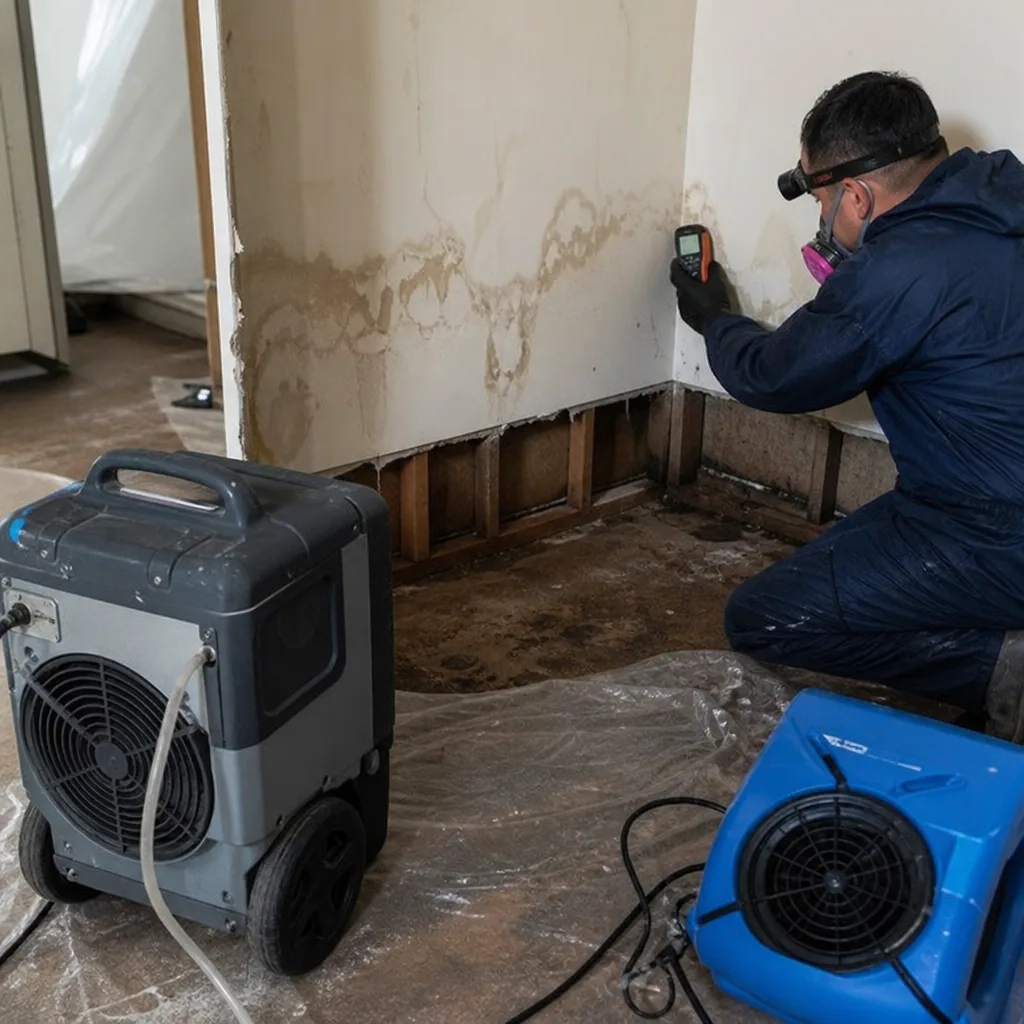 Before
 After
After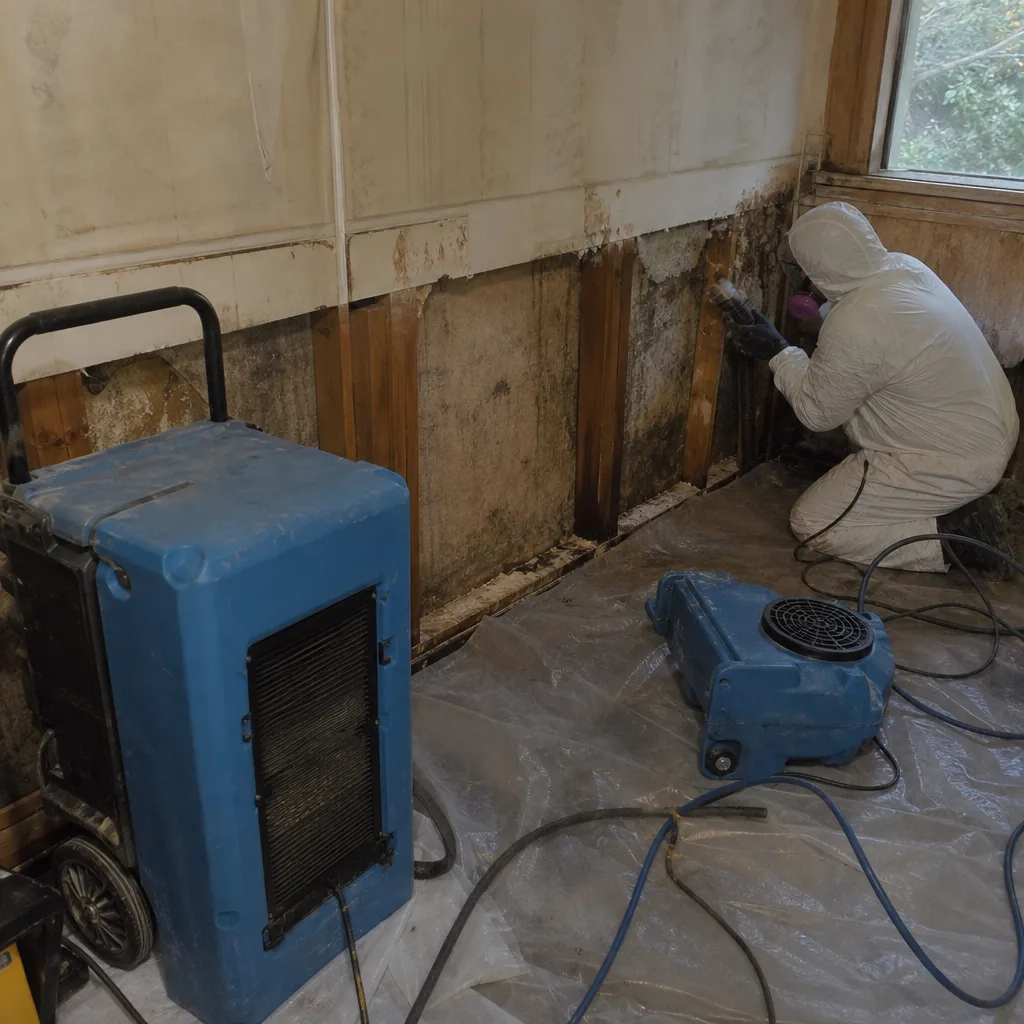 Before
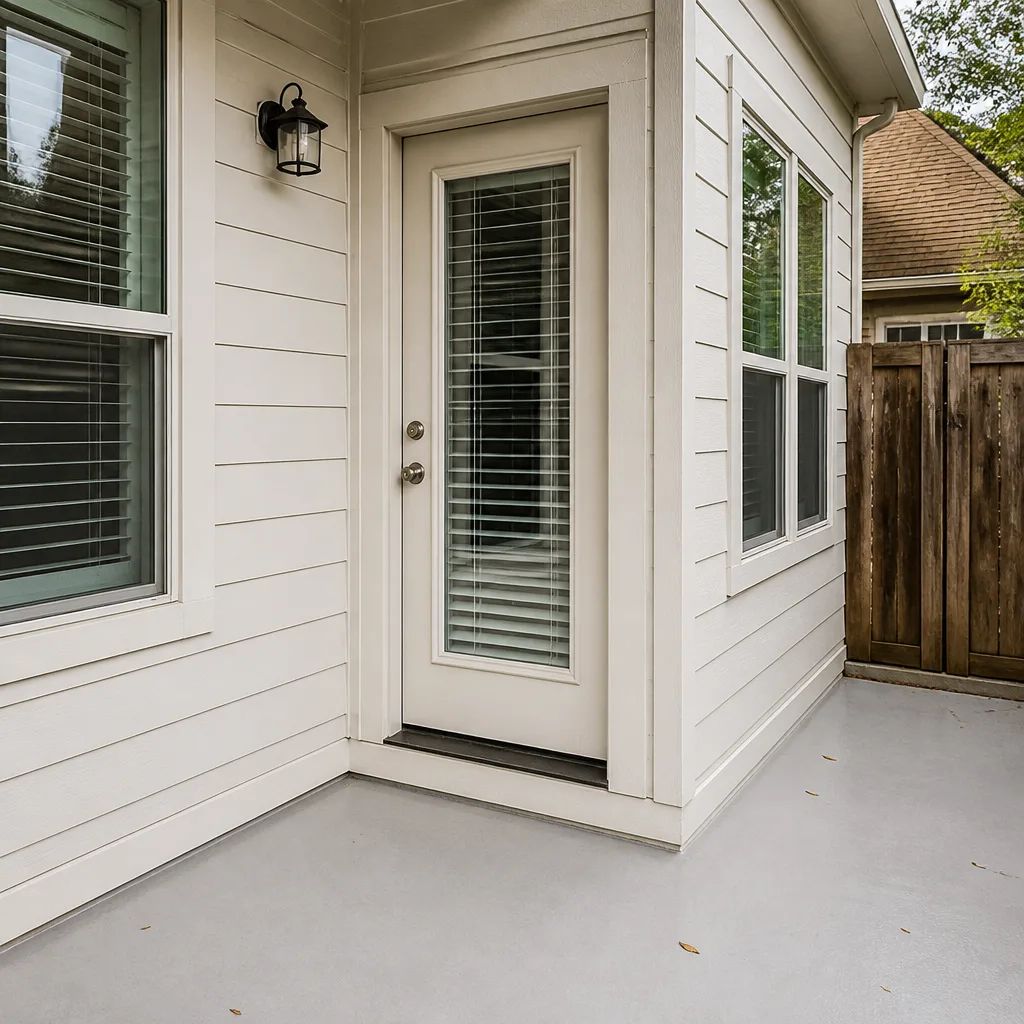 After
After