
 Water damage drying
 Fire & smoke cleanup
 Mold remediation
 Storm response
 Sewage cleanup
 Reconstruction
Free visual inspection and a written scope of work before any mitigation begins - photos, moisture readings, and drying logs go in your claim file
The scope we write is the scope we bill. Anything new gets shown to you, in writing, before we touch it.
Get your free estimateFast, Reliable Fire Damage Restoration Across Houston
A kitchen fire in Houston doesn’t just leave char and soot. It leaves water from the fire department’s hoses, humidity that holds moisture in every wall, and a family standing in the driveway wondering what happens next. We’re Tidemark Water Damage Houston, and we handle fire damage as the two-part problem it is: the burn and the water that put it out. Our crews live and work in Houston, know the slab-on-grade construction in Meyerland and the older bungalows in the Heights, and can usually be at your door within 90 minutes of your call. If you’re standing in a wet, smoky house right now, call (325) 423-6800 and a real person answers, day or night.
Why Tidemark Water Damage Houston Is Houston’s Preferred Fire Damage Restoration Team
We’ve spent years chasing the tide mark in Houston homes, and fire restoration is where that habit pays off most. Our technicians are IICRC- and RIA-credentialed, background-checked, and uniformed. They arrive with shoe covers on before the first boot touches your floor and drop cloths laid down before any equipment rolls in. Rick Sumner leads our Houston crews with a simple rule: name what will be protected, and protect it before anything else.
Houston homeowners tell us the same thing after a fire: they were more afraid of what the cleanup crew would do to the rest of the house than of the fire itself. We get that. Our people move quietly, respect nap time and school hours, and use pet-safe cleaning products wherever there’s a choice. Before any work starts, you get a written price. Not an estimate range over the phone, not a “we’ll see when we get in there.” A written number, agreed to before tools come off the truck.
We also carry the 365-Day Done Right Promise on every fire job we do in Houston. If the restoration isn’t done right, we make it right, even if you find the problem months later. That’s the Cedarwell Care Promise standard, and it’s why Houston families across Spring Branch, Bellaire, and the East End keep our number in their phones.
Restoration work we handle
Smoke Damage Restoration in Houston
Smoke Damage Restoration in Houston means treating soot as a contaminant, not a stain. In Houston’s humidity, smoke residue stays tacky for days. It bonds to paint, drywall, carpet fibers, and ductwork. If you wipe it with a damp rag, you smear it. If you wait too long, it cures and turns into a permanent yellow-brown film. Our crews start with containment before anything else. Plastic sheeting and negative air pressure keep airborne soot from drifting into bedrooms that never saw flame.
Soot Removal and Surface Treatment
Soot from a kitchen grease fire behaves differently than soot from burned synthetic carpet or electronics. The first is oily, the second is fine and acidic. We test each surface before choosing a cleaning method, because the wrong chemical turns oily soot into a smeared mess that never comes out of painted drywall. On Houston’s brick-veneer homes, exterior smoke staining is common near roof eaves and around window frames, and we treat those surfaces without blasting water into the wall cavity.
Smoke Odor Removal for Houston Homes
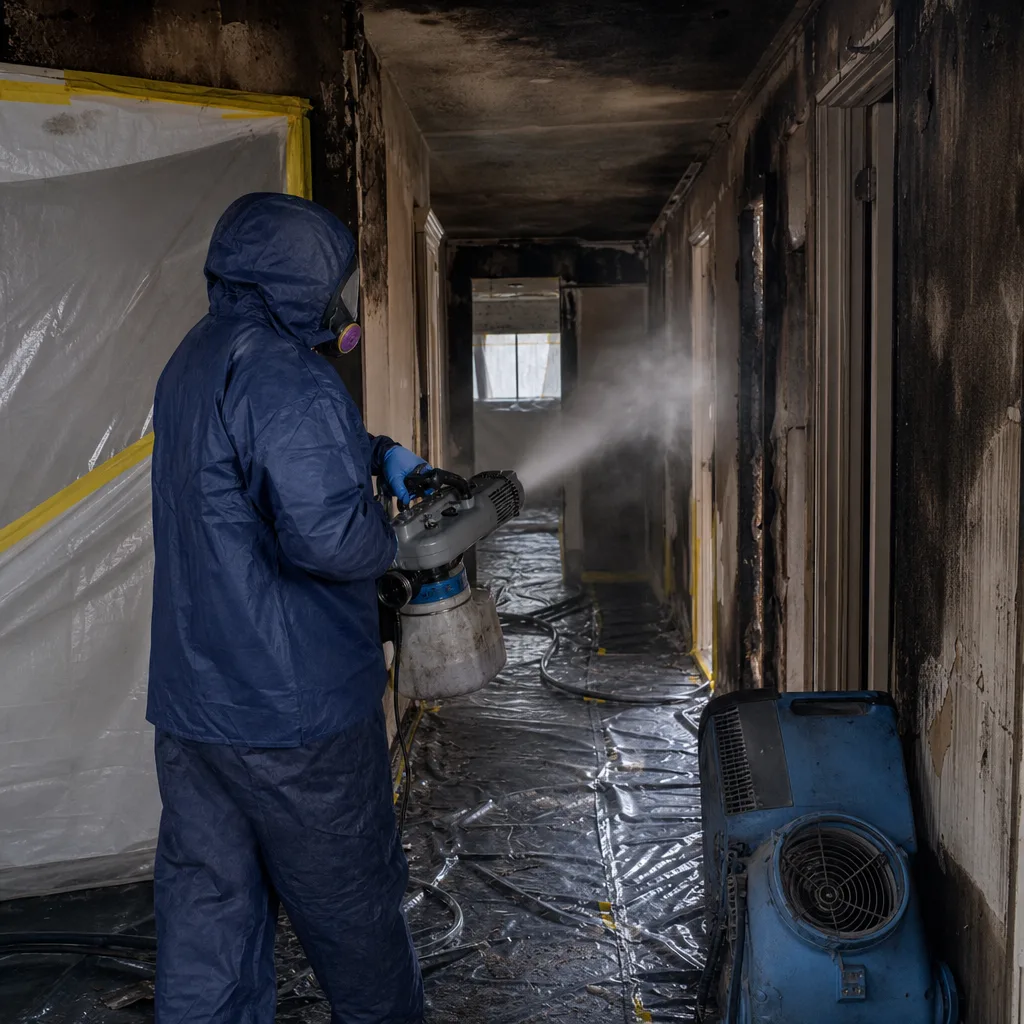
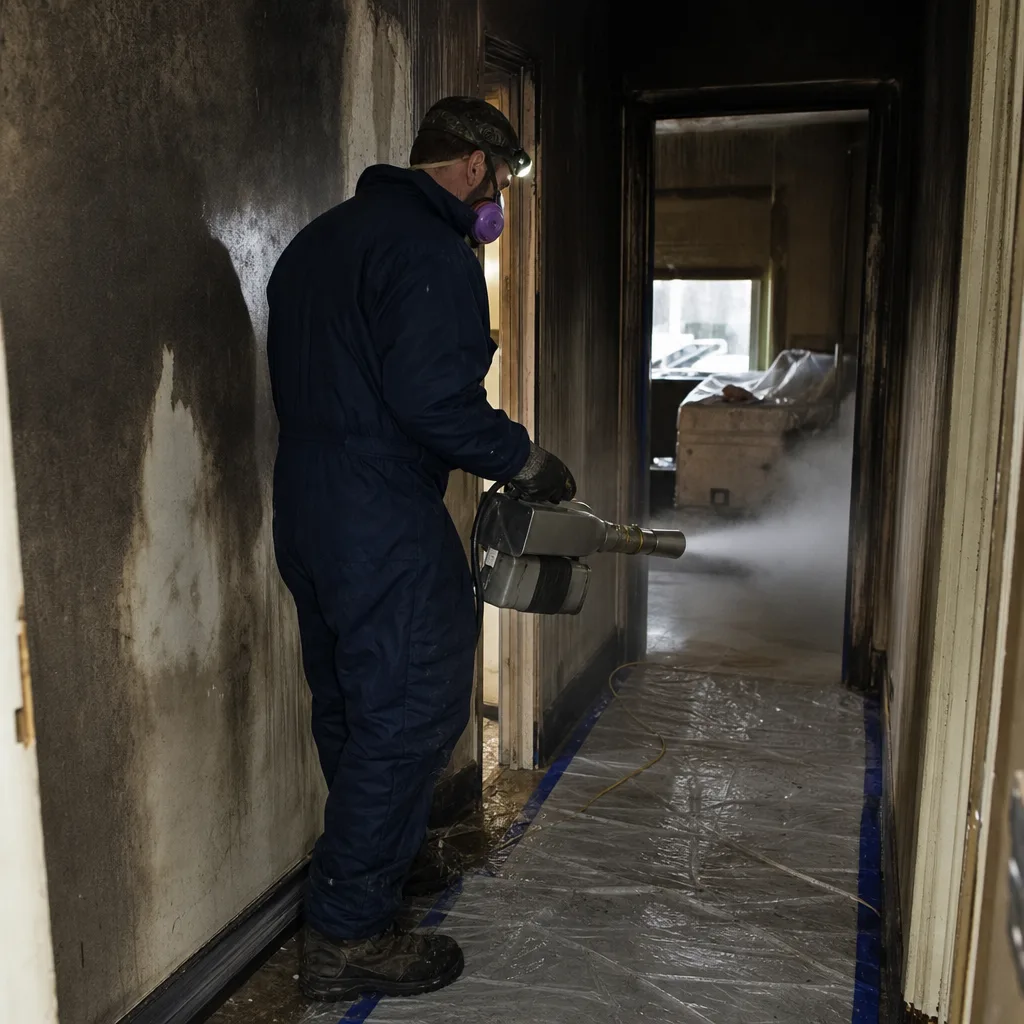
Houston’s heat makes smoke odor travel farther inside a house. The smell follows the air path: up through the attic, into return vents, behind baseboards. We use thermal fogging and ozone treatment in sealed, unoccupied spaces, not just deodorizing sprays. In homes with central air that ran during the fire or in the hours after, we inspect and clean the ductwork too, because that’s where smoke particles settle and keep recirculating for weeks.
Fire Damage Repair in Houston
Fire Damage Repair in Houston usually starts with water removal, not carpentry. The fire department’s hose water pools in slab-on-grade homes, wicking under baseboards and into the bottom plates of framed walls. We use moisture mapping on day one to find where the water went, including places that look dry. On a Meyerland home last spring, our crew pulled back vinyl plank flooring that looked fine from above and found moisture holding at 95% RH underneath. That kind of hidden water is what turns a small kitchen fire into a whole-house mold problem by day three.
Structural Drying Before Rebuild
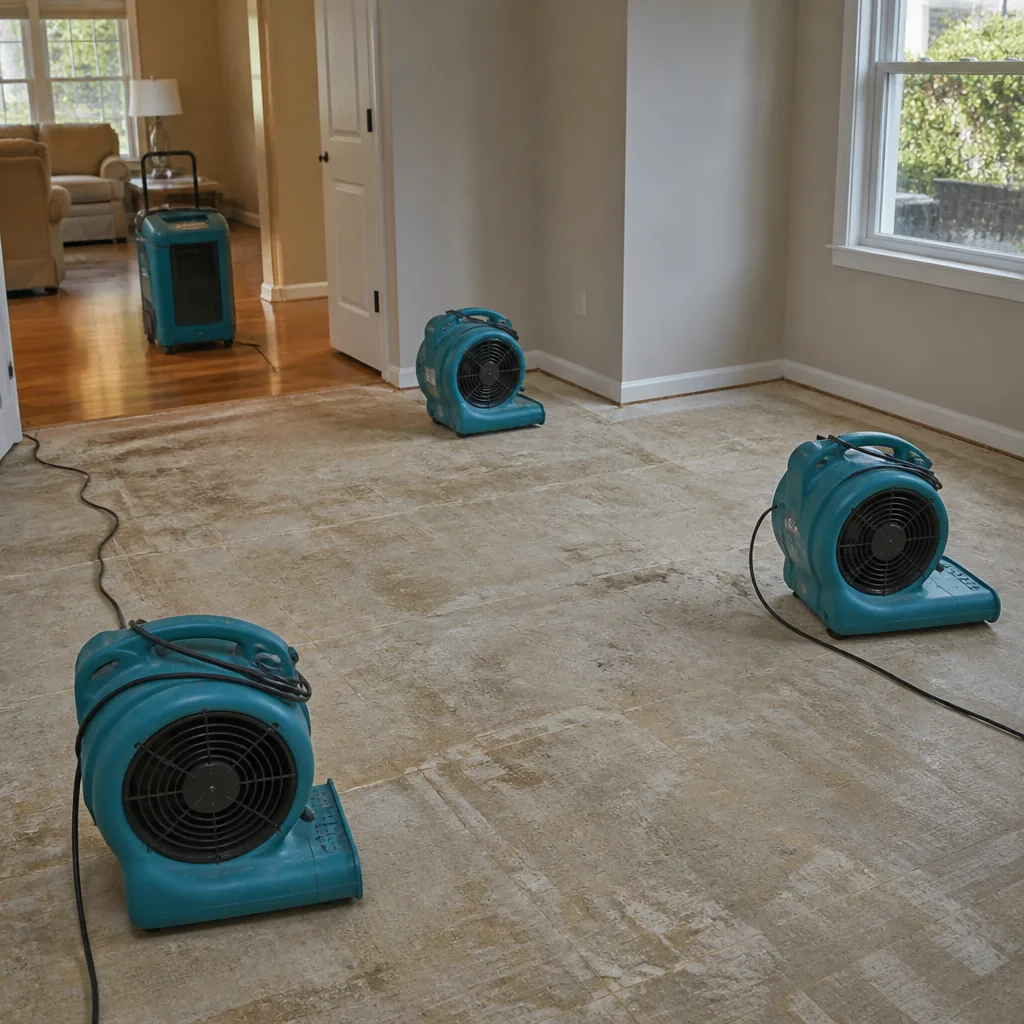
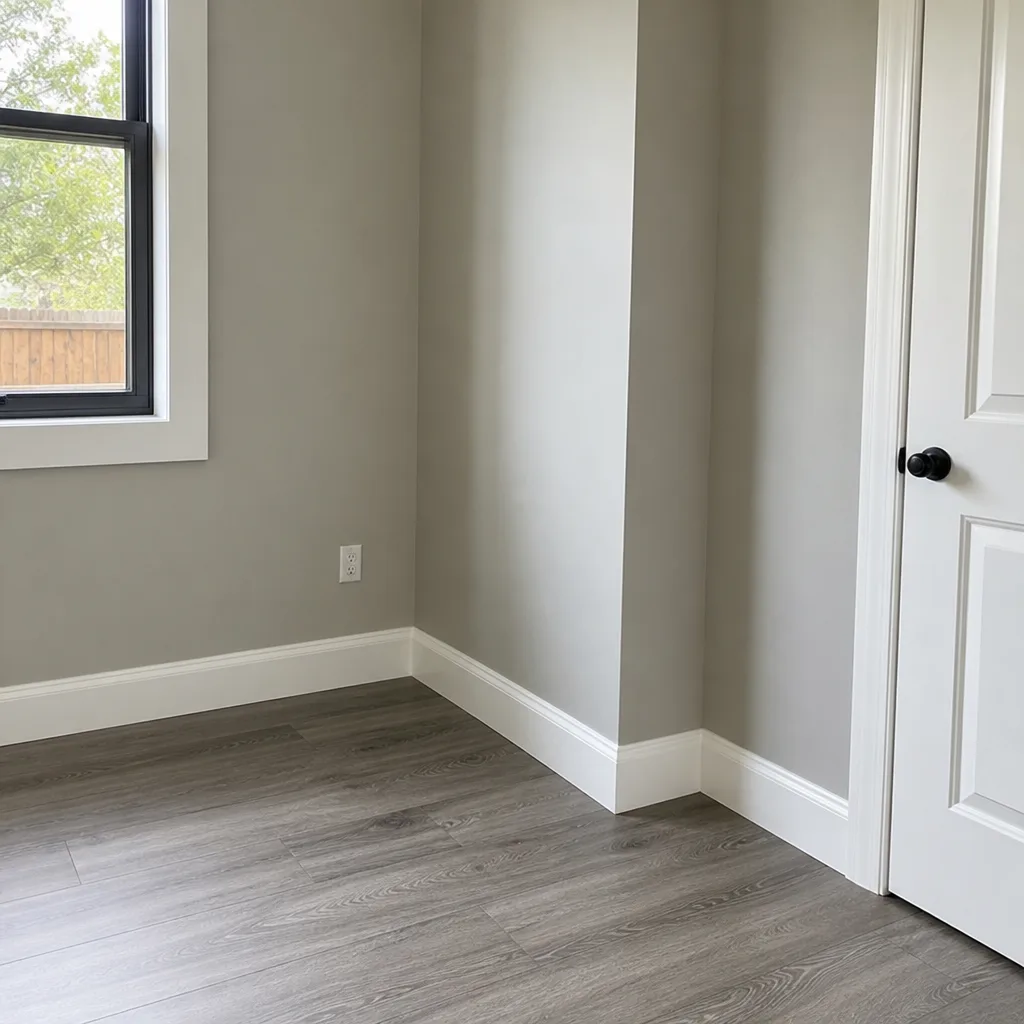
We run Dri-Eaz LGR dehumidifiers and XPOWER air movers sized to the room, not guesswork. Houston’s ambient humidity fights us the whole time, so undersized drying equipment fails quietly. Our technicians check moisture readings daily against a pre-loss baseline. Only when readings are stable do we cut out charred drywall, replace studs, and begin reconstruction. The sequence matters as much as the work itself.
Emergency Board-Up and Structural Fire Repair
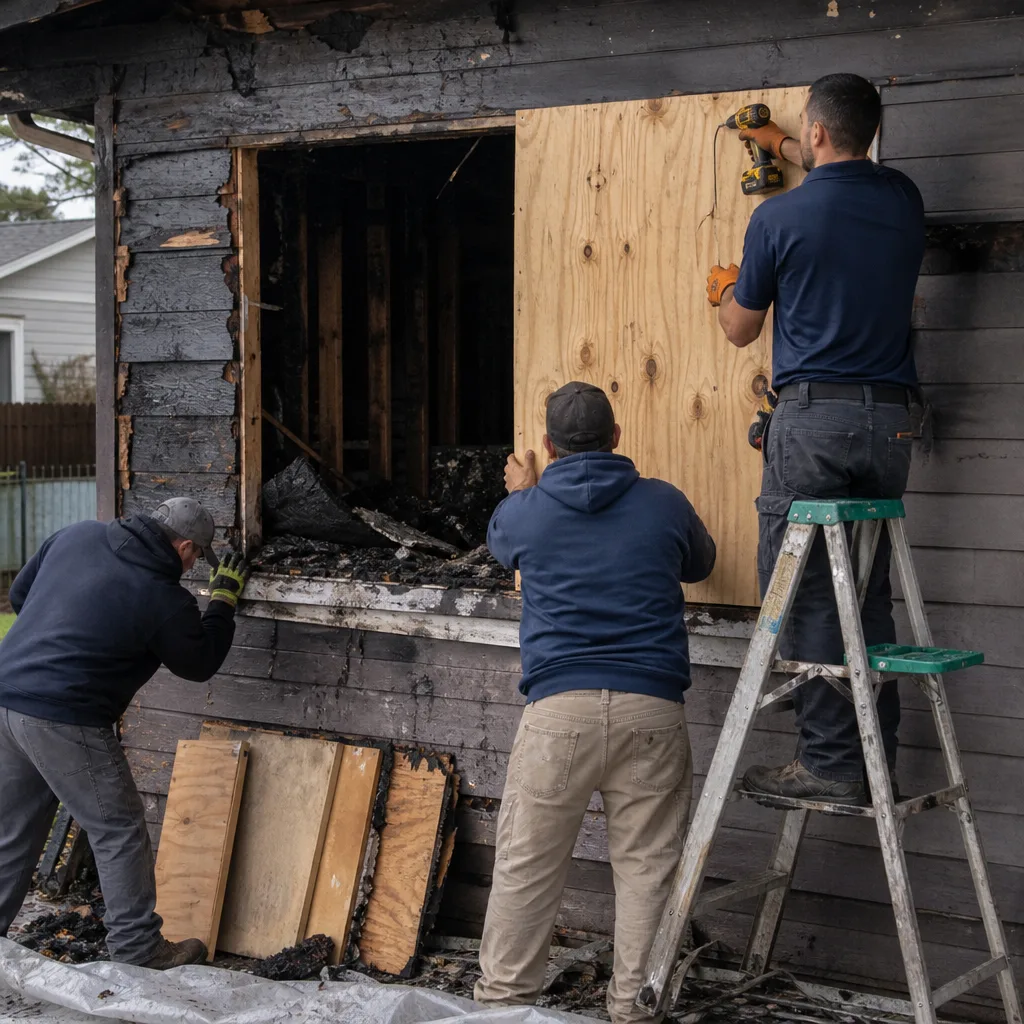
After a fire, the house sits open to Houston’s weather. A sudden summer thunderstorm can pour through a hole in the roof. We board up windows, tarp roofs, and secure door frames the same day we’re called. For structural repair, we handle everything from charred trusses to replaced floor joists, always with a written scope before saws start. No structural change happens without you seeing the plan and the number first.
Trusted Brands We Service in Houston
We run professional-grade equipment from the brands Houston restoration crews actually rely on: XPOWER air movers, B-Air dehumidifiers, and Injectidry systems for tight cavity drying. IICRC standards govern how we set up and monitor the equipment, so the drying isn’t just fast, it’s verified. Because we keep stock locally and coordinate through our Houston office, we don’t lose a day waiting on parts to be shipped in. If you need restoration after a fire, you want the same machines the best crews in the country use, running the same way they’d run them.
See the difference
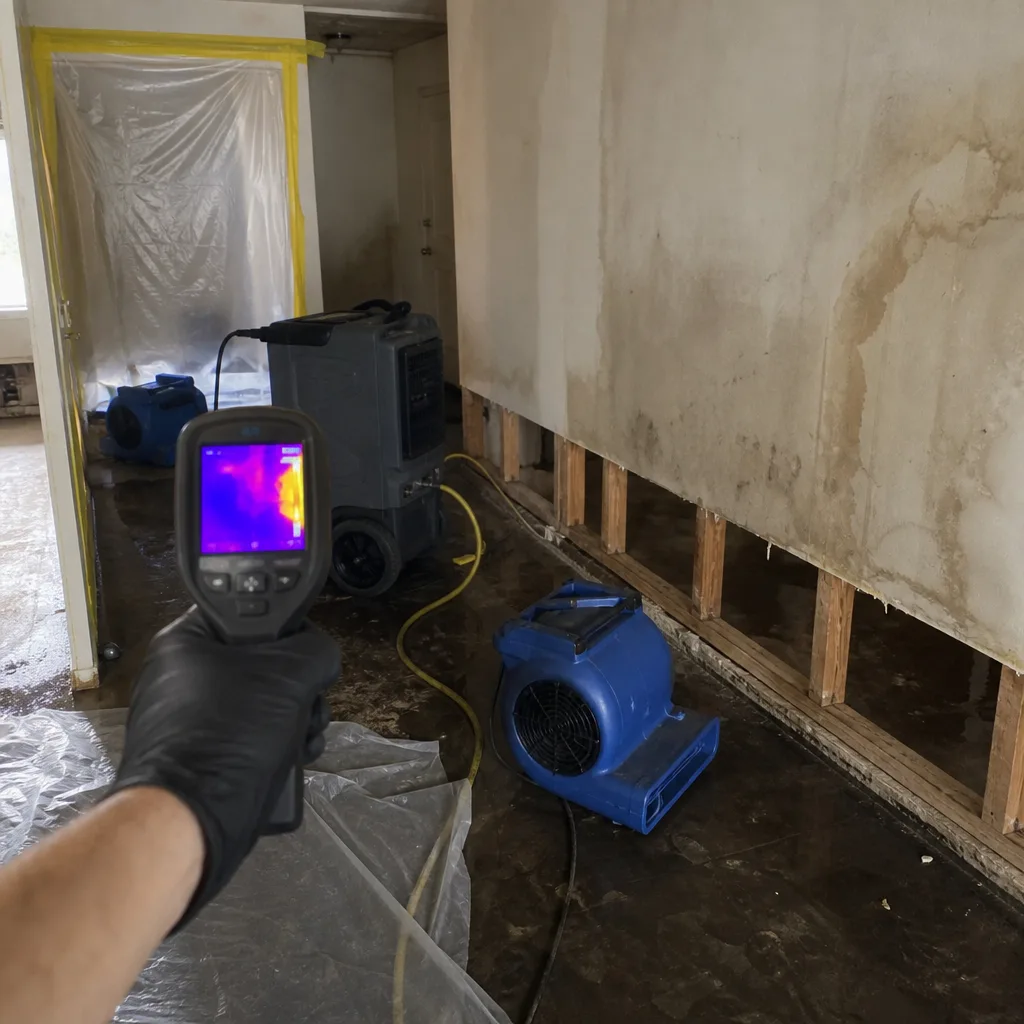 Before
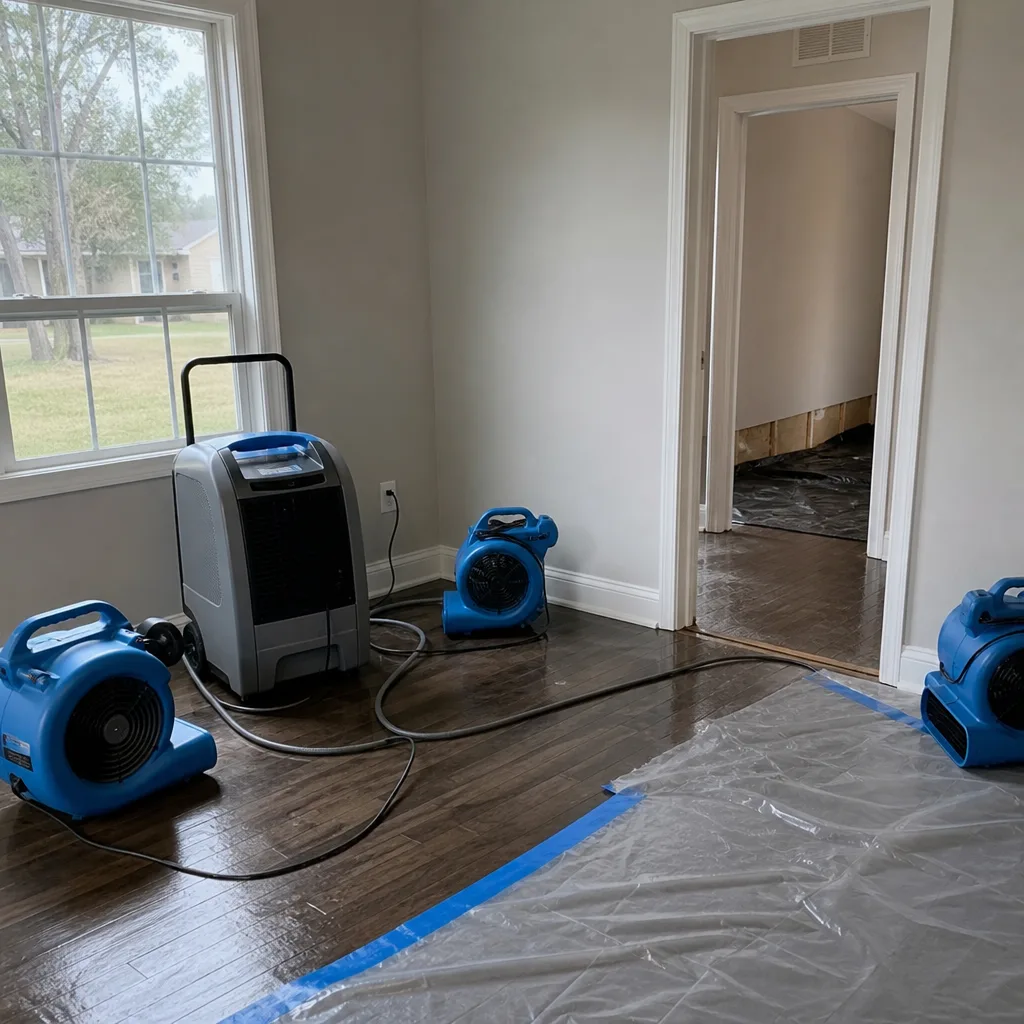 After
After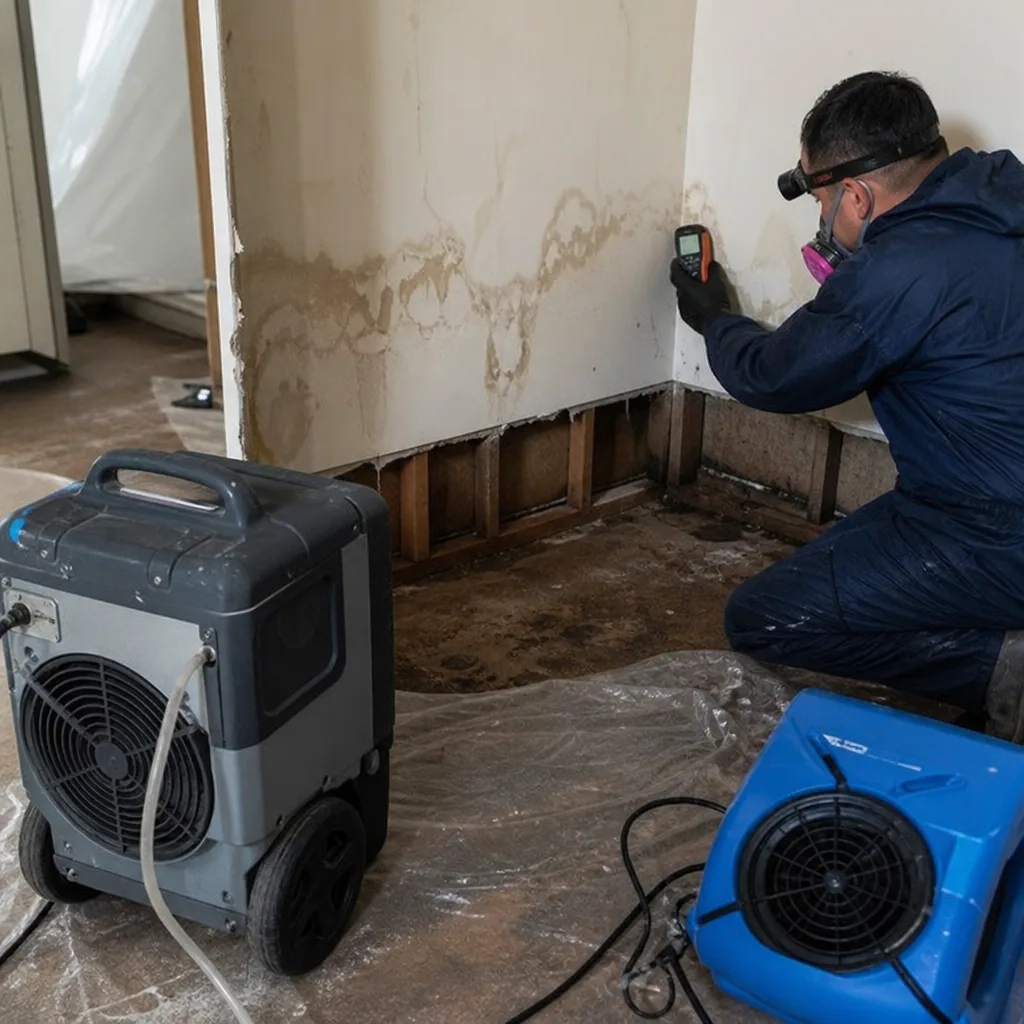 Before
 After
After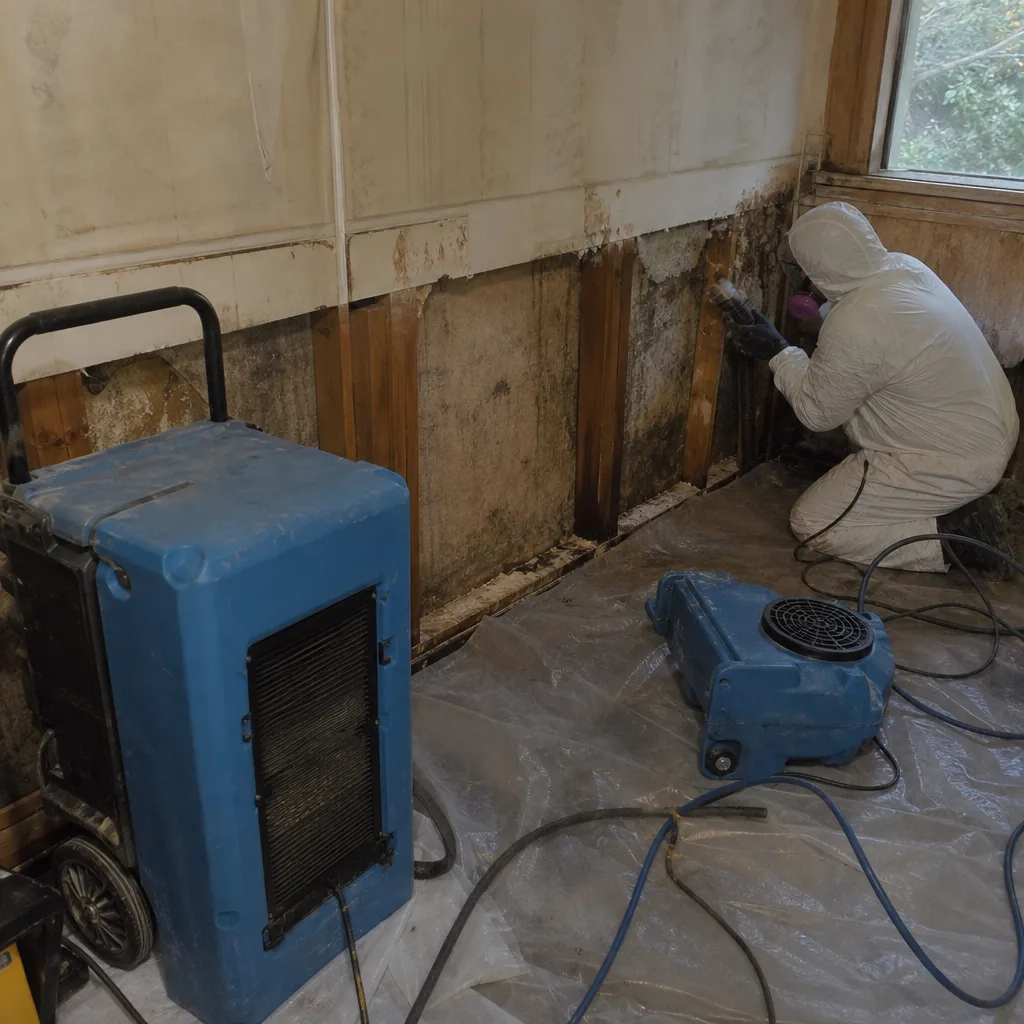 Before
 After
AfterCommon Fire Damage Restoration Problems We See in Houston Homes
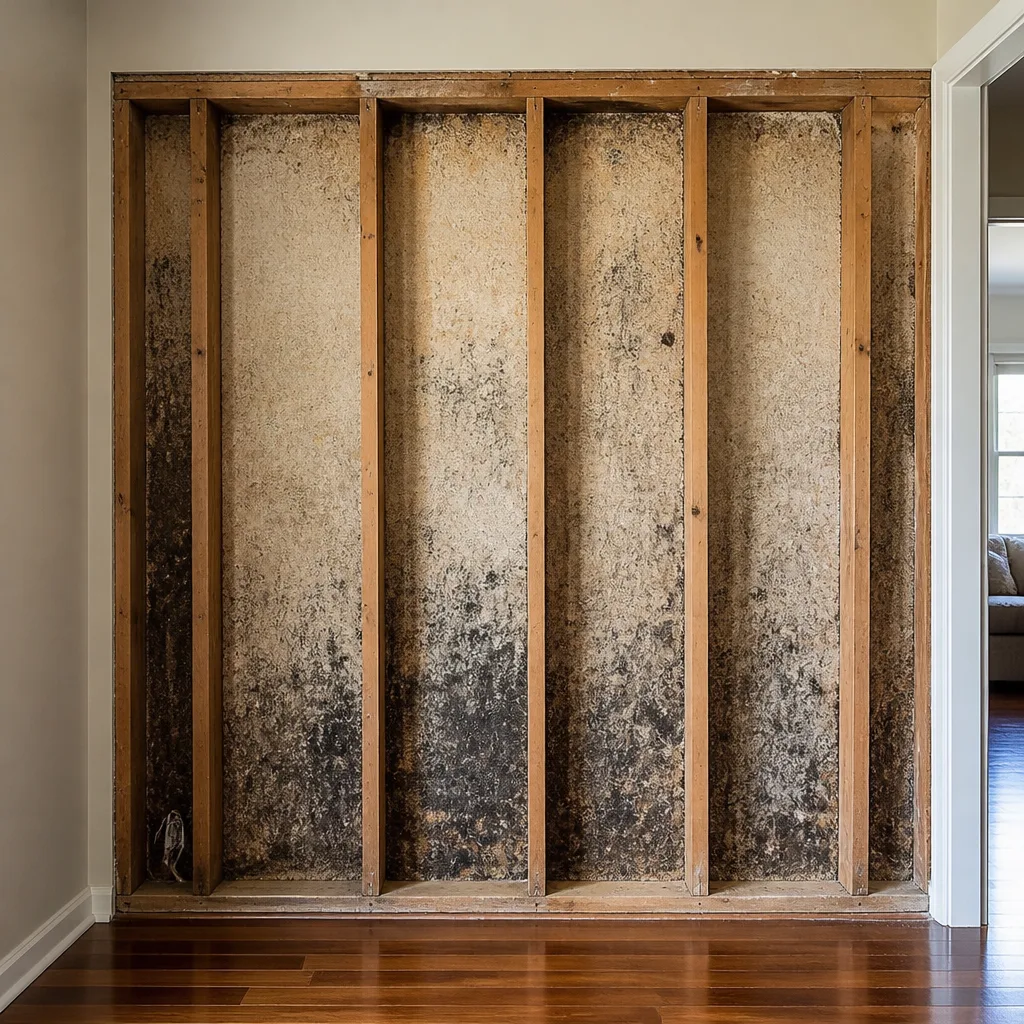
- Water from firefighting trapped under slab flooring. Houston’s concrete slabs don’t drain. Water pools, wicks into base plates, and sits against drywall. If you don’t catch it with moisture mapping within 48 hours, mold starts behind the walls where you can’t see it.
- Soot that won’t let paint adhere. Houston’s humidity keeps soot residue moist and sticky. Paint rolled over untreated soot peels within a year. The surface has to be cleaned, sealed, and tested before refinishing.
- Pre-existing water damage mixed with fire damage. In neighborhoods like Meyerland and Kingwood, homes often have old flood damage that insurance adjusters already settled. We separate new fire and water damage from what was already there, so your claim reflects only what this fire actually caused.
- Attic insulation soaked by fire hoses. Blown-in insulation acts like a sponge. Houston’s heat makes it dry poorly if left in place. We usually recommend removal and replacement rather than trying to salvage material that will smell musty forever in a humid attic.
Pricing for Fire Damage Restoration in Houston, TX
We Also Serve Cities Near Houston
Tidemark Water Damage Houston works throughout the metro, not just inside the Loop. We regularly help homeowners in Fire Damage Restoration jobs across Galena Park, Pasadena, South Houston, and Deer Park. If you’re in one of those communities and dealing with fire or smoke damage, call the same Houston number and we’ll send a local crew. See also Fire Damage Restoration in Houston for more on how we serve the broader area.
Serving Houston, TX - Our Local Coverage Area
We’re based in the Houston area and know this community well. Use the map below to see our service coverage - if you’re nearby, we can almost certainly help.
FAQs About Fire Damage Restoration in Houston
How soon after a kitchen fire in a Meyerland slab home should we start structural drying to prevent mold?
Within 24 to 48 hours. In a slab-on-grade Houston home, firefighting water pools under flooring and wicks into wall cavities fast. If structural drying doesn’t start within two days, mold growth is likely in the hidden spaces behind baseboards and under cabinets. Call (325) 423-6800 the same day as the fire and our crew can set up drying before the spores have a chance to establish.
Does Houston’s humidity mean we need different drying equipment after fire suppression?
Yes. Houston’s year-round humidity means standard homeowners-grade fans don’t move enough air or pull enough moisture to dry a fire-damaged structure properly. We use LGR (low grain refrigerant) dehumidifiers and air movers sized to the cubic footage of each affected room. Undersized equipment leaves soot surfaces tacky and walls damp enough to grow mold. Our IICRC-credentialed techs monitor daily with moisture meters until readings are back to pre-loss baselines.
Can you dry out smoke-damaged insulation in a Kingwood attic, or does it have to come out?
In almost every Houston case, it has to come out. Blown-in fiberglass and cellulose insulation absorbs water from fire hoses and holds it. Houston’s heat and humidity slow evaporation, and even if the top layer dries, the bottom layer stays wet against the ceiling drywall. We recommend removal and replacement. Trying to salvage it usually means a musty smell returns in months, and the ceiling below stays at risk of staining and mold.
How do you keep soot from spreading into rooms that weren’t burned in an open-plan Houston home?
We set up full containment before touching anything. That means plastic sheeting sealing off the unaffected rooms, negative air pressure machines pulling air out of the affected area, and HEPA filtration on the intake. Our techs wear protective gear and change it when moving between zones. In Houston’s open-plan ranch homes especially, soot travels fast during the fire, and it travels again during cleanup if containment isn’t set first.
After a small grease fire in a Heights bungalow, is it enough to just repaint over the smoke stains?
No. Paint applied over soot without proper cleaning and sealing usually peels within a year, and the smoke odor comes back through the new coat. The wall needs to be cleaned with the right agent for the type of soot, sealed with an odor-blocking primer, then painted. In the older pier-and-beam bungalows of the Heights, smoke often travels into wall cavities and under the floorboards through gaps in the original framing, which means the cleaning has to go beyond the stained surface you can see. Call (325) 423-6800 and we’ll tell you honestly what needs doing.
Written by Rick Sumner, Owner at Tidemark Water Damage Houston, serving Houston since the company’s founding under the Cedarwell Care Promise.