
 Water damage drying
 Fire & smoke cleanup
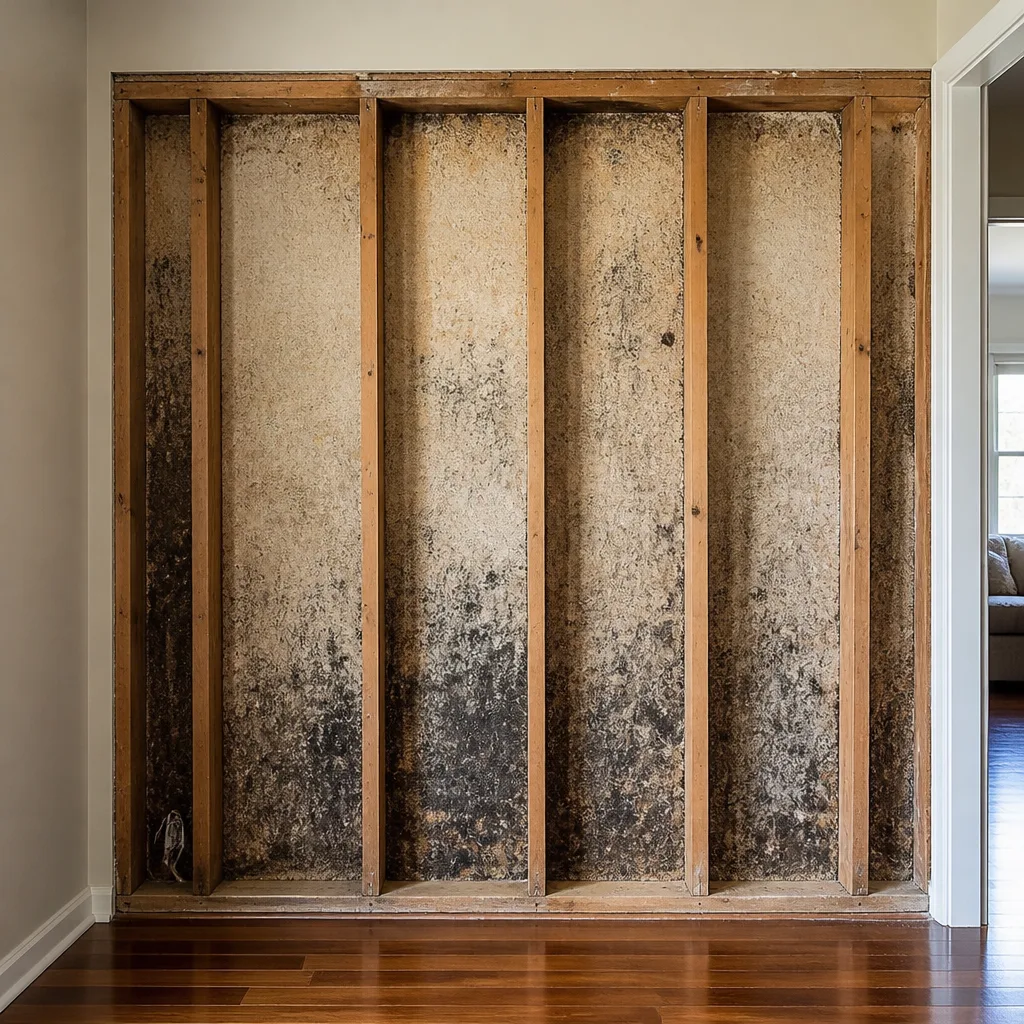 Mold remediation
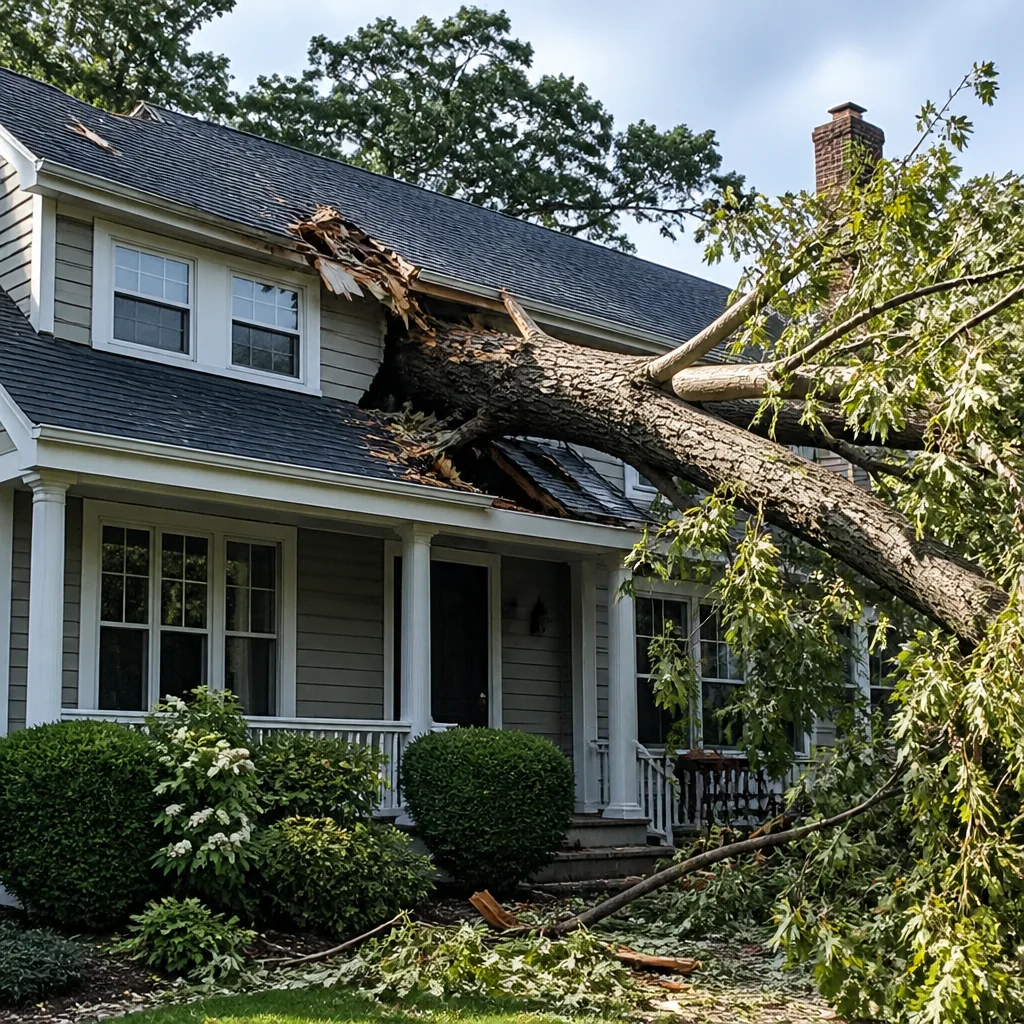 Storm response
 Sewage cleanup
 Reconstruction
Free visual inspection and a written scope of work before any mitigation begins - photos, moisture readings, and drying logs go in your claim file
The scope we write is the scope we bill. Anything new gets shown to you, in writing, before we touch it.
Get your free estimateFast, Reliable Fire Damage Restoration Across South Houston
After a fire in a South Houston home, the first 48 hours decide whether your structure dries safely or develops secondary mold in the humid coastal air. Most fire damage restoration jobs in South Houston cost between $3,200 and $12,500 depending on square footage, soot depth, and water volume from firefighting. Our crews reach South Houston neighborhoods off Spencer Highway, College Avenue, and Allen-Genoa Road typically within 60 to 90 minutes of your call. We live with the same Braes Bayou humidity and 1950s pier-and-beam crawlspaces you do, so we know exactly where the damage hides. Call (325) 423-6800 anytime, day or night, and a real person answers.
Why Tidemark Water Damage Houston Is South Houston’s Preferred Fire Damage Restoration Company
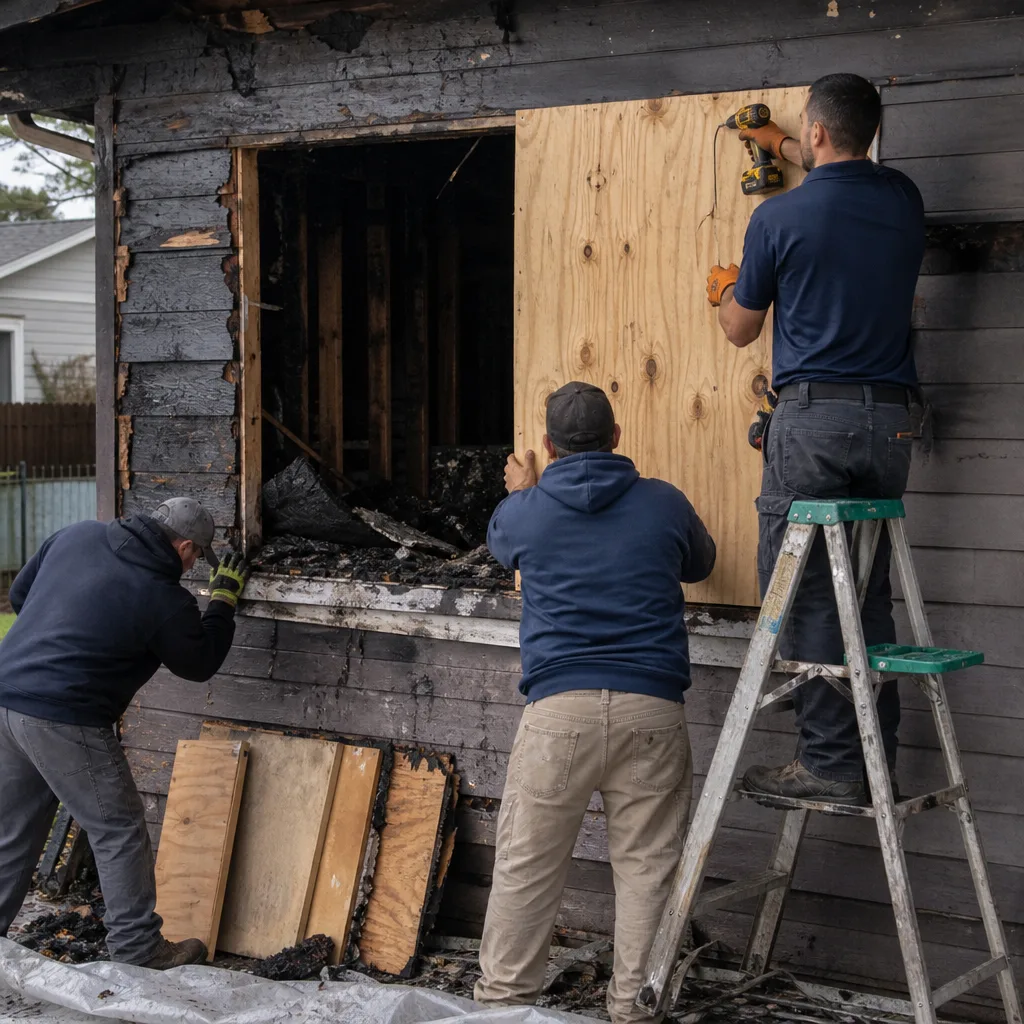
South Houston homeowners deal with a specific kind of fire damage that national call centers don’t understand. A kitchen fire in a slab-on-grade infill home leaves water pooled under vinyl plank and in wall cavities. A garage fire in a 1950s wood-frame house off Spencer Highway sends soot into uninsulated attics and original single-pane window frames. Our Fire Damage Restoration crew includes technicians who have worked these exact home types for years, and they arrive with shoe covers on at the door and drop cloths down before the first air mover rolls in.
South Houston customers tell us the same thing after every job: the crew explained the price before touching anything, and the house was left cleaner than expected. We carry IICRC-credentialed techs who run Dri-Eaz and XPOWER drying equipment sized for the humidity here, not for a dry inland market. Rick Sumner, who leads our Houston operation, insists on a written scope and a drying log review before any equipment gets shut off. That’s why we stand behind every job with a 365-Day Done Right Promise. If it’s not right, we make it right.
We’re independently owned and operated, working to the Cedarwell Care Promise. That means no franchise playbook, no upselling, and no final invoice that surprises you. Just a written price before work starts, every time.
Restoration work we handle
Fire and Water Damage Restoration in South Houston
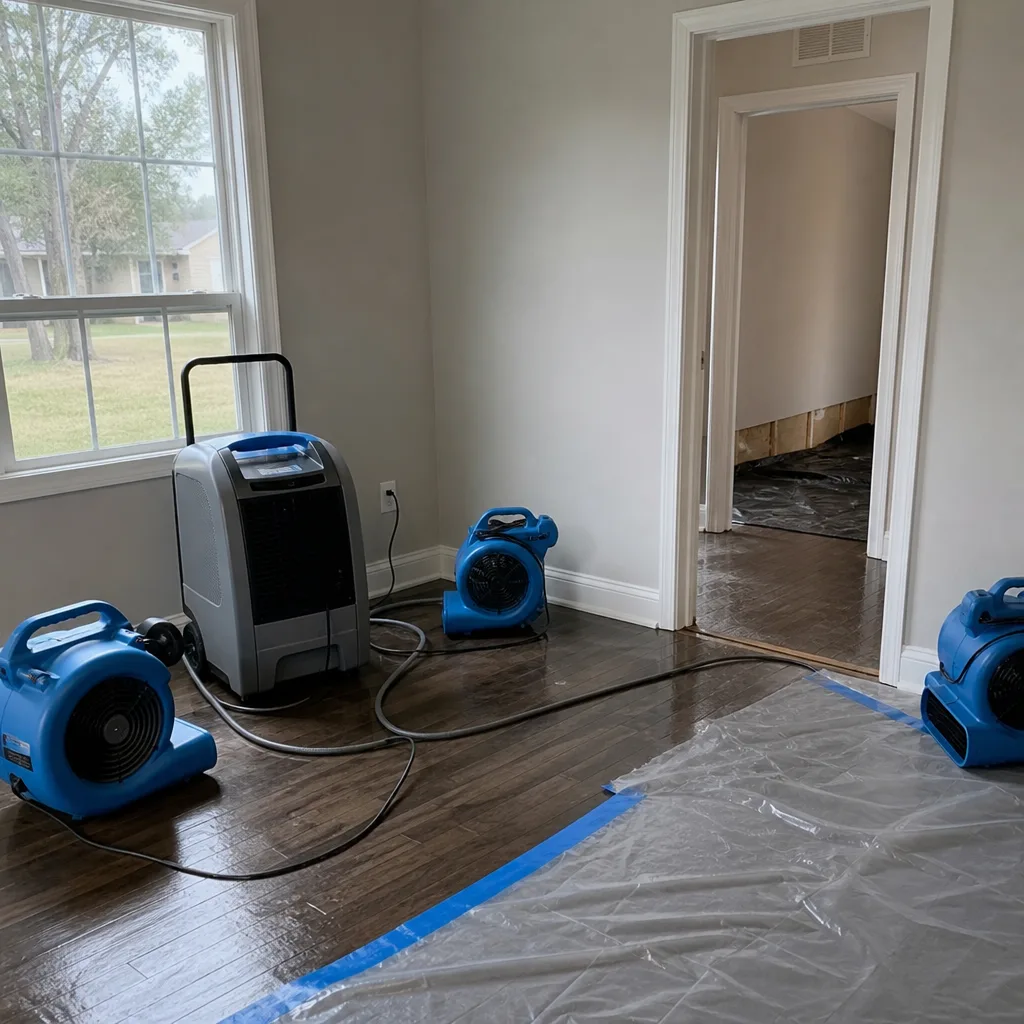
Fire and Water Damage Restoration in South Houston almost always means handling both elements at once, because the water used to put out the fire travels farther than the flames did. In a South Houston pier-and-beam home, that water doesn’t stop at the subfloor. It drips through the floorboards and settles in the crawlspace, where Braes Bayou humidity keeps it from evaporating on its own. Our process pairs structural drying of the burned room with a second drying chamber below the floor, running dehumidifiers until the floor joists read back to pre-loss moisture levels. Most combined fire and water restoration jobs in South Houston homes run between $4,500 and $12,000.
Structural Drying Below the Burn
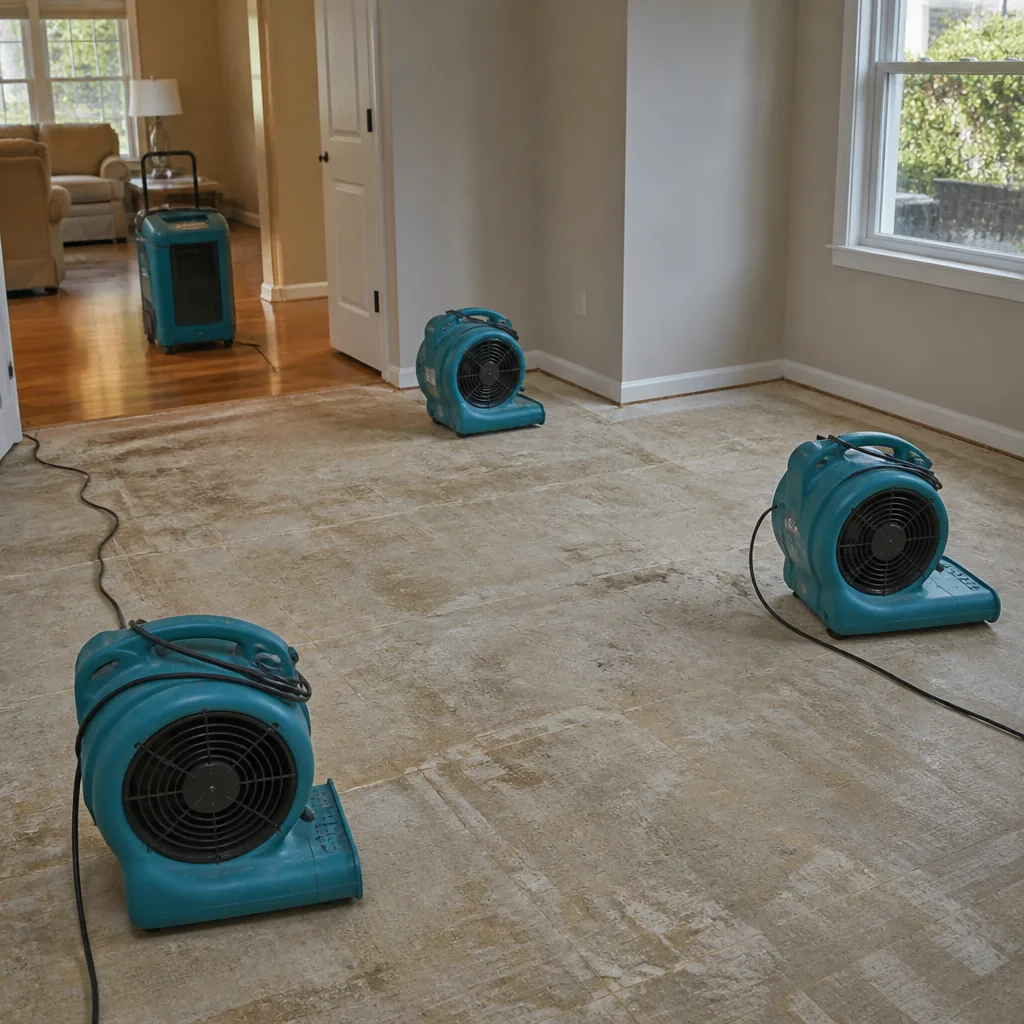
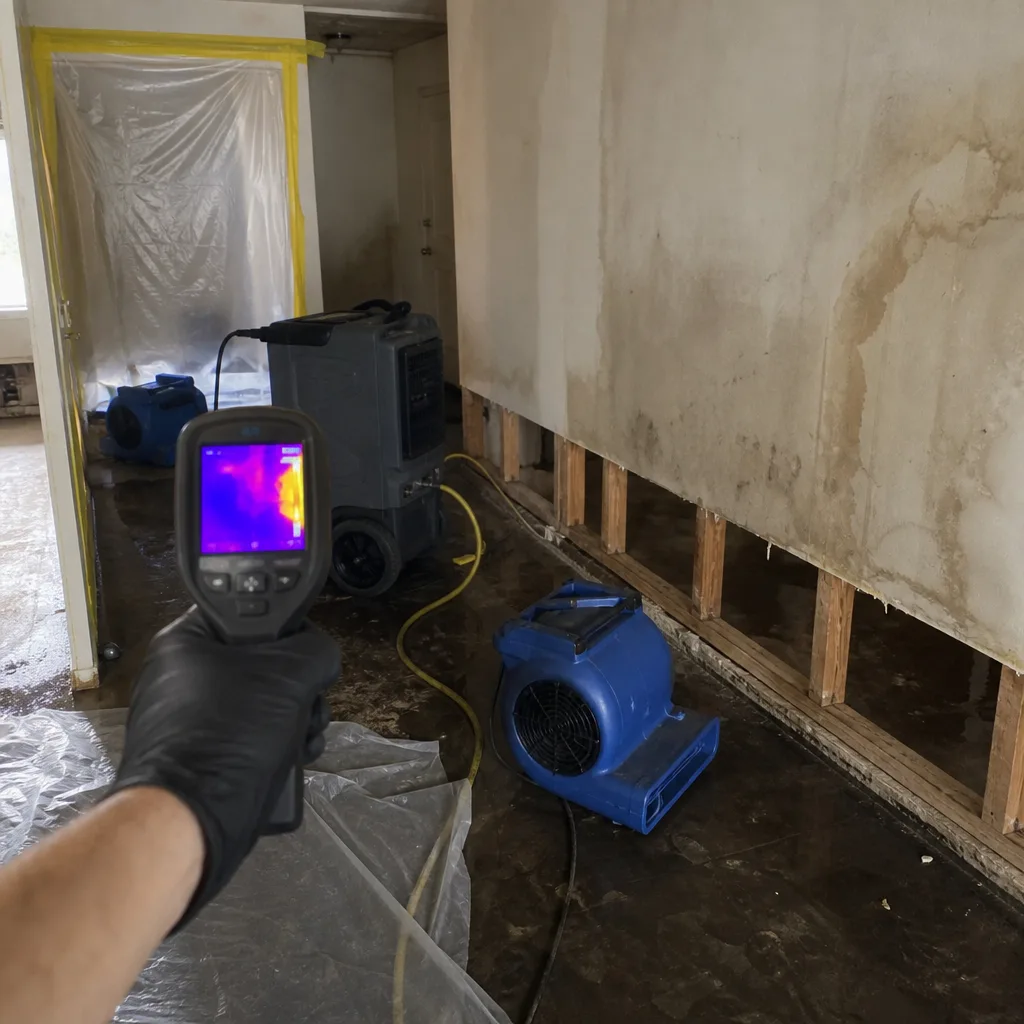
The most common mistake on South Houston fire jobs is shutting off the drying equipment too soon. A burned wall may read dry while the floor joists underneath still hold 25 to 30 percent moisture from firefighter water and pre-existing crawlspace dampness. We run moisture mapping on every surface, including the crawlspace, before we declare a structure dry.
Category 2 Water From Firefighting
Water that runs through a burned room and into a crawlspace or under vinyl plank carries soot, ash, and residues that make it a Category 2 loss. That requires antimicrobial treatment on wet materials before drying begins, not just air movement. South Houston’s high dew point means that water won’t leave on its own, and mold can bloom within 24 hours if the drying chamber isn’t sealed properly.
Soot Removal in South Houston
Soot Removal in South Houston homes requires more than wiping down walls. Soot from a kitchen or garage fire embeds into original single-pane window frames, uninsulated attic spaces, and the rough-cut wood siding common on 1950s pier-and-beam houses. It also carries an acidic residue that etches surfaces if left for more than a few days. Typical soot removal in a South Houston home runs $1,800 to $5,500, depending on how far the soot traveled and whether the attic and crawlspace need treatment too.
Attic and Cavity Soot Access
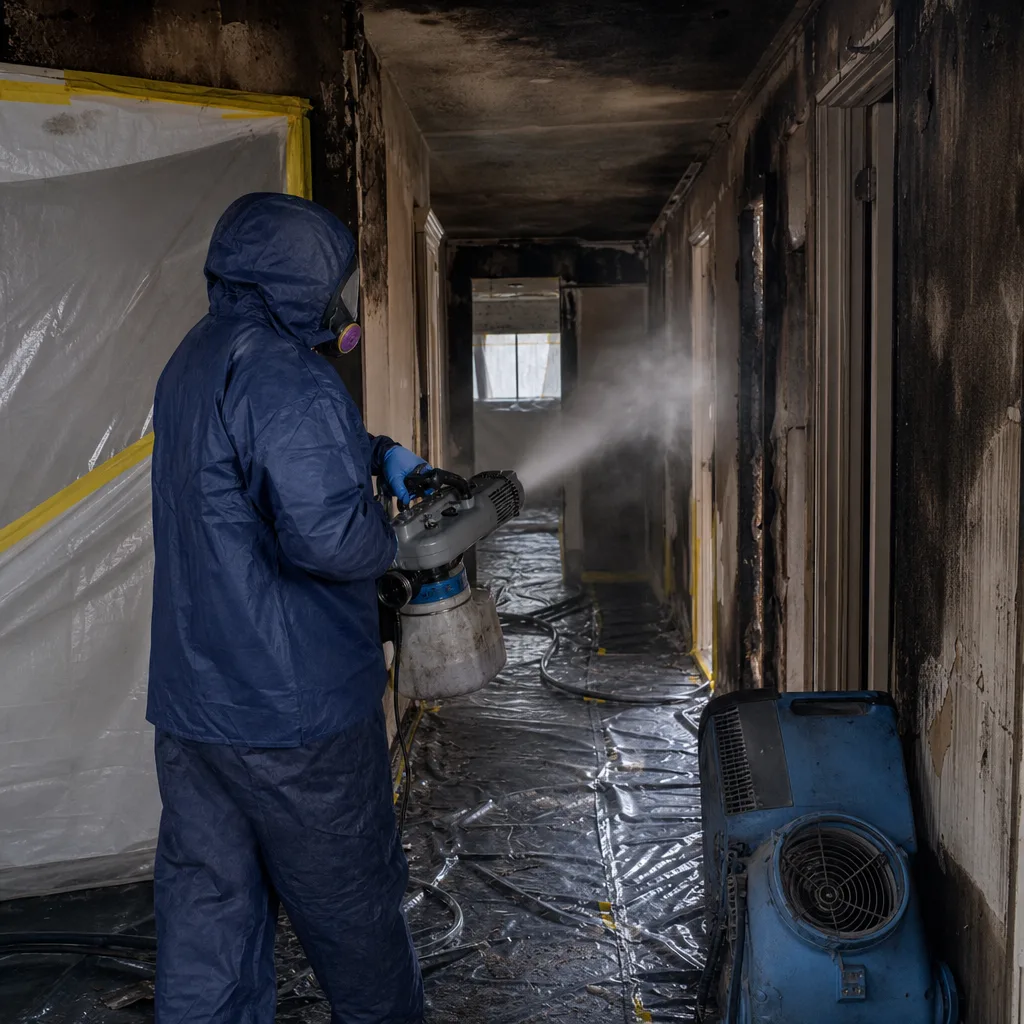
South Houston’s older homes have uninsulated attics that act like chimneys during a fire, pulling soot into every void and rafter bay. Standard thermal fogging fails in these homes because the fog can’t reach soot trapped behind the original siding or above the collar ties. We open limited access points, treat the cavities with antimicrobial and deodorizing agents, and only then run the fogging equipment.
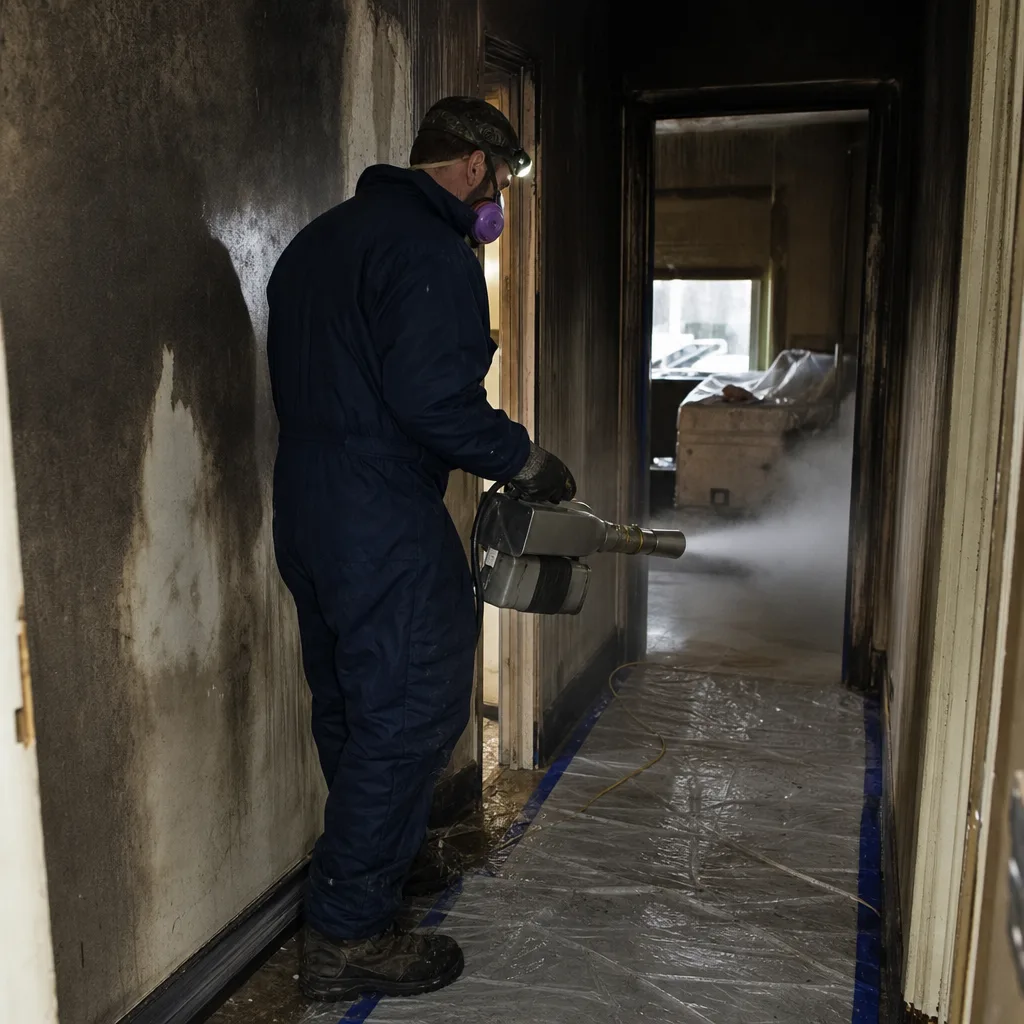
Window Frame and Sill Restoration
Original single-pane windows in South Houston homes are worth saving when the frames are sound. Soot works its way into the sash channels and behind the stops, and if it’s not removed, the smell returns every time the humidity rises. We remove the sashes, clean the channels with HEPA vacuums and dry sponges, and seal the raw wood before reinstalling. Most windows don’t need replacement; they need the soot taken out of the frame, not just wiped off the glass.
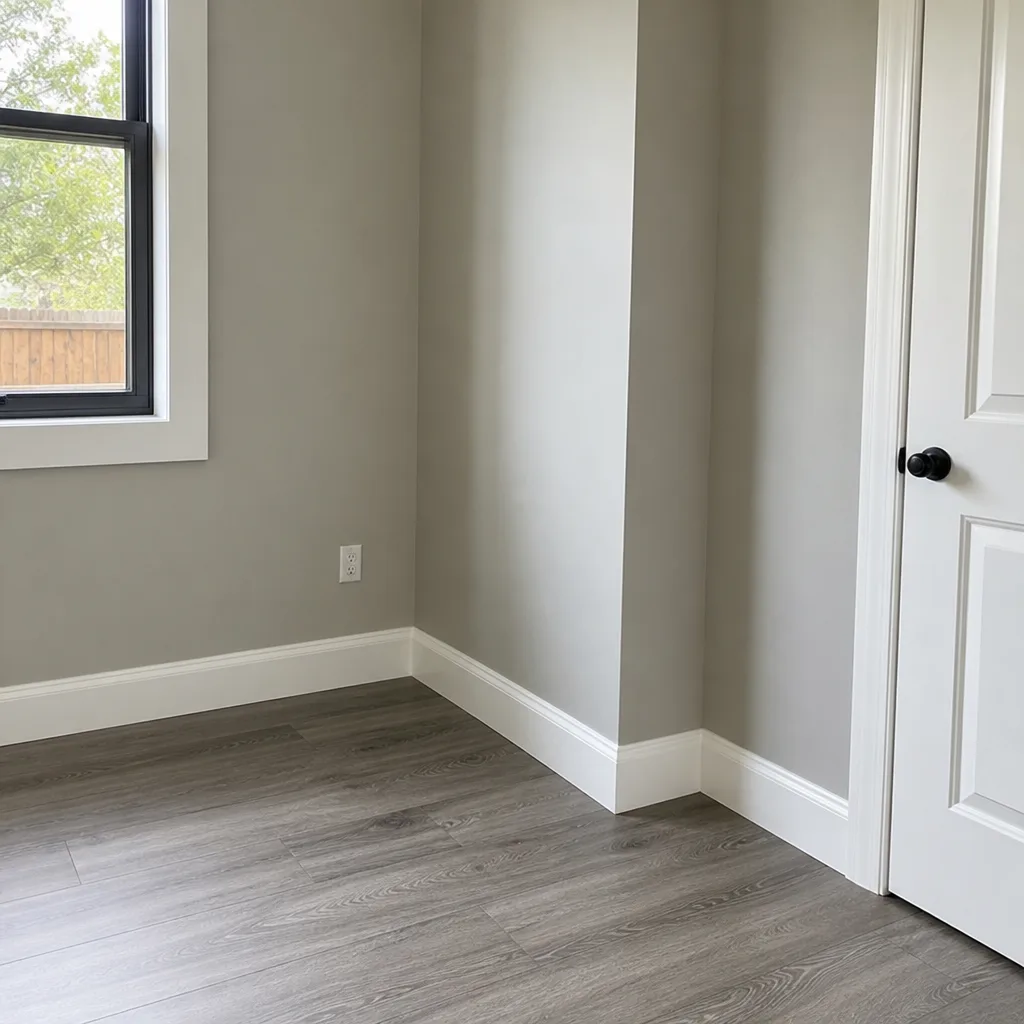
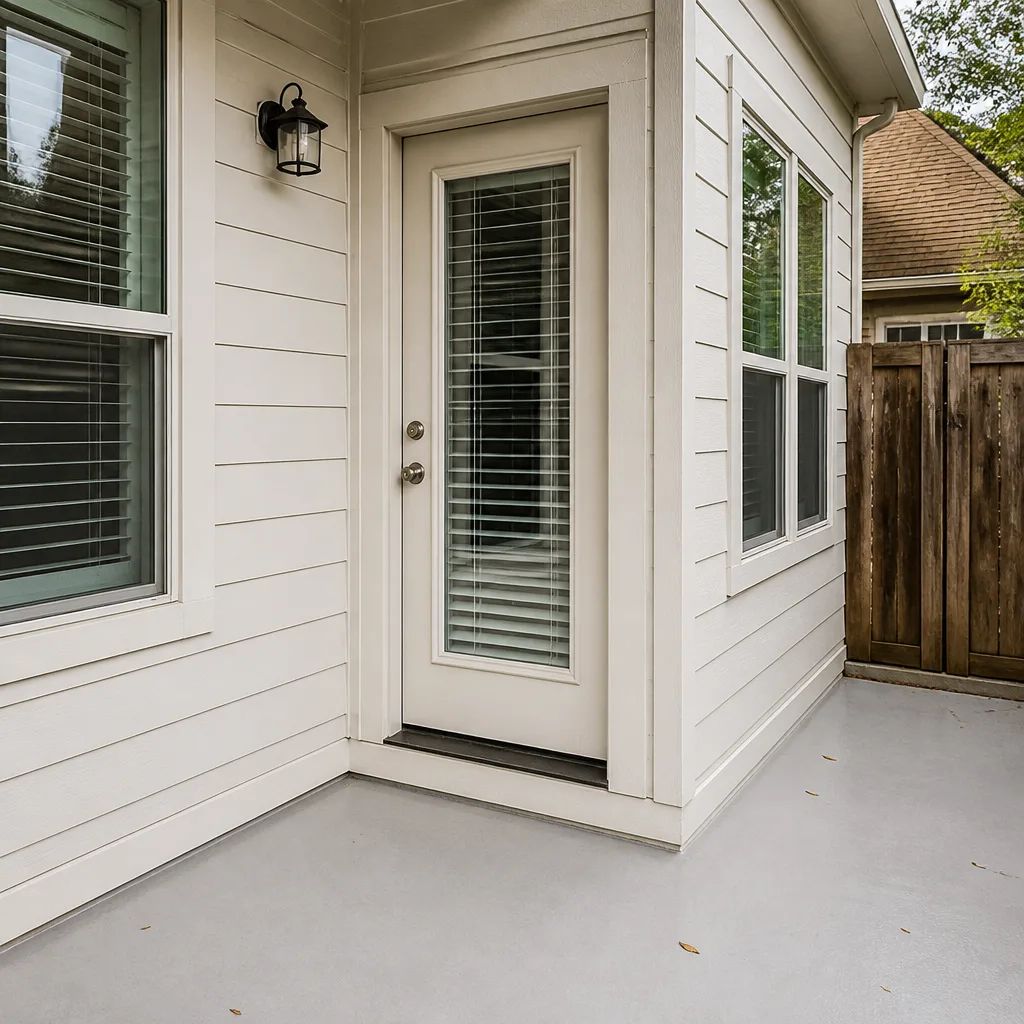
See the difference
 Before
 After
After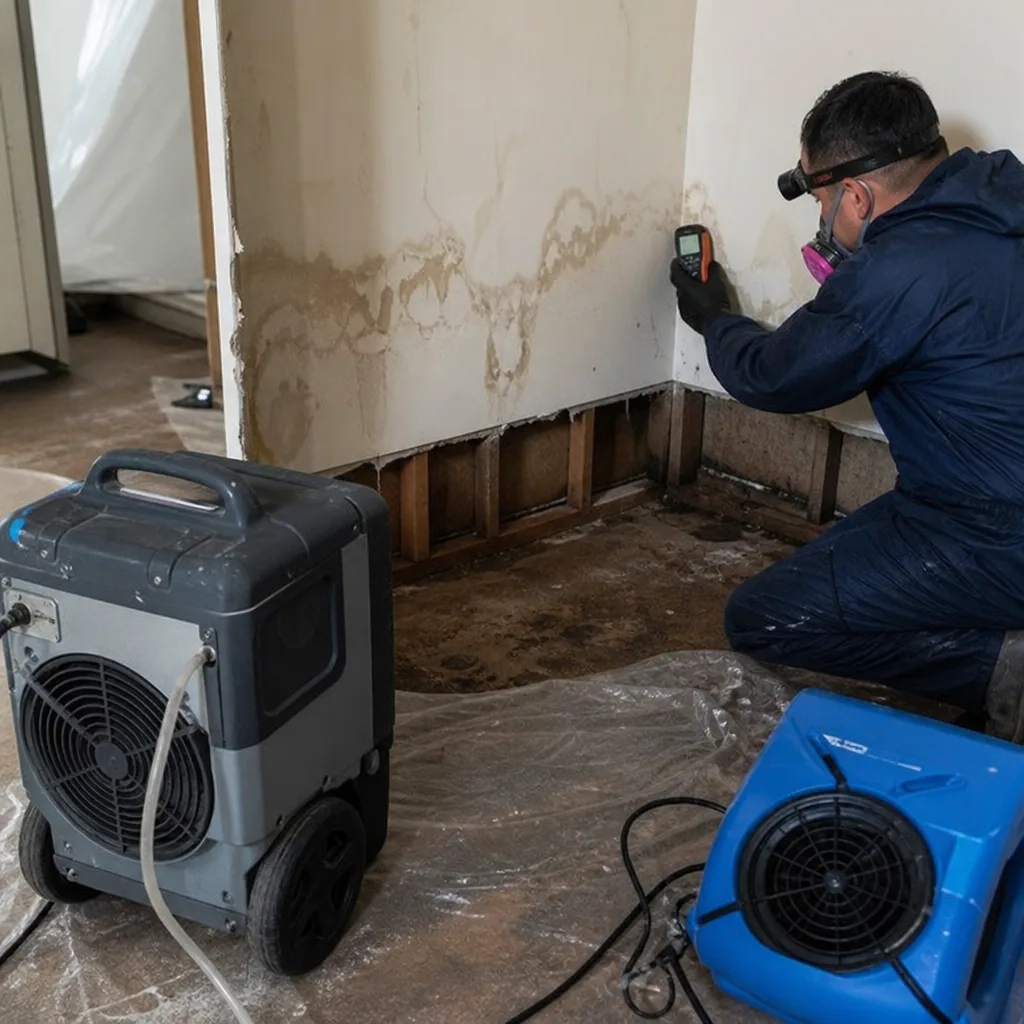 Before
 After
After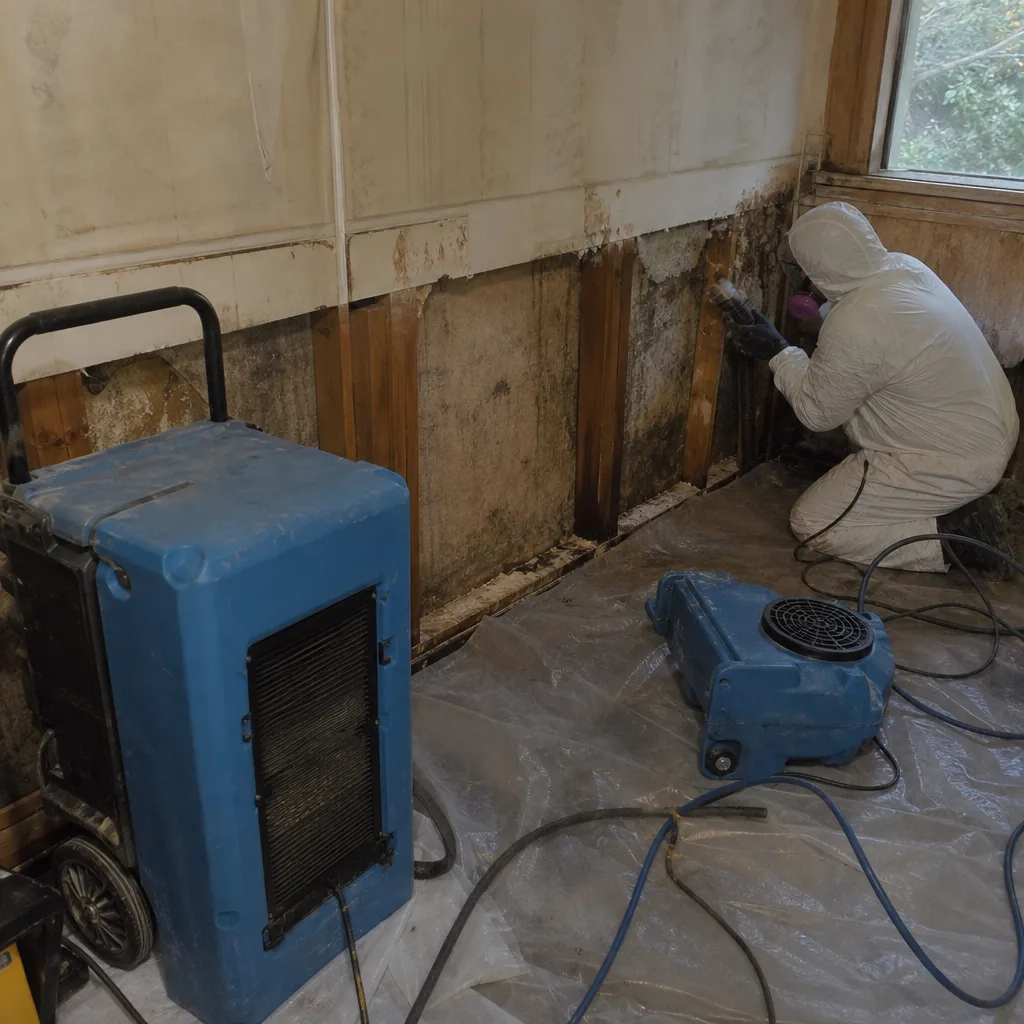 Before
 After
AfterCommon Fire Damage Restoration Problems We See in South Houston Homes
- Wet crawlspaces after firefighter water extraction. South Houston’s majority pier-and-beam homes hold water under the floor for days after the fire is out, and this water is Category 2 from soot and ash. Without a second drying chamber below the floor joists, mold starts within 24 to 48 hours in the humid air.
- Soot trapped in original single-pane window frames and uninsulated attics. The 1950s wood-frame stock around College Avenue and Allen-Genoa Road has cavities that standard fogging never reaches. Those homes need full cavity access and antimicrobial treatment of any wet insulation before odor work begins.
- Slab-on-grade infill homes with water pooled under vinyl plank. Newer South Houston construction has the opposite problem: concrete slabs don’t drain, so firefighting water sits under the flooring. Without moisture mapping before dehumidification, the visible floor looks dry while the subfloor grows mold.
- Drying logs that don’t account for the dew point. Technicians who set equipment and walk away leave South Houston homes with drying logs that look fine but fail to hit structural drying targets. The outside air pulled in by negative pressure is already saturated with moisture, so the equipment works against itself.
Pricing for Fire Damage Restoration in South Houston, TX
Fire damage restoration in South Houston is priced by the scope of damage, not by a flat fee. Here’s what you can expect for a typical single-story home:
- Small kitchen or garage fire: $3,200 to $5,800 for soot removal, structural drying, and odor treatment
- Mid-size fire with water extraction: $5,500 to $9,500 for full content cleaning, crawlspace drying, and antimicrobial treatment
- Larger fire with structural repair: $9,000 to $14,000 for framing repair, insulation replacement, and full odor removal
Your written price comes before we start, and it includes every line item in the scope. Rick Sumner reviews every estimate personally before it goes to you. Call (325) 423-6800 for a free, no-obligation assessment, and we’ll give you the number before any equipment comes off the truck.
We Also Serve Cities Near South Houston
Our crews serve South Houston and the surrounding communities every day. If you’re in Pasadena, Galena Park, Deer Park, or Pearland, we can reach you fast, with the same written-price-first process and the same local understanding of pier-and-beam crawlspaces and coastal humidity.
Serving South Houston, TX - Our Local Coverage Area
We’re based in the South Houston area and know this community well. Use the map below to see our service coverage - if you’re nearby, we can almost certainly help.
FAQs About Fire Damage Restoration in South Houston
Braes Bayou humidity keeps the air outside your home saturated with moisture, so the drying equipment has to work harder and run longer to hit structural drying targets. On a pier-and-beam home, we add a second drying chamber in the crawlspace because the floor joists are pulling moisture from both the firefighting water above and the humid soil below. Without that second chamber, the drying logs will show progress while the structure remains too wet, and mold follows within a day or two. Call (325) 423-6800 if you’re dealing with fire damage and want an honest read on what your crawlspace needs.
Soot on original wood siding doesn’t just sit on the surface. The porous, unpainted grain of 1950s siding absorbs soot into the fibers, and the acidic residue starts etching the wood within days. We use HEPA vacuums and dry-chem sponges to lift the soot from the grain without grinding it deeper, then apply a wood-safe antimicrobial and seal the surface before painting or restaining. Siding that looks heavily charred may need sections replaced, but soot-stained siding often cleans up well when treated early. Call us for an assessment and we’ll tell you exactly what your siding needs.
Most original single-pane windows in South Houston homes can be saved if the frames are structurally sound. The soot and smoke odor hide in the sash channels and behind the stops, not in the glass itself. We remove each sash, clean the channels, treat the raw wood, and reinstall with new weatherstripping if needed. Windows with cracked panes from the heat or burned frames do need replacement, but we save every window that’s salvagable, and the written scope tells you which is which before work begins.
South Houston’s older pier-and-beam homes hold moisture in the crawlspace and the uninsulated attic, two zones that stay wetter because of Braes Bayou humidity and the coastal dew point. The drying equipment has to remove water from the burned room plus the pre-existing dampness in those cavities, so the logs show longer run times than a slab-on-grade home in a drier part of Harris County. We don’t shut off the equipment by the clock. We run it until the moisture mapping shows every surface back to pre-loss condition, and the drying log is yours to keep.
Yes. The water used to extinguish a kitchen fire picks up soot, ash, and burned residues as it drips through the floor, making it a Category 2 water loss, just like flood water. That means antimicrobial treatment is required on all wet materials, including the floor joists in the crawlspace, before drying begins. Skipping that step leaves the home smelling like smoke and at risk for mold long after the fire is out. Our crews treat every fire water loss as Category 2, no exceptions. Call (325) 423-6800 for a free estimate and a straight answer about what your home needs.
Written by Rick Sumner, who leads Tidemark Water Damage Houston. Serving South Houston with written prices, pet-safe products, and the 365-Day Done Right Promise.