
 Water damage drying
 Fire & smoke cleanup
 Mold remediation
 Storm response
 Sewage cleanup
 Reconstruction
Free visual inspection and a written scope of work before any mitigation begins - photos, moisture readings, and drying logs go in your claim file
The scope we write is the scope we bill. Anything new gets shown to you, in writing, before we touch it.
Get your free estimateFast, Reliable Water Damage Restoration Across Houston
When water is rising in your Houston home, you need a crew that knows exactly where it traveled and how to dry past it. Water damage restoration in Houston is not a one-size-fits-all job. The clay soil under your slab, the humidity pressing against your walls, and the age of your 1970s brick veneer all shape how far water moves and how long drying takes. Tidemark Water Damage Houston answers the phone 24/7 at (325) 423-6800 with a live person, not a voicemail. We serve the entire Houston metro area, from Meyerland to Kingwood, and we put a written price in your hand before any equipment comes off the truck.
Why Tidemark Water Damage Houston Is Houston’s Preferred Water Damage Restoration Company
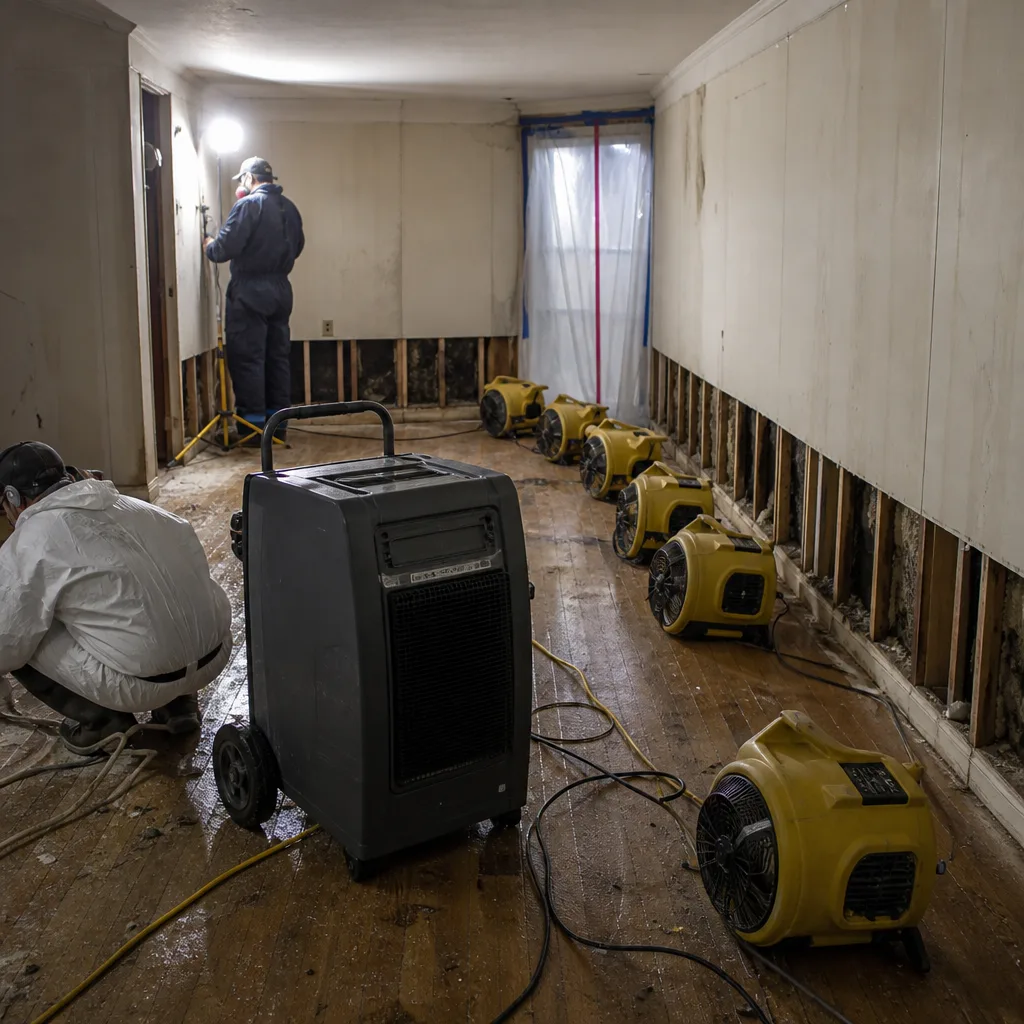
Houston homeowners call us because we treat their house the way we would treat our own, and we say that with specifics, not slogans. Shoe covers go on at the door. Drop cloths cover the floors before the first piece of equipment rolls in. We ask before we move a single piece of furniture. Our technicians are background-checked, uniformed, and credentialed through IICRC and RIA, and they run Dri-Eaz and Phoenix drying equipment, the same machines used by leading restoration specialists.
Rick Sumner leads our Houston team, and he has built a crew that understands this city’s particular water problems. A tide mark is the line water leaves on a wall. It is the first thing our technicians look for on every job, because finding the tide mark tells us exactly how far water traveled and how far past it we need to dry. That precision is why Houston homeowners keep our number saved. Our Water Damage Restoration team has worked in homes from Galena Park to Deer Park, and we know the difference between a slab leak in a 1980s ranch and stormwater pushing through a pier-and-beam bungalow inside the Loop.
Restoration work we handle
Emergency Water Removal in Houston
Emergency water removal in Houston means getting standing water out of your home within hours, not days, because water sitting on slab floors and wicking into drywall creates the conditions for mold growth in 24 to 48 hours. When a pipe bursts in your attic at 2 a.m. or a storm drain backs up into your garage, the first step is extraction. Our crews arrive with truck-mounted extraction units and portable pumps, and we remove the bulk of the water before setting up drying equipment. Most emergency water removal jobs in a Houston single-family home run between $1,800 and $4,200 depending on affected square footage, and you see the written number before we start.
Slab and Subfloor Extraction
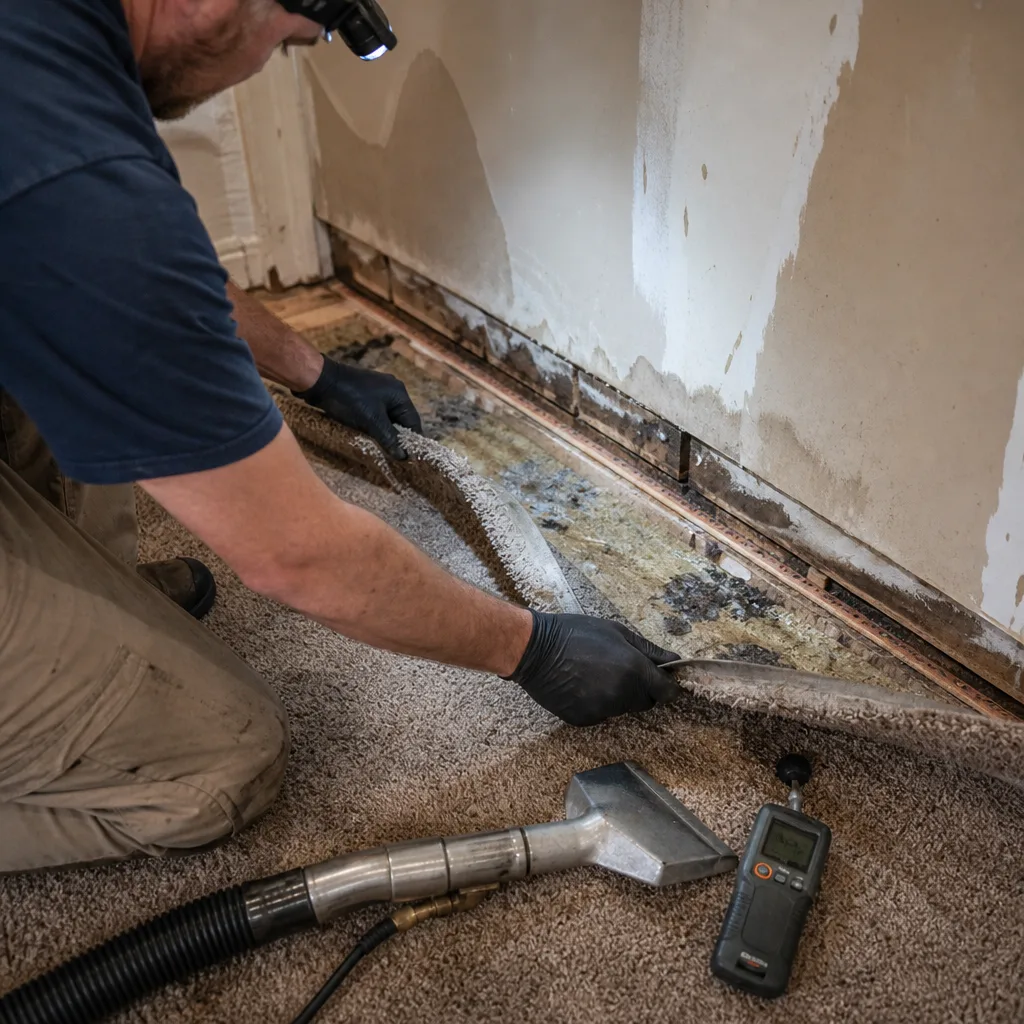
Houston’s slab-on-grade construction means water does not drain downward the way it does in homes with basements. Water sits on the concrete and wicks up into baseboards, drywall, and carpet tack strips. We pull water from the surface and then check beneath vinyl plank and carpet for trapped moisture that a homeowner-grade meter will miss.
Pier-and-Beam Water Removal
Older homes inside the Loop often sit on pier-and-beam foundations, which can actually be easier to dry, because air moves beneath the floor. But the subfloor insulation and joists still hold water. We extract from above and set drying equipment below the house as well, monitoring moisture readings in the framing every 12 hours.
Flood Damage Restoration in Houston
Flood damage restoration in Houston is not just about removing water. It is about understanding what that water carried with it. During heavy rain events, stormwater moving across streets picks up gasoline, pesticides, animal waste, and whatever else was on the road. That changes the category of water and the entire restoration plan. Most flood-related jobs in Houston run between $4,500 and $12,000 for a single-story home with moderate intrusion, before any rebuild work, and we write that number down before we touch a wall.
Category 2 and Category 3 Flood Water
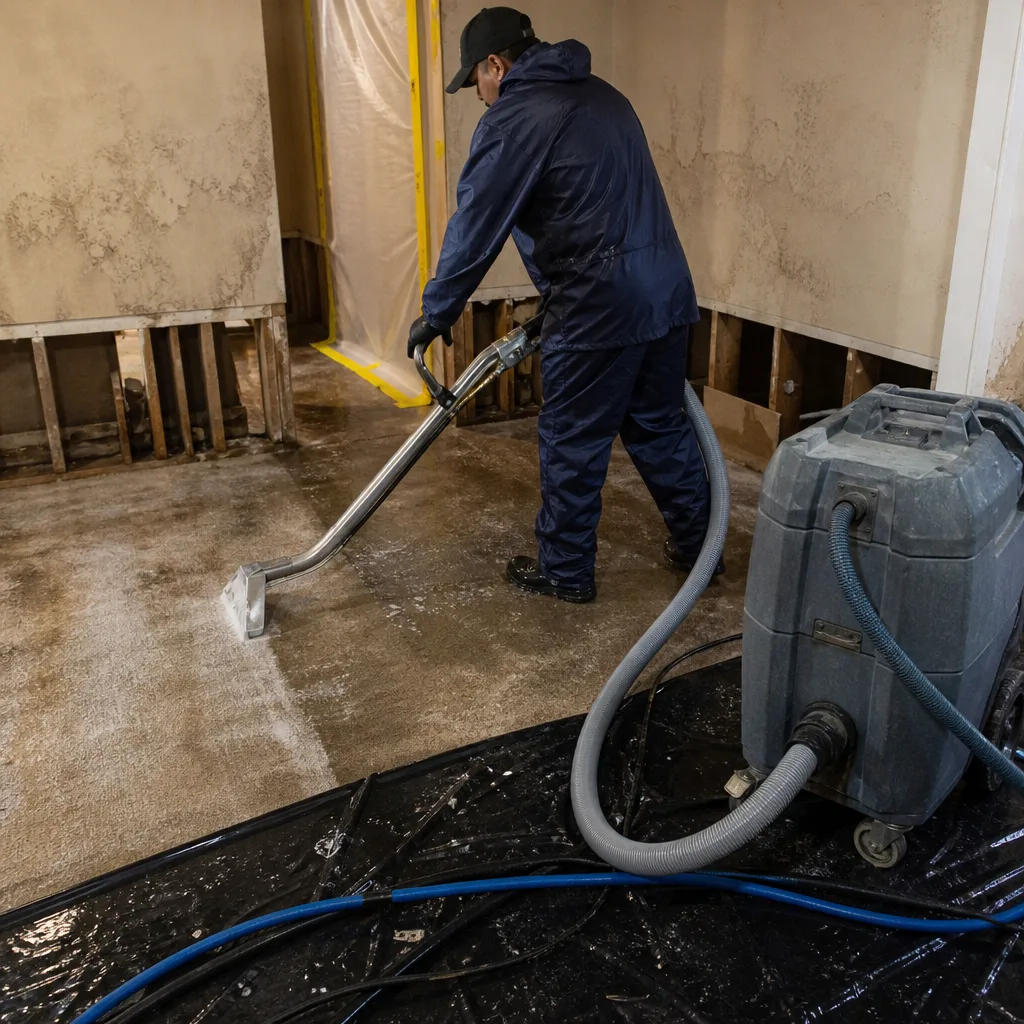
Street water that backed into your home is rarely clean. We treat it as contaminated, cut out saturated carpet and pad rather than trying to dry it, and disinfect surfaces before drying begins. Trying to dry contaminated materials is a common mistake we correct. Pet-safe drying agents and antimicrobials are used wherever there is a choice, because kids and pets live in these homes.
Repeat Flood Events
In Meyerland, we pulled 4,200 gallons of Category 2 water from a 1978 slab-on-grade ranch after a 9-inch rain overwhelmed its perimeter drains. Our crew set 26 Dri-Eaz LGR dehumidifiers and 18 Phoenix air movers, logged moisture readings every 12 hours, and replaced saturated drywall to pre-loss condition within five days. It was the same house we had dried out eight months earlier. Houston’s clay-heavy gumbo soil expands and contracts so dramatically with moisture that slab-on-grade foundations heave and crack, creating recurring water intrusion pathways that do not exist in cities with sandy or limestone soils like Dallas or Austin. That is why we see the same homes flooded again and again, and why we keep drying logs from every job.
Trusted Brands We Service in Houston
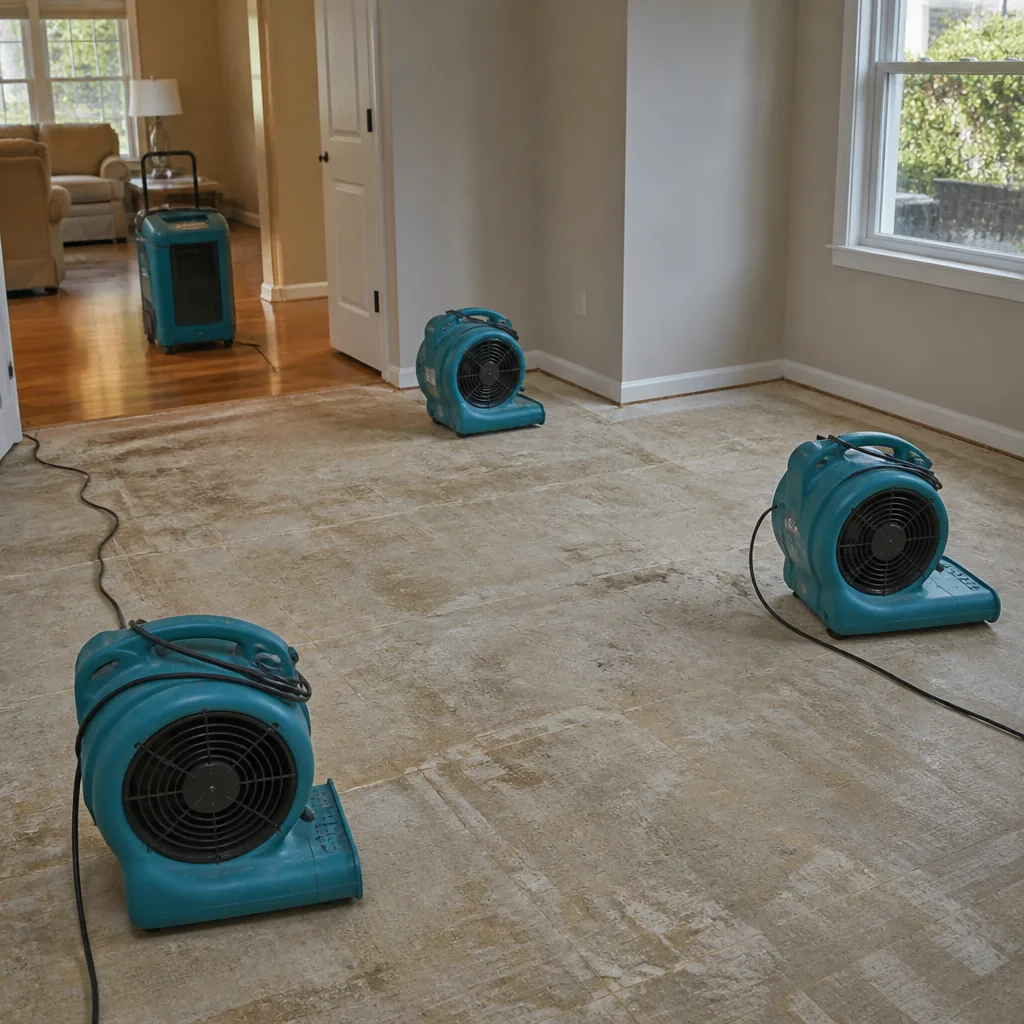
We work with the equipment and standards Houston homeowners should demand. Our crews run B-Air and Phoenix air movers, Injectidry systems for wall and floor cavity drying, and Dri-Eaz dehumidifiers. We are IICRC-certified and RIA-credentialed, which means we follow the documented drying standards those organizations set. What Houston customers care most about is that the equipment actually shows up, runs properly, and gets the house dry. We maintain our own fleet and stock replacement parts in the Houston office, so a failed dehumidifier does not stall your job for three days while parts ship from somewhere else. Dispatch and scheduling are coordinated from our Houston office, and crews serve Houston locally.
See the difference
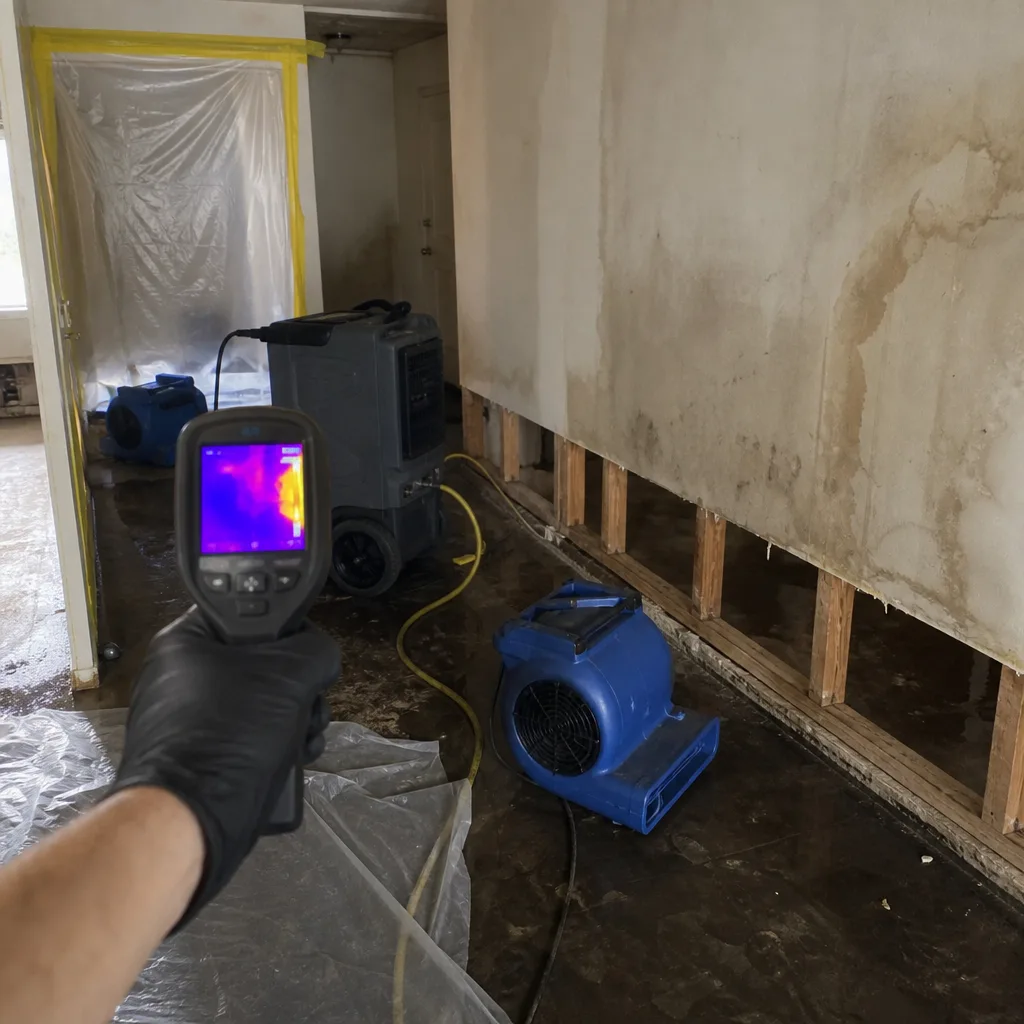 Before
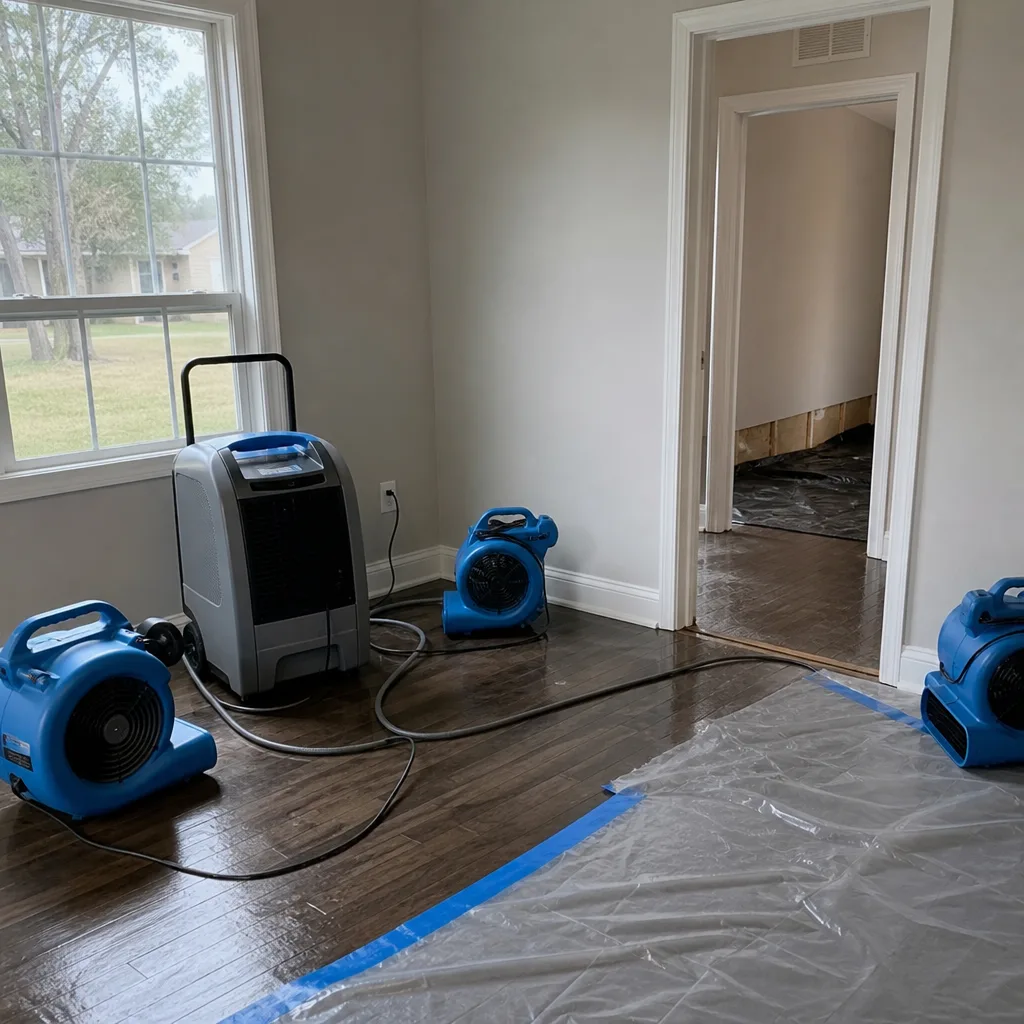 After
After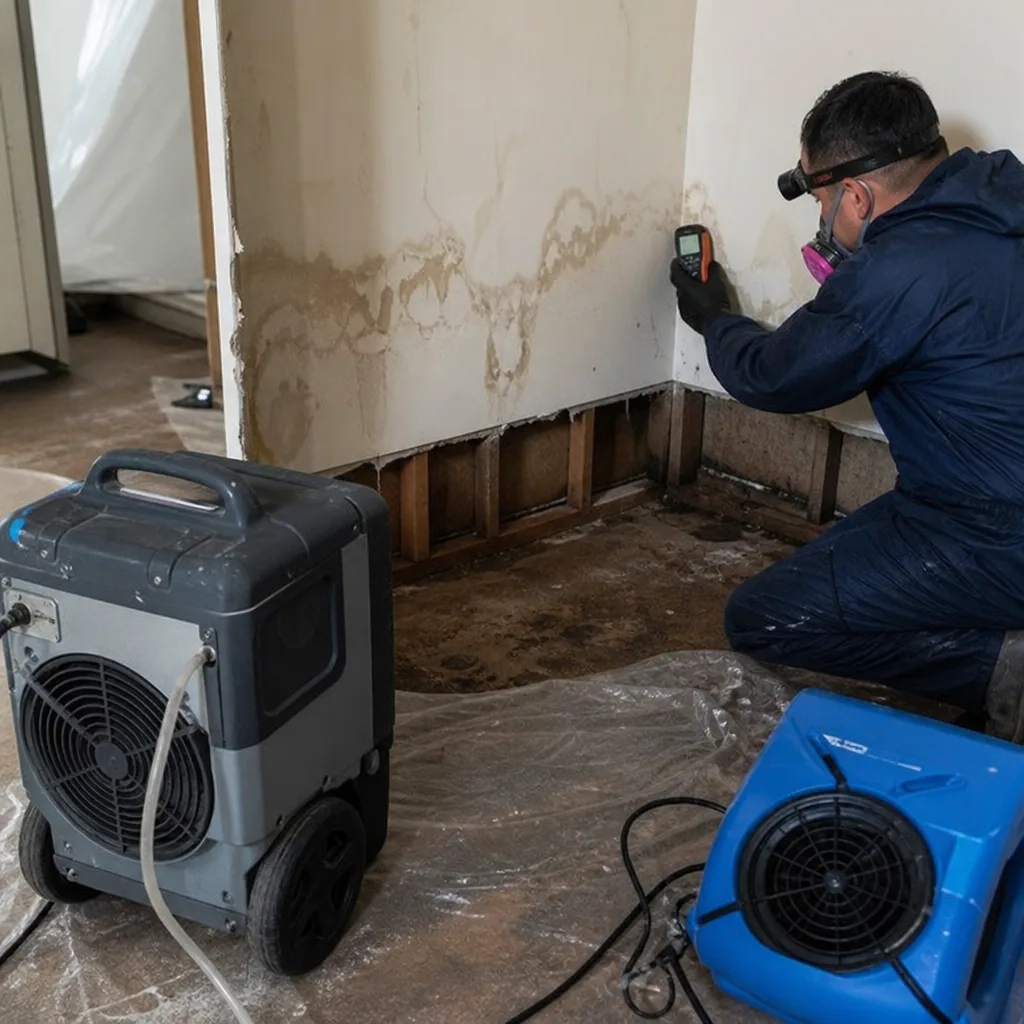 Before
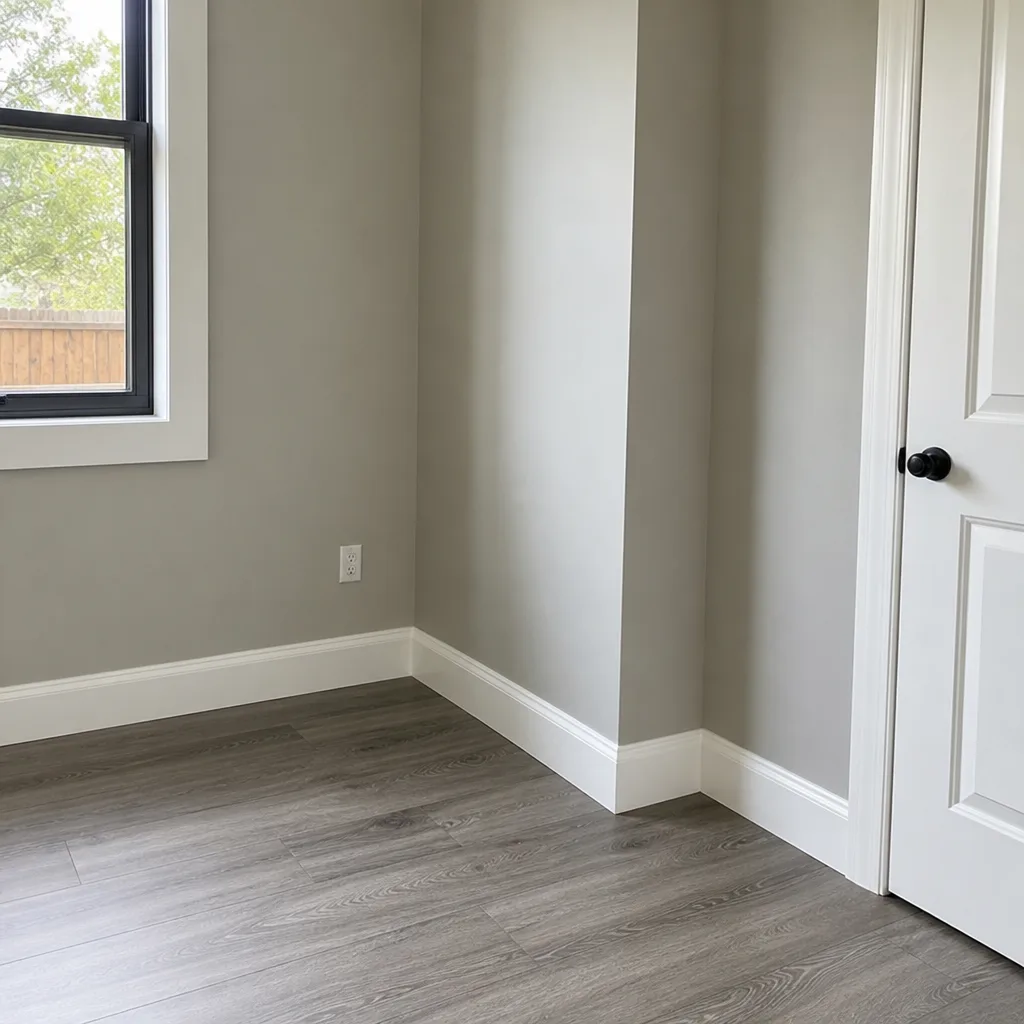 After
After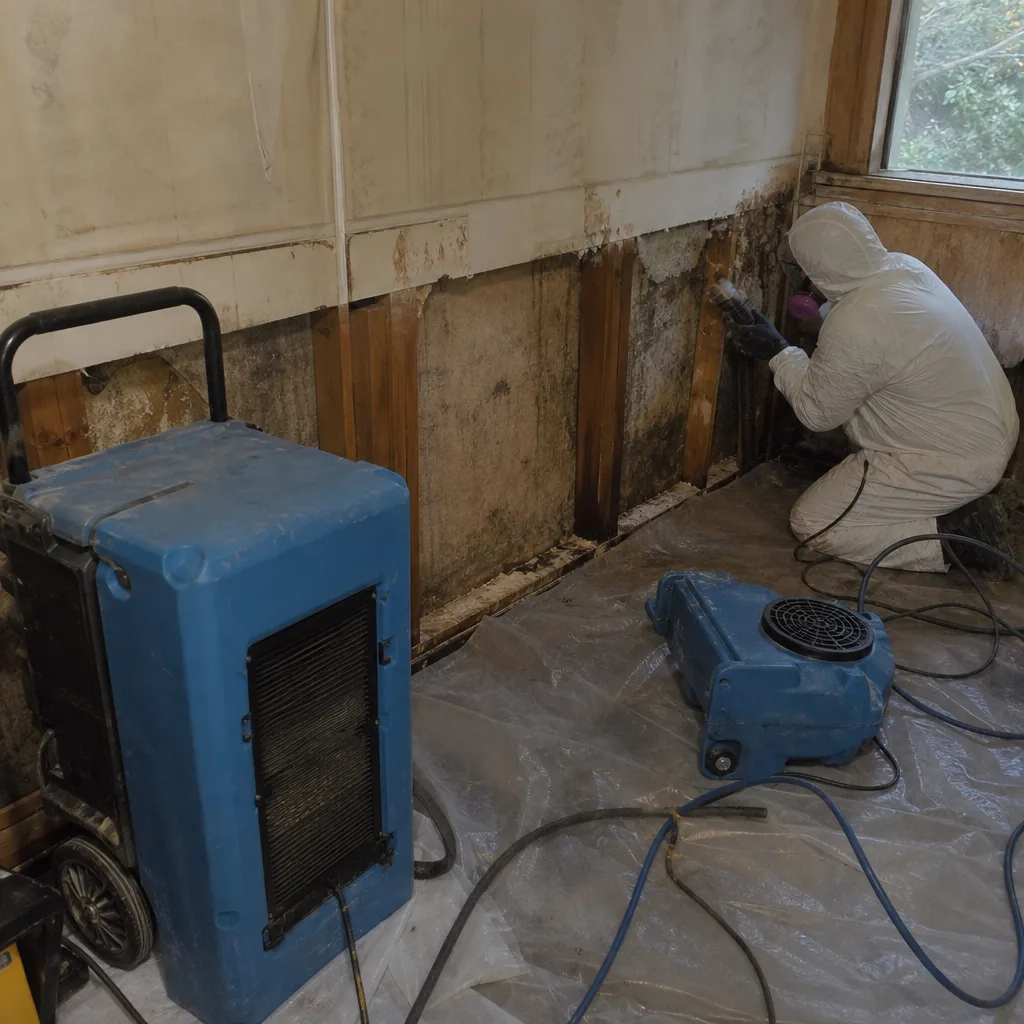 Before
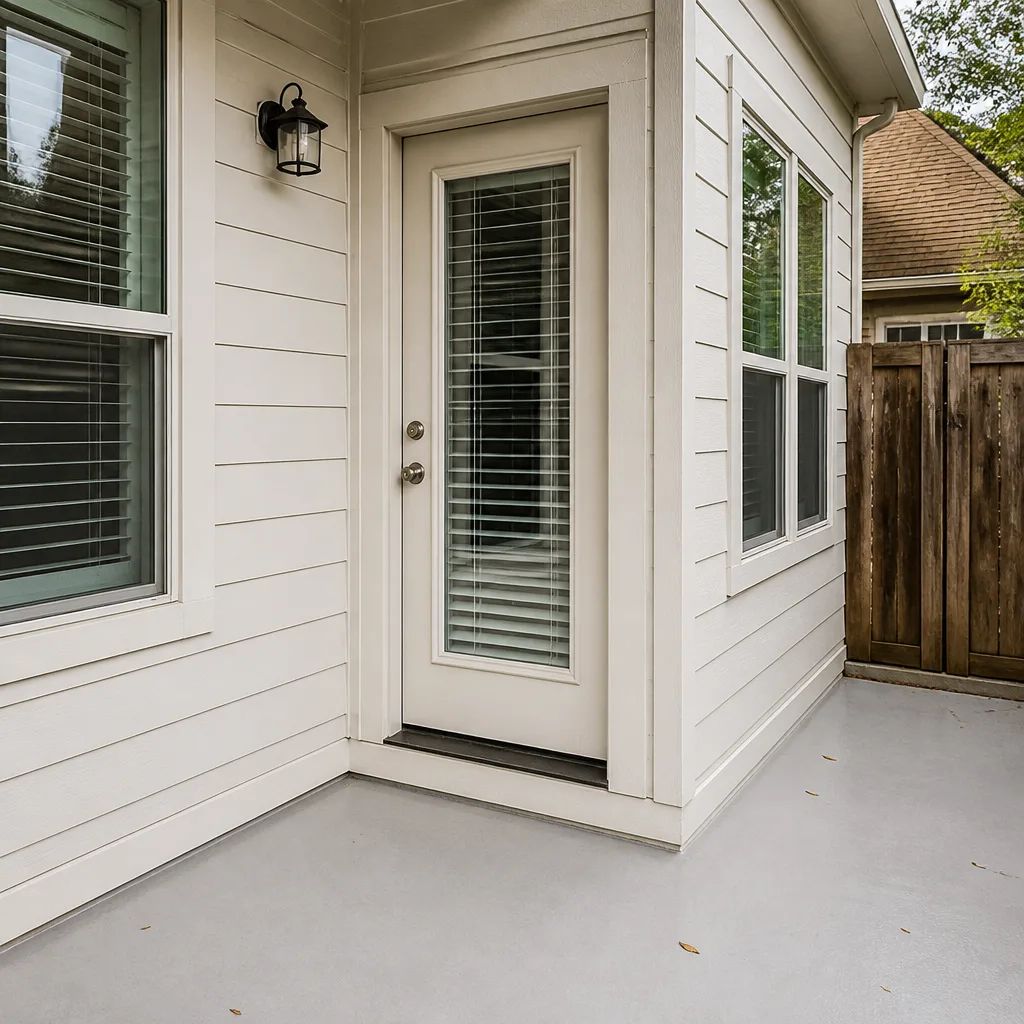 After
AfterCommon Water Damage Restoration Problems We See in Houston Homes
- Slab foundation cracks that reopen with every rain. Houston’s gumbo clay heaves when wet and shrinks when dry. Hairline cracks widen, and the same water path that flooded your hallway in 2021 comes back in 2025. We document these pathways with photos and moisture maps so you can address the drainage or foundation issue before the next storm.
- Homes left wet because technicians stopped drying too early. DIY moisture meters miss water trapped inside wall cavities and under vinyl plank. Crews pull equipment after the surface feels dry, but the framing is still at 25 percent moisture. Within weeks, you get musty odors and warped baseboards. We log readings every 12 hours and do not remove equipment until the numbers say the structure is dry.
- Carpet and pad that should have been cut out, not dried. Flood water from the street is not clean. Trying to salvage carpet soaked with Category 2 or Category 3 water leaves hidden mold under the slab, which reactivates with the next rain. We cut out and dispose of contaminated materials, then disinfect before drying begins.
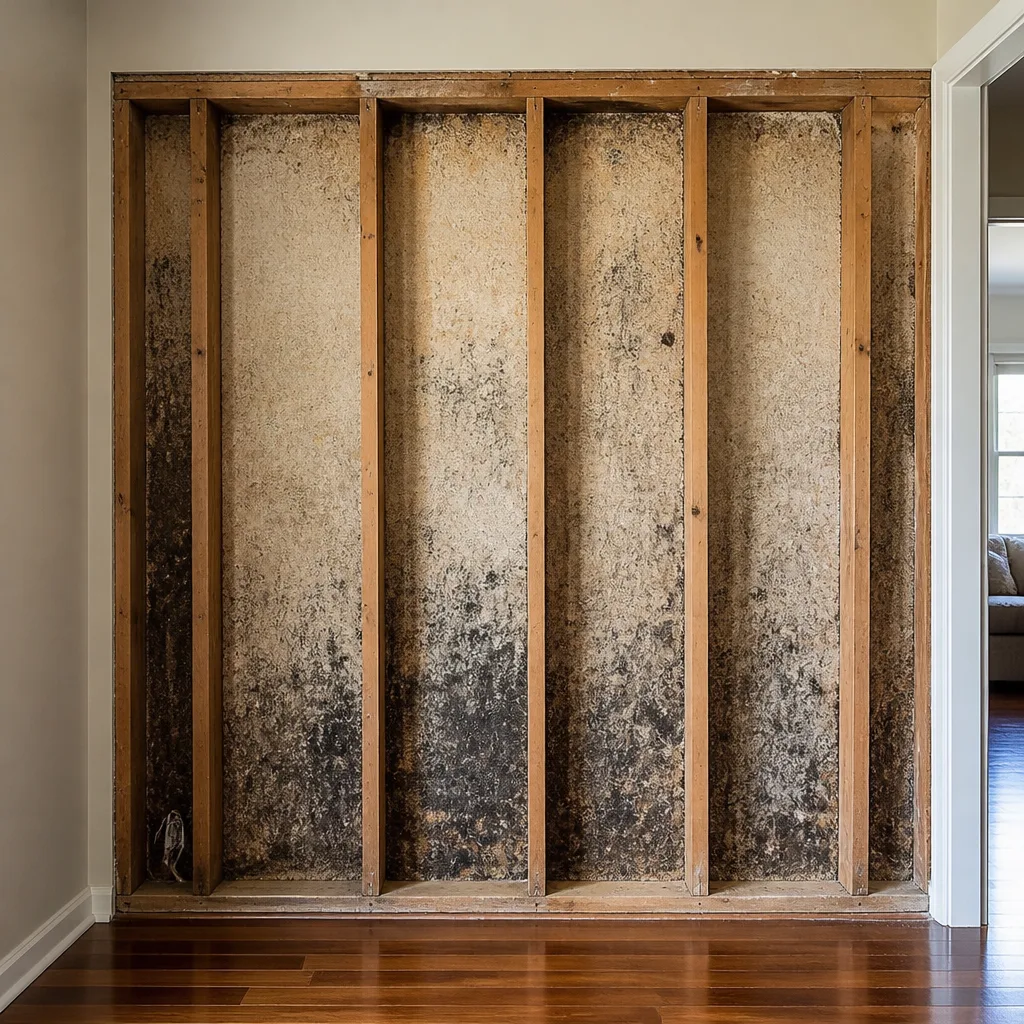
- Homeowners waiting 36 hours or more to call. The assumption that water “will just dry out” in Houston is wrong. Houston’s humidity keeps everything damp. By the time a homeowner calls us after a weekend of “letting it air out,” mold is already colonizing the drywall, and the job has shifted from mitigation to full remediation. Call the same day you see water. It costs less and saves more of your home.
Pricing for Water Damage Restoration in Houston, TX
We Also Serve Cities Near Houston
Our crews serve Houston and the surrounding communities every day. Whether you are in Galena Park, Pasadena, South Houston, or Deer Park, we can be at your door quickly because our Houston office dispatches locally. Houston is home base, and we know these neighborhoods well enough to understand how water moves through each one. If your home is in any of these nearby cities, call us. You will get the same written price and the same 365-Day Done Right Promise.
Serving Houston, TX - Our Local Coverage Area
We’re based in the Houston area and know this community well. Use the map below to see our service coverage - if you’re nearby, we can almost certainly help.
FAQs About Water Damage Restoration in Houston
Why do Meyerland and Kingwood homes flood repeatedly even after professional water extraction?
Because the problem is the foundation and the soil, not just the water in the house. Meyerland and Kingwood sit on clay-heavy gumbo soil that heaves when wet and shrinks when dry, cracking slab foundations and creating recurring water pathways. Extraction removes standing water, but if the slab crack, perimeter drains, or grading are not addressed, the next 9-inch rain pushes water through the same openings. We document those pathways on every job so your insurance claim and your long-term fix are based on evidence, not guesswork. Call (325) 423-6800 for a written assessment.
My 1980s Houston home has original windows that leak during storms. Should I repair the flashing or replace the windows as part of water damage restoration?
Repair the flashing and the surrounding water-damaged drywall first. Replacing windows as a first step often does not solve anything if the flashing is the actual leak point, and you end up spending on new windows while water keeps coming in around them. We assess the water path, document it with photos and moisture readings, and write a scope that separates restoration work from window replacement decisions. That written scope is yours before any work starts.
Houston’s tap water is Category 1, but my flooded home came from the street. What category is that water and does it change the restoration plan?
Street water is Category 2 or Category 3 depending on the source, and yes, it changes the plan completely. Category 1 is clean water from a supply line or a sink overflow. Once water crosses your lawn, your driveway, or the street, it carries contaminants. Category 2 water requires cut-out of saturated carpet and pad, disinfection, and more aggressive drying. Category 3 water, like sewage backup, means even more thorough removal and sanitization. The category determines what we can salvage and what we cut out, and we explain that before we begin.
How quickly does mold start in a Houston slab home after a water leak, and what should I do in the first 24 hours?
Mold colonization can begin in 24 to 48 hours in Houston’s humid climate, especially inside a slab home where moisture has nowhere to go but up into drywall and baseboards. In the first 24 hours: shut off the water source, move valuables and electronics out of the wet area, call your insurance company if the loss is significant, and call us at (325) 423-6800. Do not run a box fan and wait to see if it dries out. Houston’s humidity works against you. Extract the water properly and set professional drying equipment.
Why do I need ‘drying logs’ for my Houston water damage insurance claim?
Drying logs are the daily moisture readings and equipment records that prove your home was dried to an accepted standard, not just until the carpet felt dry. Adjusters recognize IICRC drying documentation because it shows we monitored the structure, not just the surface. If we stop dehumidification too early and hidden moisture turns into mold months later, your claim gets complicated. Our logs protect you. We log readings every 12 hours, record when equipment was set and removed, and share the final documentation with you and your adjuster.
Written by Rick Sumner, Owner at Tidemark Water Damage Houston, serving Houston since the company founded its local office as part of the Cedarwell Care Promise network.