
Last updated October 16, 2026
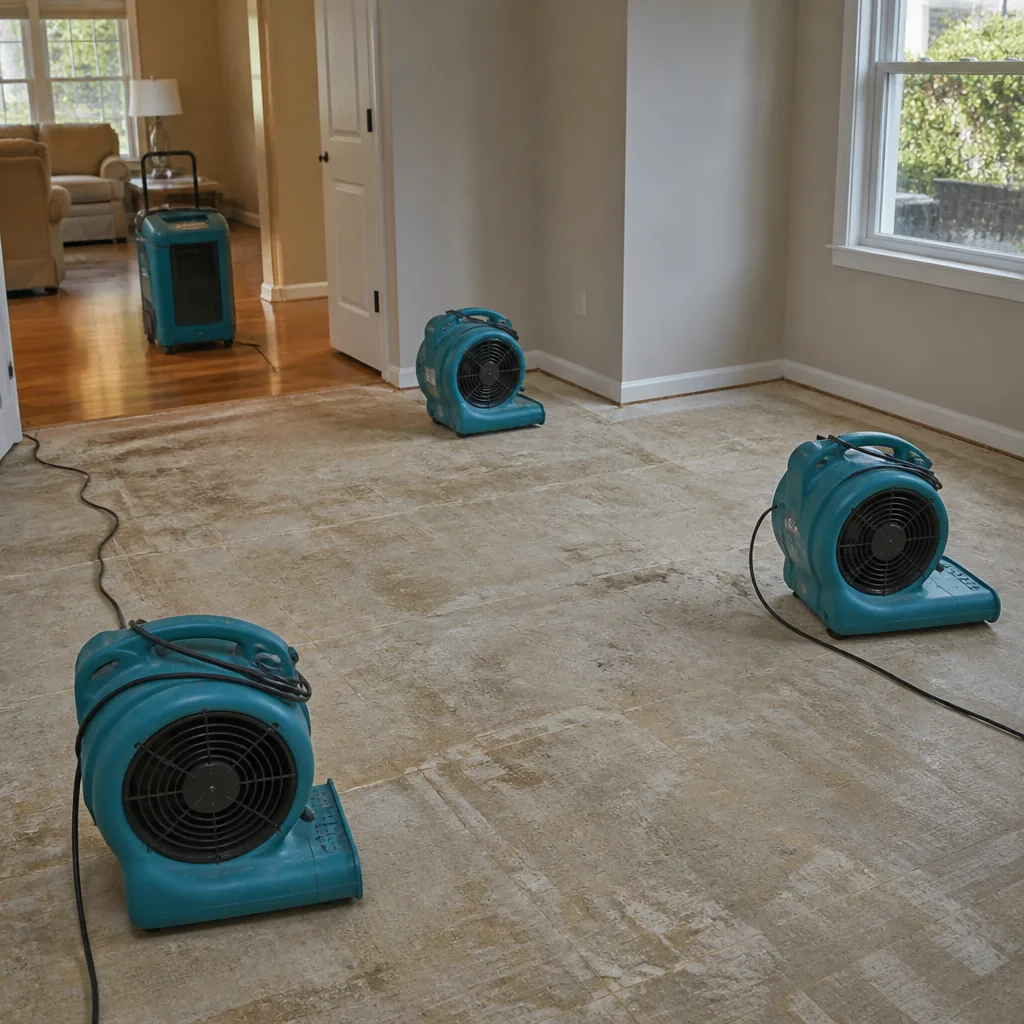 Water damage drying
 Fire & smoke cleanup
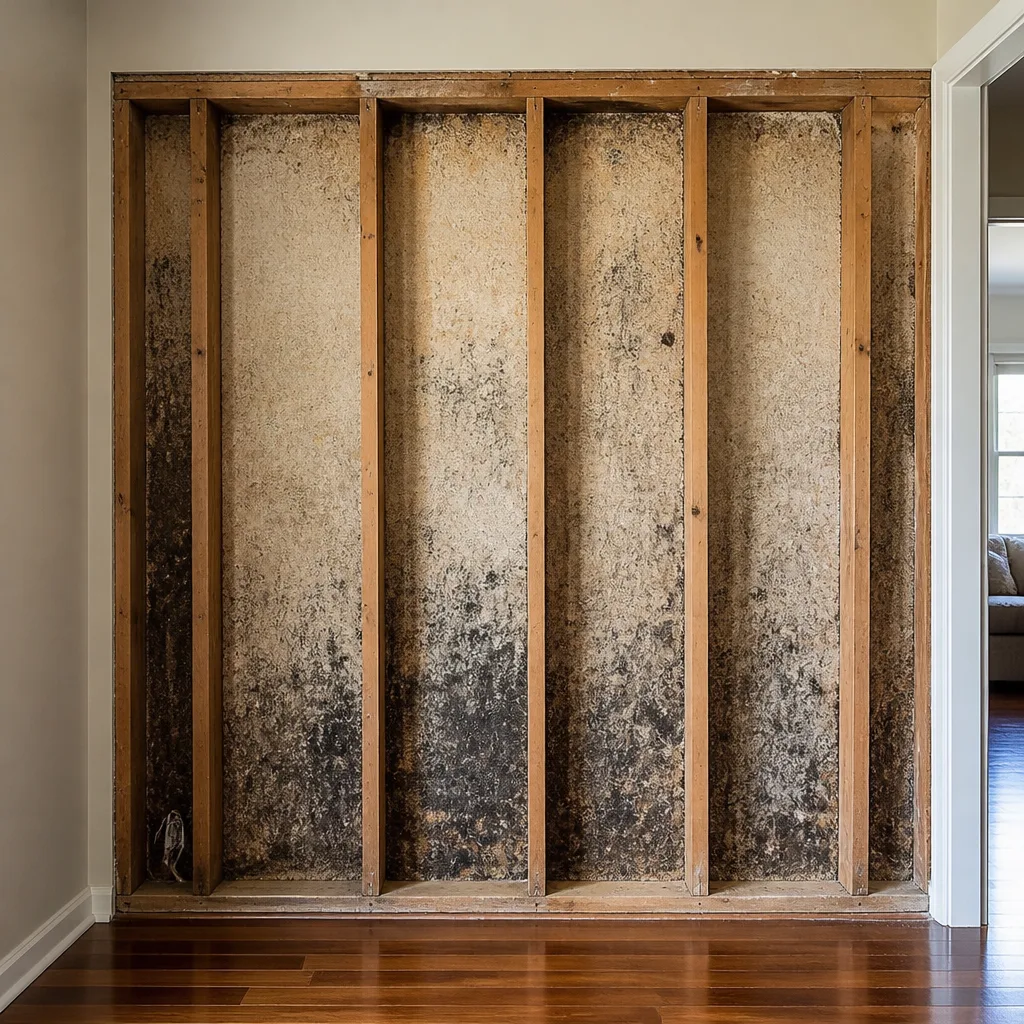 Mold remediation
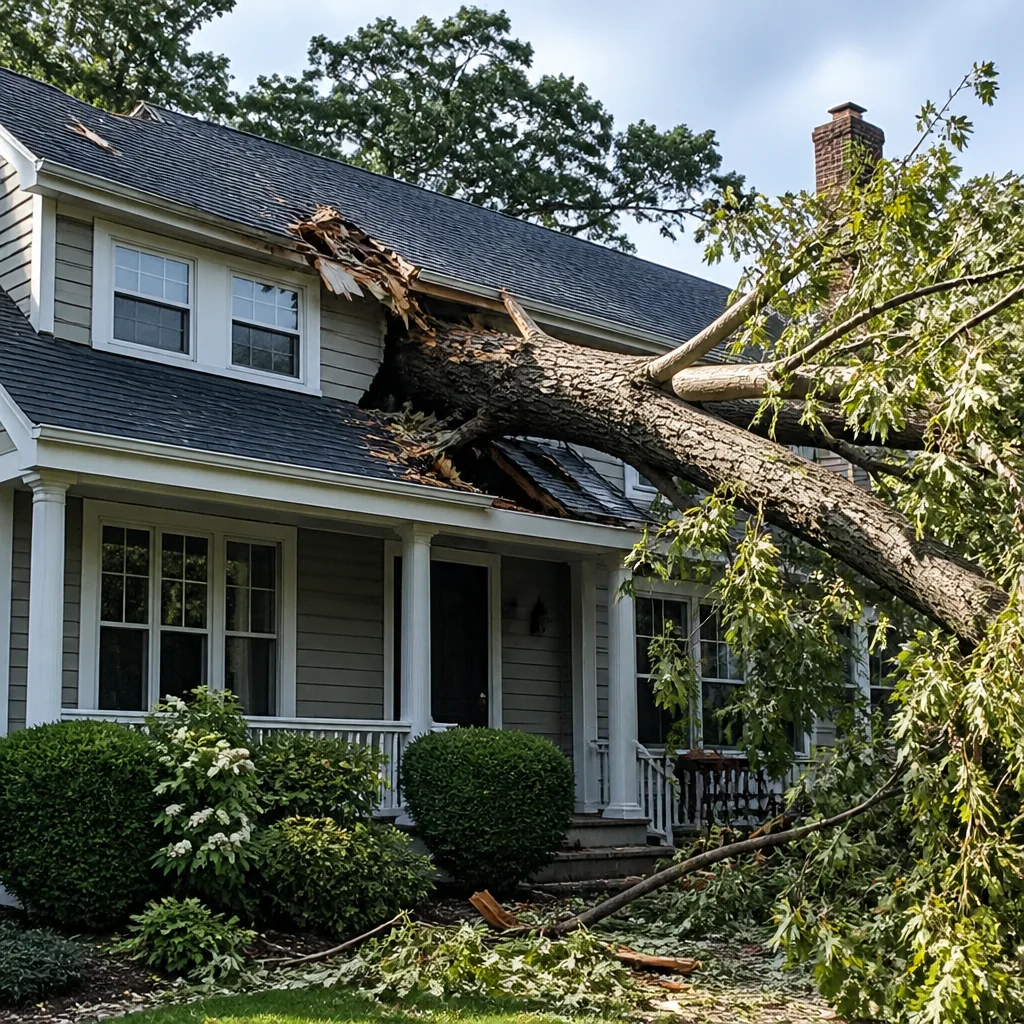 Storm response
 Sewage cleanup
 Reconstruction
Free visual inspection and a written scope of work before any mitigation begins - photos, moisture readings, and drying logs go in your claim file
The scope we write is the scope we bill. Anything new gets shown to you, in writing, before we touch it.
Get your free estimateDamage Restoration Cost Breakdown: The Houston Homeowner’s Reference for 2026
The single largest driver of restoration cost disputes in Houston is not fraud. It is a mismatch in terminology. Homeowners approve a scope of work without knowing that one line reading “structural drying” can legitimately range from $800 to $4,200 depending on square footage, material type, and the ambient humidity that Houston brings nearly every month of the year. This guide gives you the line-item vocabulary to evaluate any quote you receive, understand what labor, materials, and equipment hours should cost in the 2026 Houston market, and walk into a claim or a restoration conversation knowing exactly what you are paying for. For Damage Restoration Warning Signs: A Houston Homeowner’s Reference Guide, see our companion post. Written by a Houston restoration company that has priced thousands of local jobs, this is the reference we wish every homeowner had before water, fire, or mold forced the conversation.
Quick Answer
Water damage restoration in Houston typically costs between $2,400 and $7,800 for a Class 2 event affecting 300 to 500 square feet, with water extraction running $3.50 to $7.50 per square foot, structural drying billed at $125 to $275 per day per affected room, and antimicrobial treatment adding $0.75 to $1.50 per square foot. Mold remediation in Houston most often lands between $1,800 and $6,500 depending on containment requirements and colony size, while fire damage restoration runs $4,500 to $14,000 for a contained kitchen fire with smoke migration into adjacent rooms. These are 2026 Houston market ranges, and every one of them should be itemized in writing before any equipment enters your home.
Restoration work we handle
Table of Contents
- Water Extraction Costs in Houston: Per Square Foot and What Drives Them
- Structural Drying: The Line Item That Surprises Most Houston Homeowners
- Antimicrobial Treatment, Demo, and Haul-Off: Houston Pricing by Category
- Subfloor Replacement and Material Costs in the Houston Market
- How Xactimate Pricing Compares to Independent Houston Restorer Quotes
- IICRC S500 Water Classes: What Class 1, 2, 3, and 4 Mean for Your Bill
- Why Written-Price-First Protects You Financially
- Three Cost Items Houston Homeowners Most Often Pay Unnecessarily
Water Extraction Costs in Houston: Per Square Foot and What Drives Them
Water extraction is the first billable line on nearly every water damage invoice in Houston, and it is the one homeowners most often misunderstand. Extraction refers to removing standing water using truck-mounted or portable extraction units, and in the 2026 Houston market it runs between $3.50 and $7.50 per square foot for the affected area. A 400-square-foot living room with a ruptured supply line will most commonly fall between $1,400 and $3,000 for extraction alone.
What drives the range? Three things, mostly. The first is water depth. A half inch of water across a slab foundation in a Katy home extracts faster than three inches saturating carpet and pad in a Heights bungalow with a crawlspace. The second is access. Houston homes built on pier and beam present different extraction challenges than slab-on-grade construction common in newer neighborhoods like Sienna or Bridgeland. The third is the condition of the flooring. Carpet and pad can sometimes be extracted in place, while saturated laminate or engineered wood will often need to be pulled. Pulling material takes labor time, and that shows up as a separate line item.
In our experience at Tidemark Water Damage Houston home, extraction is rarely where invoices get inflated. It is the most physically verifiable work on the job. You can see standing water leave, and you can touch the floor afterward. The line items worth more scrutiny are the ones that follow: drying, antimicrobial work, and demolition.
One Houston-specific variable to understand: our clay soil and high water table mean that groundwater intrusion after heavy rain often carries silt, sewage cross-contamination, or both. If your extraction job involves groundwater, the water is classified as Category 3, and extraction costs trend toward the upper end of the range because the water itself requires different handling, containment, and disposal. A stormwater intrusion in Meyerland during hurricane season is a different job than a supply line break in a Kingwood kitchen.
Structural Drying: The Line Item That Surprises Most Houston Homeowners
Structural drying is exactly what it sounds like: the controlled removal of moisture that has wicked into drywall, baseboards, subfloor, framing, and the cavity spaces behind walls. In the 2026 Houston market, structural drying is most often billed between $125 and $275 per day per affected room, and a typical three-room event takes three to five days to reach dry standard.
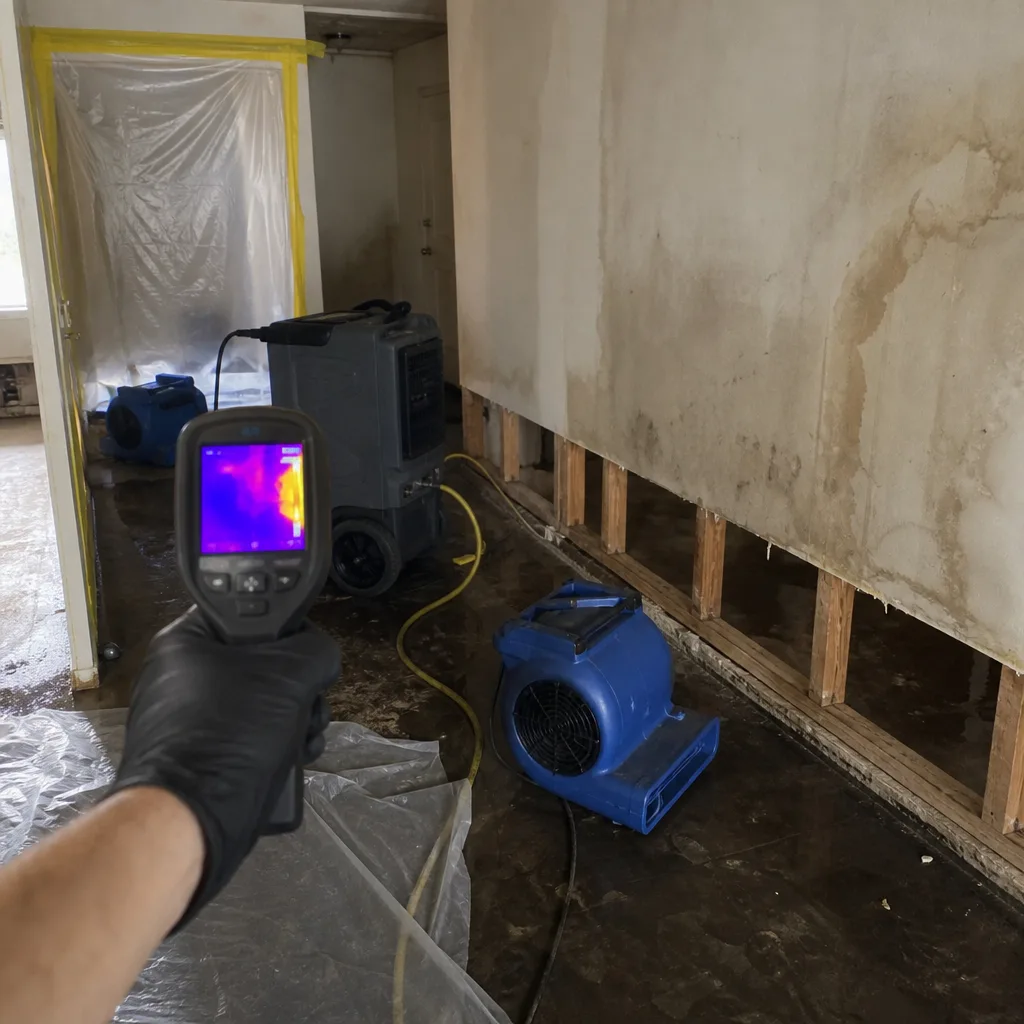
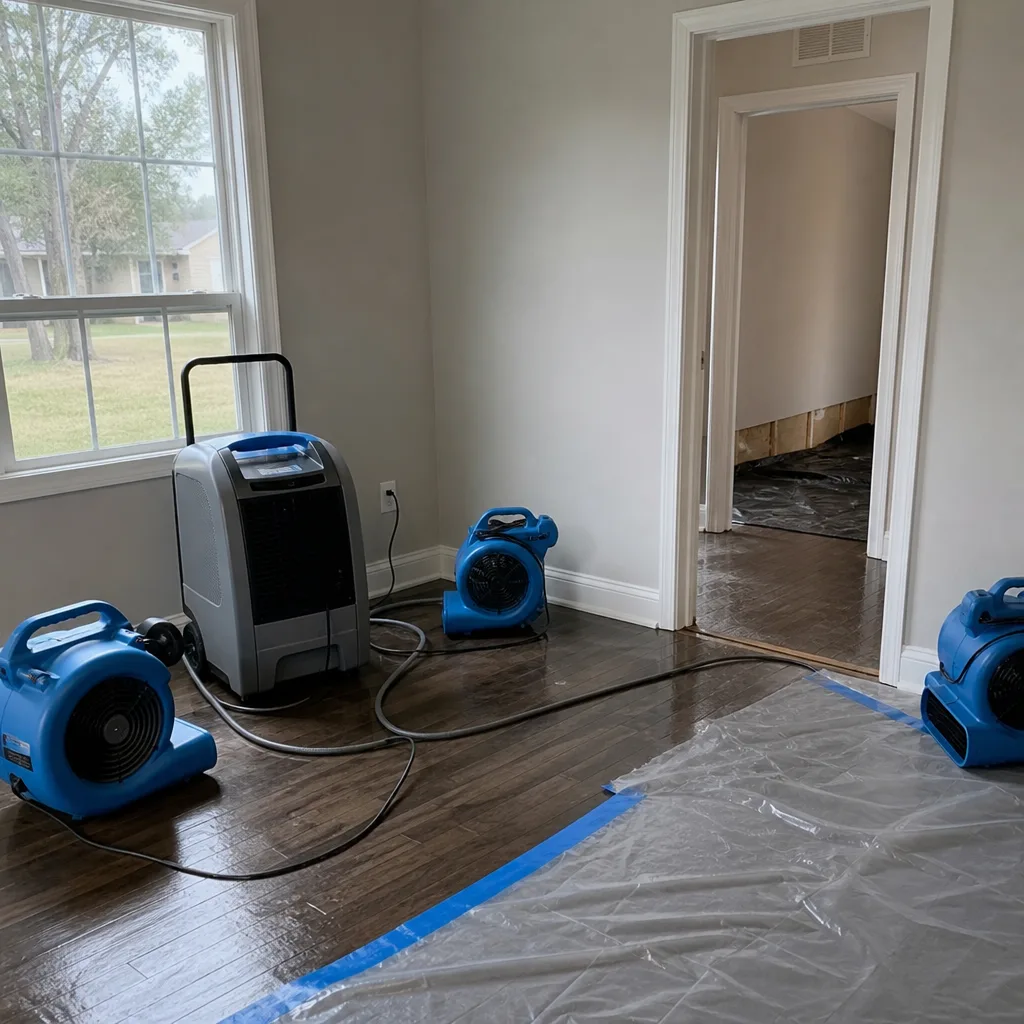
The surprise comes from the equipment. A proper drying setup uses centrifugal air movers, low-grain refrigerant dehumidifiers, and often a desiccant dehumidifier for dense materials or high-humidity Houston days. Each piece of equipment draws power, generates heat, and requires monitoring. A kitchen and adjacent dining room with water behind the baseboards might need six air movers and two dehumidifiers running continuously for four days. At $175 per day per room, that is roughly $2,100 over four days for the drying phase alone. On a $1,500 extraction job, that feels like a lot. But against the cost of missed moisture, which leads to mold, which leads to Mold Remediation in Houston starting at $1,800 and climbing, the drying line is the cheapest insurance most Houston homeowners will ever buy.
We run professional-grade drying equipment from Dri-Eaz, Phoenix, XPOWER, and B-Air. The Dri-Eaz and Phoenix units in particular are built for the humidity levels Houston sees from April through October. In our region, ambient moisture means the drying chamber inside your home must be held at a lower relative humidity than the outside air, and that takes commercial-grade dehumidification, not the unit you bought at a hardware store. This is one reason we covered DIY vs Professional Damage Restoration: The Houston Homeowner’s Decision Guide in depth.
A word on monitoring: legitimate structural drying includes daily moisture readings. You should see a technician with a penetrating moisture meter checking walls, flooring, and framing each day. If you are paying for drying and no one is taking readings, you are paying for equipment rental without verification, and that is a line item worth questioning.
Antimicrobial Treatment, Demo, and Haul-Off: Houston Pricing by Category
These three categories get bundled in quotes constantly, and they should not be. Each has its own cost driver, its own timing, and its own role in a Houston restoration job. Here is the 2026 breakdown by category:
- Antimicrobial treatment: $0.75 to $1.50 per square foot. This is the application of EPA-registered antimicrobial products to surfaces that came into contact with water, applied by spray, fog, or wipe. In Houston, where warm temperatures accelerate microbial growth, antimicrobial treatment is nearly always appropriate after Category 2 or 3 water events. We use pet-safe products where there is a choice, which matters in homes with children and animals, and we note the product name on the invoice.
- Demolition and debris removal: $2.50 to $6.00 per square foot of material removed. This covers cutting out wet drywall, pulling saturated insulation, removing baseboards, and pulling carpet and pad. Houston demolition costs run higher in older homes with plaster walls, which are common in neighborhoods like Montrose, the Heights, and parts of Bellaire. Plaster is heavier, dustier, and slower to remove than modern drywall.
- Debris haul-off and disposal: $175 to $450 per load, depending on volume and landfill fees. Houston disposal costs are generally moderate, but Category 3 material may require special handling. Most restoration companies in Houston bundle haul-off into the demolition line item, which is fine, but the load count should be visible on your quote.
The lesson here is not that these numbers are fixed. They are market ranges. But every one of them should be a separate line item, or at minimum a clearly itemized sub-allocation within a larger scope. A quote that says “mitigation: $6,500” with no breakdown tells you nothing about what is actually happening in your home. A quote that says “antimicrobial application, 420 sq ft, $525” tells you exactly what is happening, where, and for what price.
Subfloor Replacement and Material Costs in the Houston Market
Subfloor replacement is the restoration line item most likely to be necessary in Houston and most likely to be omitted from an initial scope. Here is why: Houston’s slab-on-grade construction means water that saturates carpet, pad, or engineered wood often has nowhere to drain. It sits against the slab, wicks into the subfloor material, and if that subfloor is particleboard, OSB, or plywood that has absorbed water beyond the point of drying, it needs to come out.
In the 2026 Houston market, subfloor replacement runs between $4.50 and $9.00 per square foot for material and labor, with the material itself accounting for roughly 40 percent of that cost. Plywood subfloor in a typical Houston home runs $1.80 to $3.50 per square foot, and the labor to remove damaged material, prep the joists, and install the new panel accounts for the rest. A 300-square-foot bedroom with a saturated plywood subfloor will commonly add $1,350 to $2,700 to a restoration invoice.
This is one of the reasons we insist on a written scope before any work starts. Subfloor damage is sometimes not discoverable until extraction and drying reveal what is underneath the flooring. A reputable Houston restorer will either identify subfloor replacement as a likely or possible line item in the initial scope, or will document the discovery with photos and provide a written change order before proceeding. For details on permits and compliance, read Damage Restoration Permits, Codes & Inspections in TX: What You Need to Know. No one should be discovering a $2,700 subfloor replacement on the final invoice. That is not how restoration should work, and it is not how we operate.
For Houston homeowners in flood-prone areas like Meyerland, the Energy Corridor, or parts of Kingwood, consider that floodwater subfloor replacement often extends beyond the room where water pooled. Floodwater travels, and slab foundations in Houston do not stop capillary wicking at the room threshold. A thorough moisture assessment is the difference between replacing a patch and replacing a connected span.
How Xactimate Pricing Compares to Independent Houston Restorer Quotes
Most Houston homeowner insurance claims involving water or fire damage are priced using Xactimate, the software platform used by insurance adjusters and the restoration contractors who work with them. Xactimate maintains a regional pricing database for every restoration line item, adjusted by ZIP code. This matters to you for one specific reason: the price your insurer is willing to pay is often derived from Xactimate, while the price an independent Houston restorer quotes may be built from direct labor costs, local material pricing, and equipment overhead.
The gap can cut both ways. In some Houston ZIP codes, Xactimate structural drying rates run slightly below what an independent restorer charges, because the software rounds down on labor efficiency assumptions that do not account for the extra extraction time Houston humidity demands. In other cases, the Xactimate line item for a given task runs higher than a local restorer would quote for the same work because the software includes padding for unfamiliar conditions that an experienced Houston company does not actually need.
What should you do with this information? Three things. First, ask any restorer whether they work with Xactimate, and if they do, ask to see the line items side by side with their own estimate. A professional Houston restoration company will not flinch at that request. Second, understand that the adjuster’s job is to approve what the policy covers, not necessarily what your home needs. The difference between those two things is often visible in the line items: if Xactimate approved 3 days of drying and your restorer is telling you 5 days are needed, the documentation matters. We photograph and document moisture readings daily specifically so that the documentation stands up in exactly that conversation. Third, and most important: do not let the insurance process convince you that the invoice price and the check price are the same number. They are often not, and the difference is borne by someone. Knowing the market ranges in this guide is how you make sure that someone is not you.
IICRC S500 Water Classes: What Class 1, 2, 3, and 4 Mean for Your Bill
The IICRC S500 Standard for Professional Water Damage Restoration classifies water intrusion into four classes, and that classification is the single biggest determinant of your total restoration cost in Houston. Here is what each class means, and what it means for your invoice:
- Class 1: Minimal absorption. Water affected a small area, materials are low-porosity, and little moisture has wicked into structures. Think a supply line leak caught within an hour on tile flooring. Houston cost range: $1,200 to $2,800 for a typical contained event. These jobs sometimes need extraction and 2 to 3 days of drying.
- Class 2: Significant absorption. Water affected a whole room of carpet or porous flooring, and moisture has wicked into walls up to 24 inches. This is the most common classification in Houston homes. Cost range: $2,400 to $7,800 for a 300 to 500 square foot event. Expect extraction, 3 to 5 days of structural drying, antimicrobial treatment, and sometimes baseboard removal and reinstallation.
- Class 3: Greatest absorption from above. Water came from overhead, saturating ceilings, walls, insulation, flooring, and subfloor. A second-floor pipe break that drains into the first-floor kitchen is a Class 3 event. Cost range in Houston: $5,500 to $14,000. These jobs almost always involve significant demolition and multiple days of aggressive drying with desiccant equipment.
- Class 4: Deep holding in dense materials. Water is trapped in materials with low permeability like hardwood, plaster, brick, or concrete. Class 4 drying requires specialized equipment, often including Injectidry panel drying systems or desiccant dehumidifiers, and takes the longest. Cost range: $6,000 to $18,000 or more depending on square footage. Hardwood floors in Houston’s older homes in West University or River Oaks are common Class 4 candidates, because dense wood holds moisture stubbornly and the Houston humidity works against drying every hour the equipment is running.
Here is the point for a Houston homeowner: the class assignment is not incidental information. It is the basis for the price. If an estimate does not tell you what class your water damage is, ask. The answer tells you whether the restorer has actually assessed the property or just quoted a number.
Why Written-Price-First Protects You Financially
A written price before work begins is not a courtesy. It is the single most important financial protection a Houston homeowner has in a restoration. Every Water Damage Restoration in Houston job starts with a piece of paper, or it should. Here is what happens when it does not.
Verbal estimates are memory-shaped. The technician says “somewhere around $3,000.” You hear “about $3,000.” The invoice arrives at $5,200, and now you are arguing about what was said in a panicked moment when water was still pooling in your hallway. That is not a negotiation; it is a stress test at the exact moment you should be focused on getting your home dry. The written-price-first standard eliminates this dynamic. The number is on the page before the equipment comes off the truck. The scope is in writing. Any change to that scope comes as a written change order, and nothing gets added without your signature.
There is a second, subtler protection in written-price-first: it forces the restorer to think through the actual job before starting. When a company has to commit to a number up front, they measure the affected area, assess the water class, check moisture readings, and account for Houston’s ambient humidity. They plan the drying layout, count the equipment, and schedule the monitoring visits. That plan is the thing you are paying for. Without it, you are hiring someone to improvise in your home, and improvisation is expensive.
Tidemark Water Damage Houston was founded in 2006, and the written-price-first standard has been our practice since the first job. It is not a policy we follow when it is convenient. It is the entire financial arrangement. Every job gets a written scope and a written price before anything starts, every time, with no exceptions. If a restoration company in Houston will not give you that, call someone who will.
Three Cost Items Houston Homeowners Most Often Pay Unnecessarily
We are going to tell you something that costs us money in the short term and earns trust in the long term. In the Houston restoration market, there are three line items homeowners pay for far too often.
- Unnecessary mold testing during active drying. Mold testing during water mitigation is usually premature. The priority in the first 72 hours is drying. If a company wants to run a full mold sampling panel the day after a pipe break, before drying is complete, ask why. The time for mold assessment is after dry standard is achieved, or if visible mold is already present. We are credentialed through the IICRC and RIA, and the honest guidance is this: dry first, assess after. Most Houston mitigation jobs do not need mold testing at all.
- Premature rebuild scheduling. Restoration is not reconstruction. The drying phase is finished when moisture readings confirm it is finished. What we see in Houston from time to time is restoration companies scheduling rebuild, painting, or flooring installation before the structure has hit dry standard. This guarantees a callback. A moisture-locked subfloor will ruin new flooring every time. If a company is trying to schedule your rebuild while dehumidifiers are still running, slow down and ask for the moisture log.
- Redundant equipment placement. More air movers does not mean faster drying, and more dehumidifiers running past the point of diminishing returns does not mean better drying. It means a higher daily bill. A legitimate Houston restoration plan places equipment based on psychrometric calculation, not on the number of units that fit in the truck. We use Dri-Eaz, Phoenix, and XPOWER equipment, and we place each unit where the moisture map says it belongs, not where it looks impressive in a photo.
The common thread in all three: knowledge protects you. When you know what drying looks like, what testing timing makes sense, and how equipment placement works, you stop being a payer and become a customer.
Common Mistakes to Avoid
- Approving a scope you have not read. Houston homeowners in a hurry sign authorization forms without reading the line items. If the scope says “drying as needed” with no dollar cap, you have signed an open check. Every line item should have a number or a range attached, in writing, before you sign.
- Choosing a restorer by the first number quoted. The lowest quote in Houston is sometimes the right one, but more often it reflects an incomplete scope. A $2,100 mitigation quote that does not include subfloor replacement on a saturated slab is a $2,100 quote that will grow. Compare line items, not totals.
- Not asking about the water class. The IICRC S500 class assignment is the single most informative piece of information on any water damage estimate. No class listed, no assessment done.
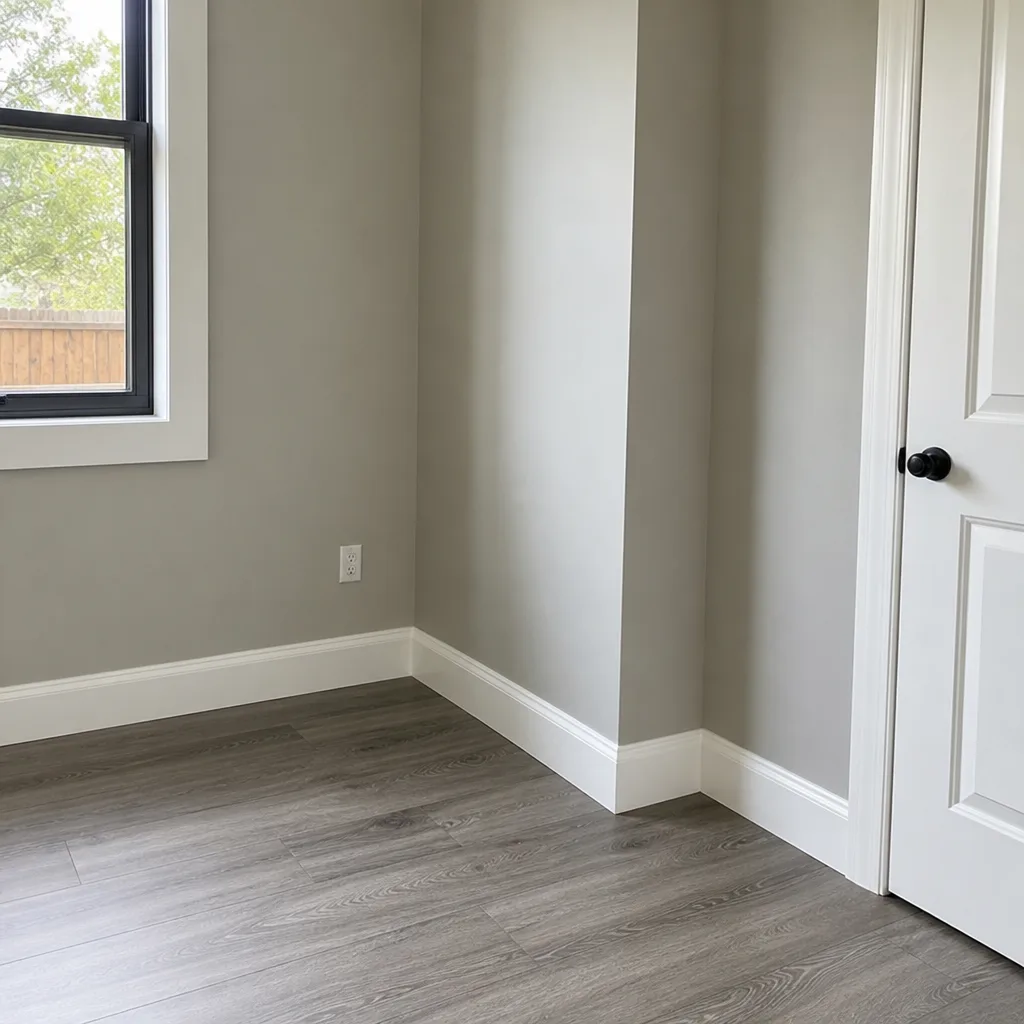
- Letting insurance paperwork replace your own documentation. You should receive photos of the damage, the drying setup, the moisture readings, and the final condition. A restorer who documents well makes your insurance conversation easier. We take a photo of the clean-up and share it before the crew leaves, so the homeowner sees exactly what was done and how it was left.
- Rushing the drying phase because it feels slow. Drying in Houston takes what it takes. Pulling equipment early to save money or speed things up is how mold becomes a $4,000 problem in a house where a $2,800 problem was nearly solved.
- Not asking what products will be used. If you have kids or pets, the antimicrobial agent matters. Ask for the product name. We use pet-safe drying agents where there is a choice, and lower-decibel settings during school hours and nap time. Your restoration company should be able to answer this question without hesitation.
- Hiring a company that cannot explain the tide mark. A tide mark is the line water leaves on a wall. It is the first thing our technicians look for on every job. If a company cannot tell you what they are looking for and how they find the edges of water travel, they are not drying past the visible line. That is the difference between drying the puddle and drying the property.
See the difference
 Before
 After
After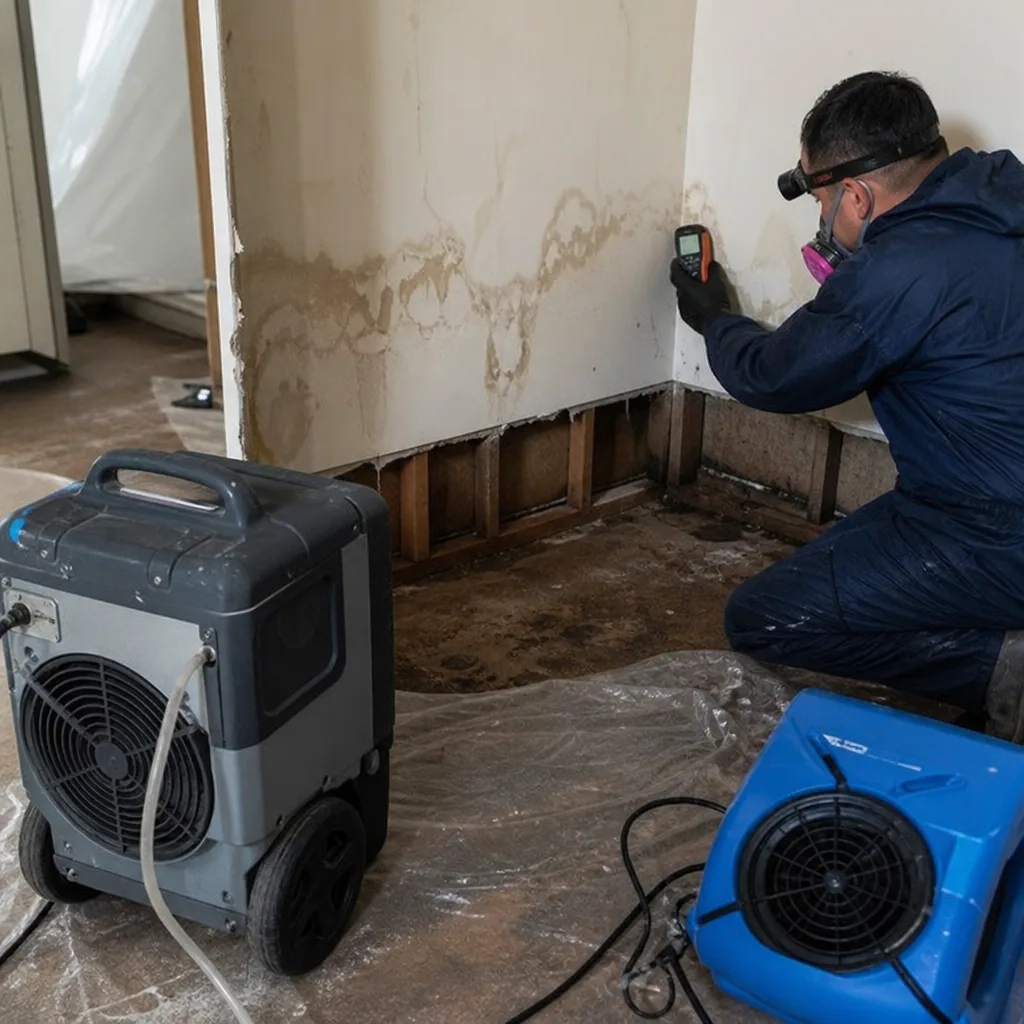 Before
 After
After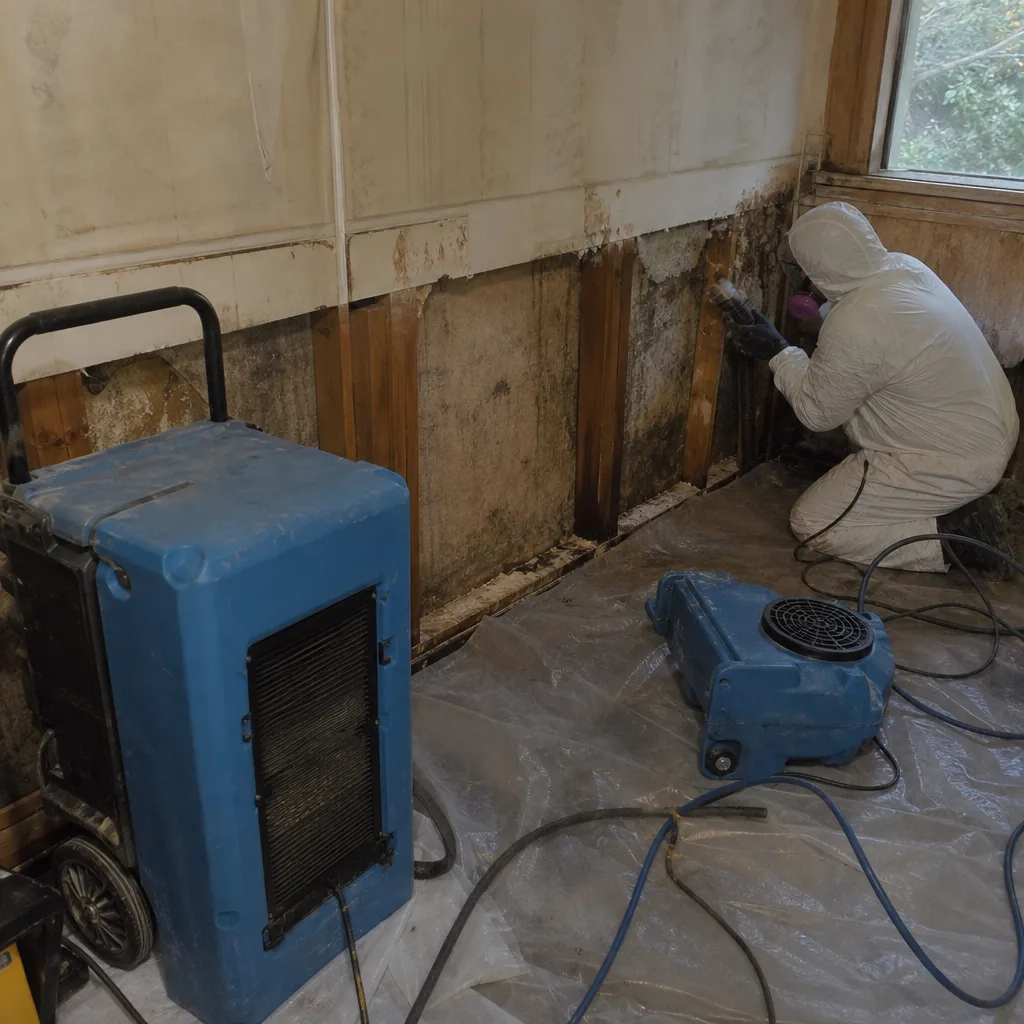 Before
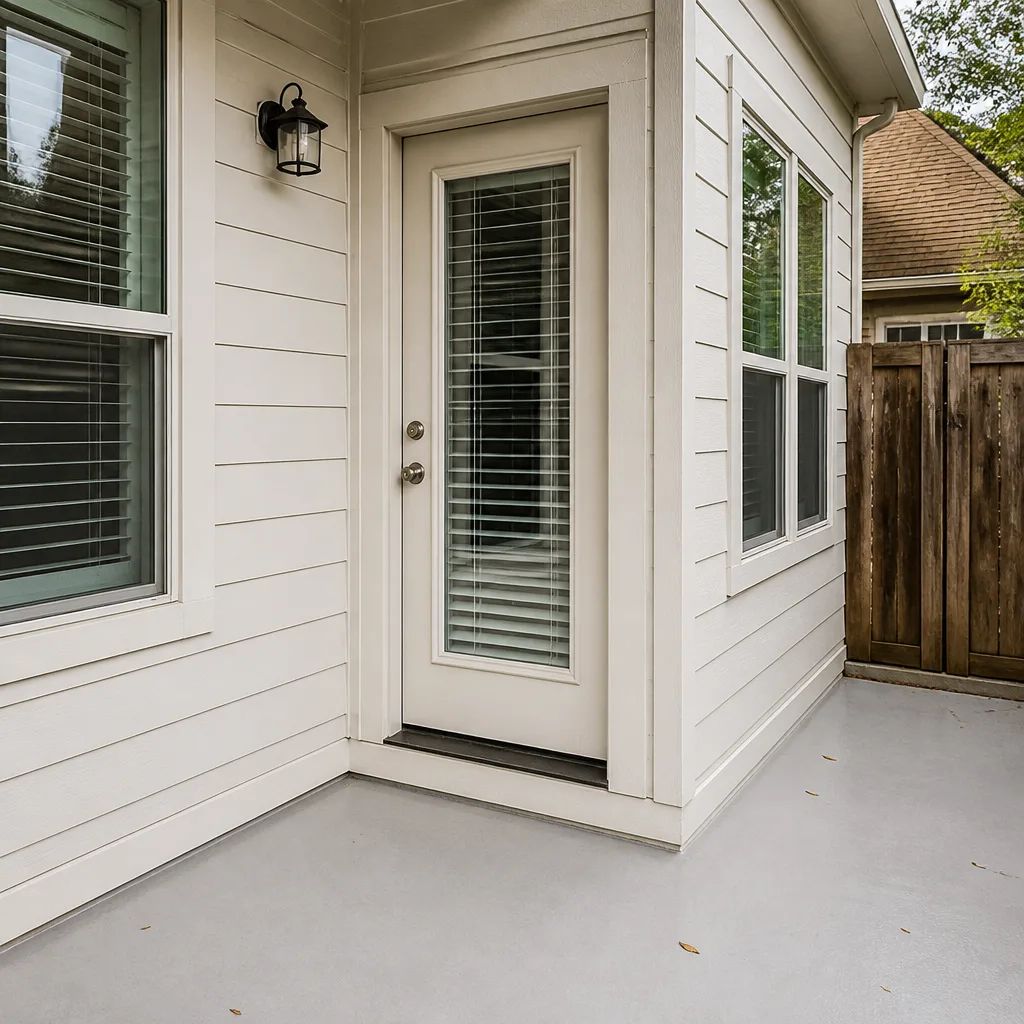 After
AfterWhen to Call a Professional
Call a professional when water has been sitting for more than a few hours, when the water came from outside the home, when it involves sewage or a toilet overflow, when flooring is saturated, when drywall is wet above the baseboard, or when you smell something that was not there yesterday. Call the same day. Houston’s heat does not wait, and neither does microbial growth. A professional restoration company will assess the water class, create a written scope, and give you a number before any work begins. For Fire Damage Restoration in Houston, call after the fire department clears the home and before the smoke residue has time to set into painted surfaces. Tidemark Water Damage Houston offers free estimates in Houston. Call (325) 423-6800 and a live person will answer, day or night.
Frequently Asked Questions
Water damage restoration in Houston costs between $2,400 and $7,800 for a typical Class 2 event affecting 300 to 500 square feet, with larger or more severe events running $5,500 to $18,000. The final number depends on the IICRC water class, the square footage affected, the flooring type, and how quickly drying begins. Call (325) 423-6800 for a written price specific to your home, free of charge.
A restoration company with 24/7 live dispatch can typically have a technician on site in Houston within 60 to 90 minutes. The response time matters, because every hour of standing water in a Houston home with the air conditioning off increases the saturation depth and the drying time. We answer the phone with a live person around the clock at (325) 423-6800.
Most Houston homeowners policies cover sudden and accidental water damage, such as a burst pipe or supply line failure, but do not cover gradual leaks, lack of maintenance, or groundwater flooding without a separate flood policy. The restoration company should document the damage with photos and moisture readings that you can provide directly to your adjuster. We coordinate with adjusters and provide the documentation that makes the claim conversation straightforward.
Household fans and open windows do not dry cavities, subfloor, or the space behind baseboards, and they do not control the humidity that Houston brings into the house through every open window. Structural drying is the cheapest version of protecting your home from what comes after incomplete drying. In our experience, water left to air-dry in Houston becomes mold more often than not.
No. Mold testing during active drying is usually premature and often unnecessary. The appropriate time for mold assessment is after dry standard is achieved, unless visible mold growth is already present. A credentialed restorer will tell you whether testing is warranted on your specific job, and will not sell you a test you do not need. Call (325) 423-6800 to talk through your situation with someone who will give you a straight answer.
You do, with support from your restoration company. The homeowner is the policyholder, and the adjuster answers to you and your insurer. A good Houston restoration company will provide documentation, meet the adjuster on site if helpful, and help you understand the line items in both the scope and the settlement. We have been doing this in Houston since 2006 and know what adjusters need to see.
The Bottom Line
Restoration costs in Houston are legitimate when they are itemized and suspect when they are not. The homeowners who come through water, fire, and mold events with the least financial damage are the ones who understand the vocabulary: extraction, structural drying, antimicrobial treatment, demo, subfloor, water class, and change order. They get a written price before work starts. They ask about the moisture log. They know what Dri-Eaz and Phoenix equipment is doing in their home and why the humidity matters. They do not rush the drying and they do not skip the documentation. They treat the invoice as a document they have read, not a number they are handed. That is the entire purpose of this guide, and it is the standard we hold ourselves to in every Houston home we step into. Explore more guides & resources on protecting your home.
Written by Rick Sumner, Owner at Tidemark Water Damage Houston, serving Houston since 2006.