
 Water damage drying
 Fire & smoke cleanup
 Mold remediation
 Storm response
 Sewage cleanup
 Reconstruction
Free visual inspection and a written scope of work before any mitigation begins - photos, moisture readings, and drying logs go in your claim file
The scope we write is the scope we bill. Anything new gets shown to you, in writing, before we touch it.
Get your free estimateFast, Reliable Mold Remediation Across Deer Park
Mold remediation in Deer Park typically costs between $1,800 and $6,500 depending on the affected square footage, with inspection and testing running $350 – $700. Most jobs can be quoted same-day and work begins within 24 – 48 hours of your call to (325) 423-6800. We know Deer Park’s older slab homes and we know what the Ship Channel air leaves behind. Our crews carry moisture mapping equipment, containment materials, and the right antimicrobial treatments for this city’s specific conditions. Call us and you’ll speak with a live person who understands what you’re dealing with, not a call center.
Why Tidemark Water Damage Houston Is Deer Park’s Preferred Mold Remediation Company
We’ve spent years working inside Deer Park homes, from College Park’s 1960s brick ranches to the newer subdivisions along Center Street. That local experience changes how we approach every job. Rick Sumner, who leads our team, has been clear since the beginning: a written price comes before any work starts, and a photo of the finished clean-up gets shared before the crew leaves. No exceptions.
Our technicians are background-checked, uniformed, and credentialed through the IICRC, RIA, and IFA. They arrive with shoe covers and drop cloths already on the truck. For Deer Park families with kids and pets, we use pet-safe antimicrobial products where there’s a choice and run equipment at lower-decibel settings during nap hours when we can. The 365-Day Done Right Promise covers every mold job we complete in Deer Park. If it’s not done right, we make it right.
See more about our full Mold Remediation process and what to expect from inspection through clearance testing.
Restoration work we handle
Mold Inspection in Deer Park
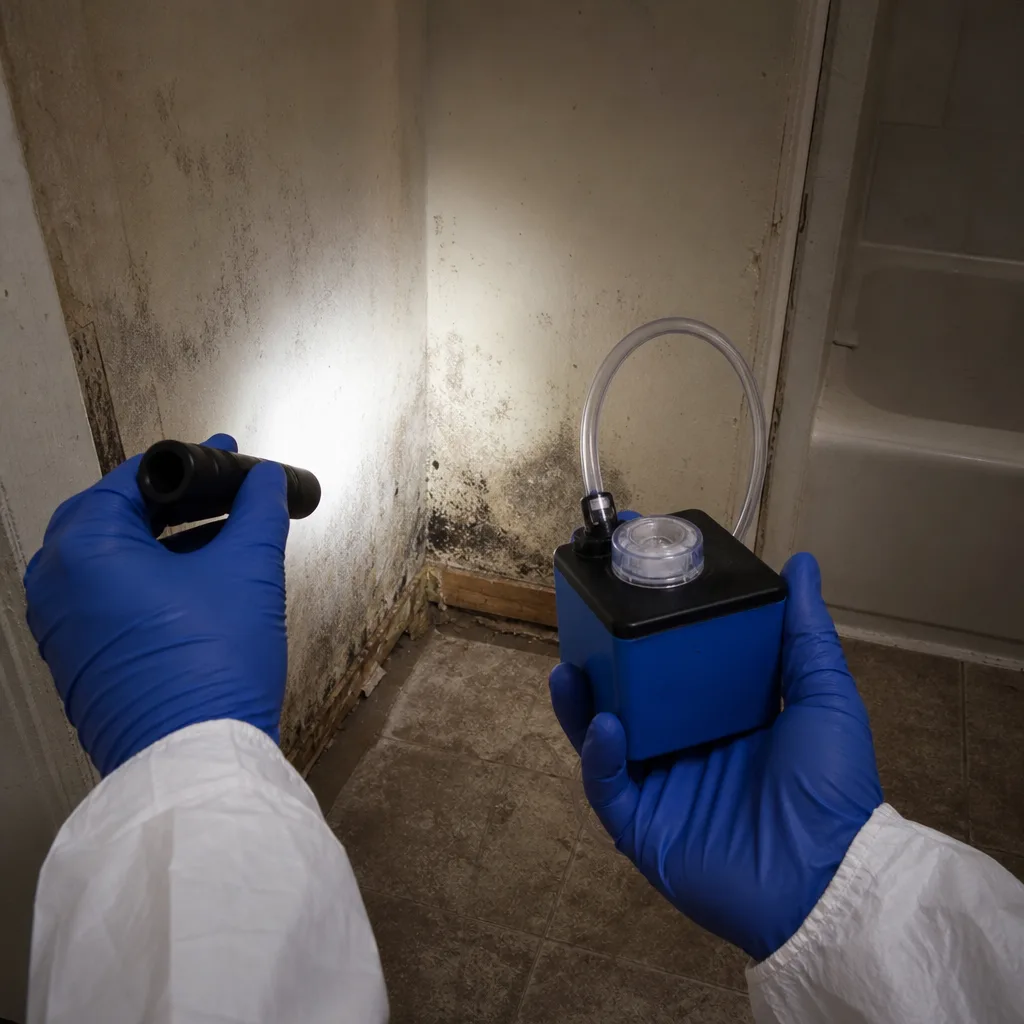
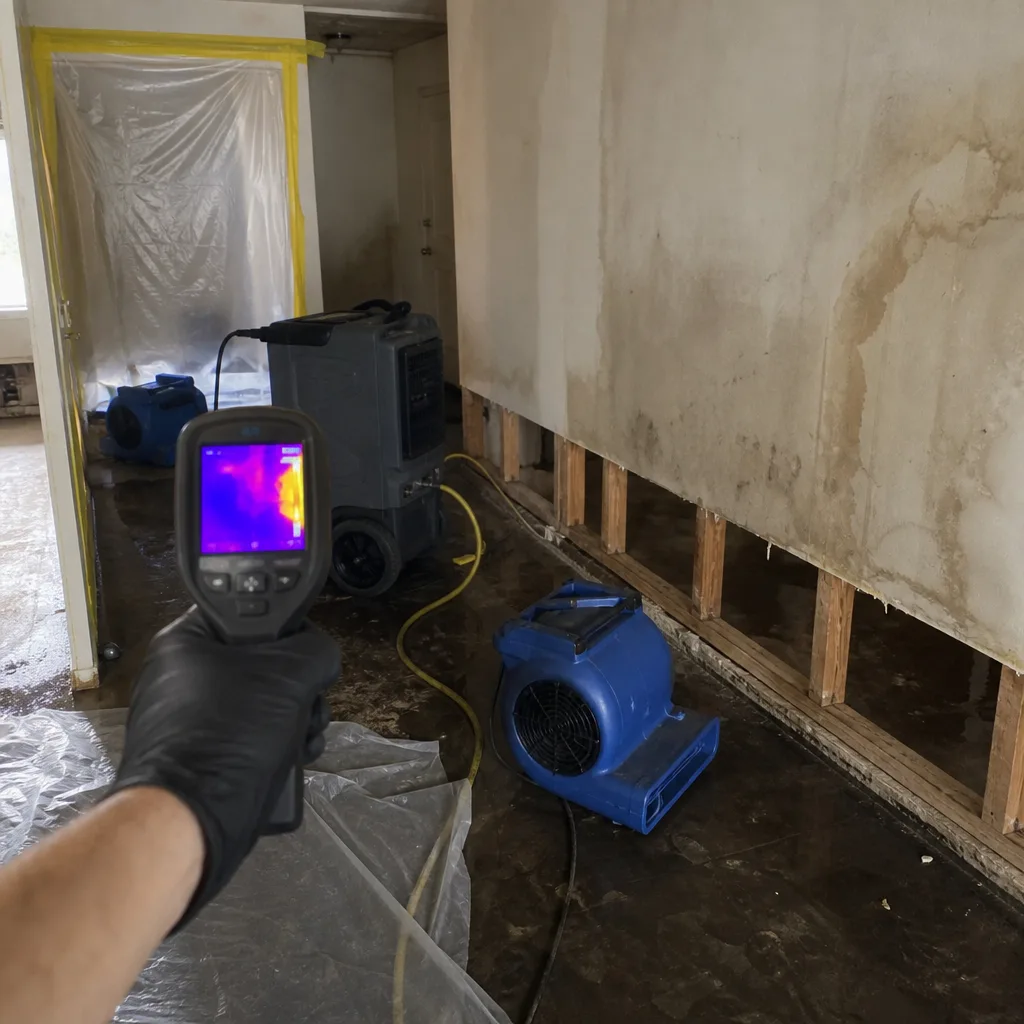
Mold inspection in Deer Park starts with a visual assessment of the affected area, moisture readings across walls and slab edges, and air or surface sampling when the situation calls for it. In Deer Park, we pay special attention to what’s bonded to the mold, because airborne fallout from the Ship Channel corridor can complicate what appears to be a straightforward bloom. A standard inspection here runs $350 – $700, and you receive a written scope of what we found before any remediation work is proposed.
When You Need Testing Before Removal
If you smell mustiness but can’t see visible growth, or if someone in the home has unexplained respiratory symptoms, testing tells us what we’re actually dealing with. We collect samples and send them to an independent lab. You get the results, not a sales pitch.
What to Do Before We Arrive
Don’t disturb visible mold. Leave it alone and keep doors closed to that room if you can. Turn off the HVAC fan so spores aren’t circulated, and keep kids and pets away from the area. We’ll handle containment when we arrive.
Mold Removal Specialist in Deer Park
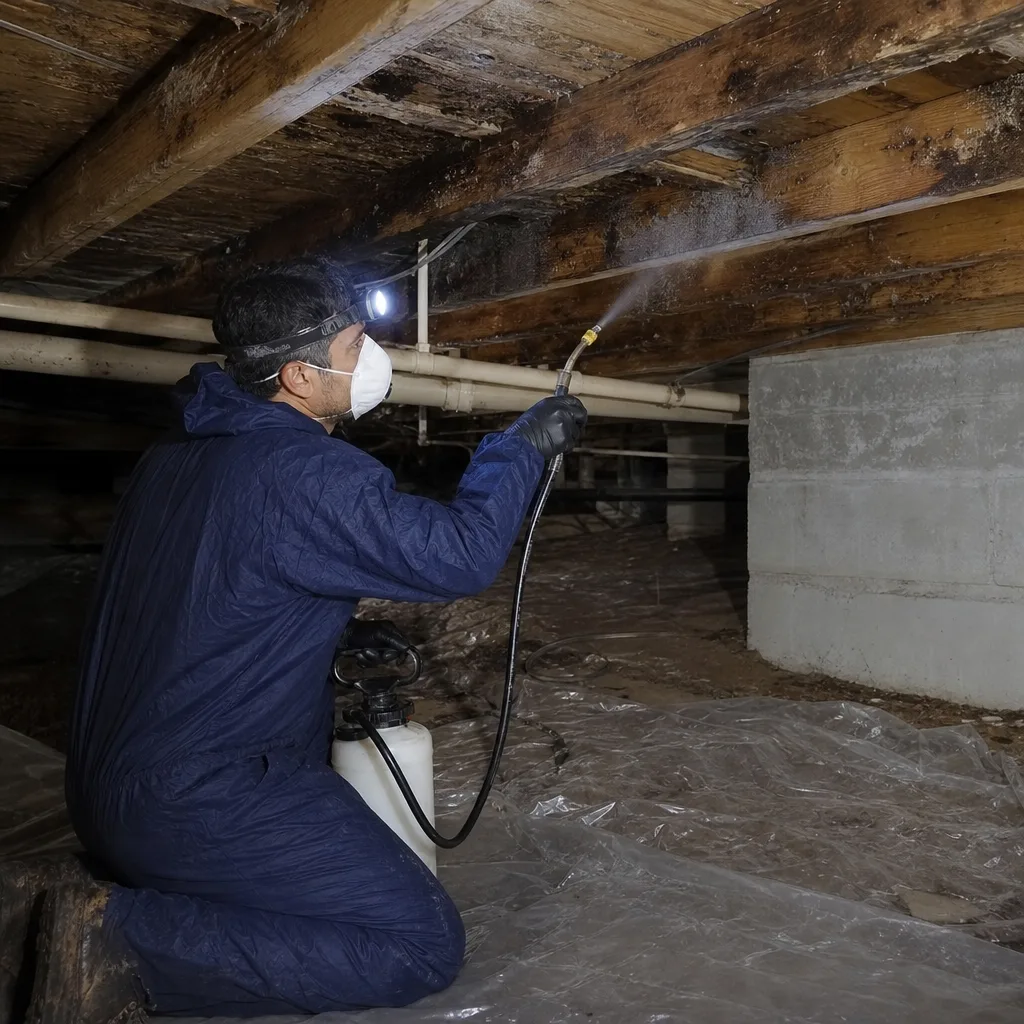
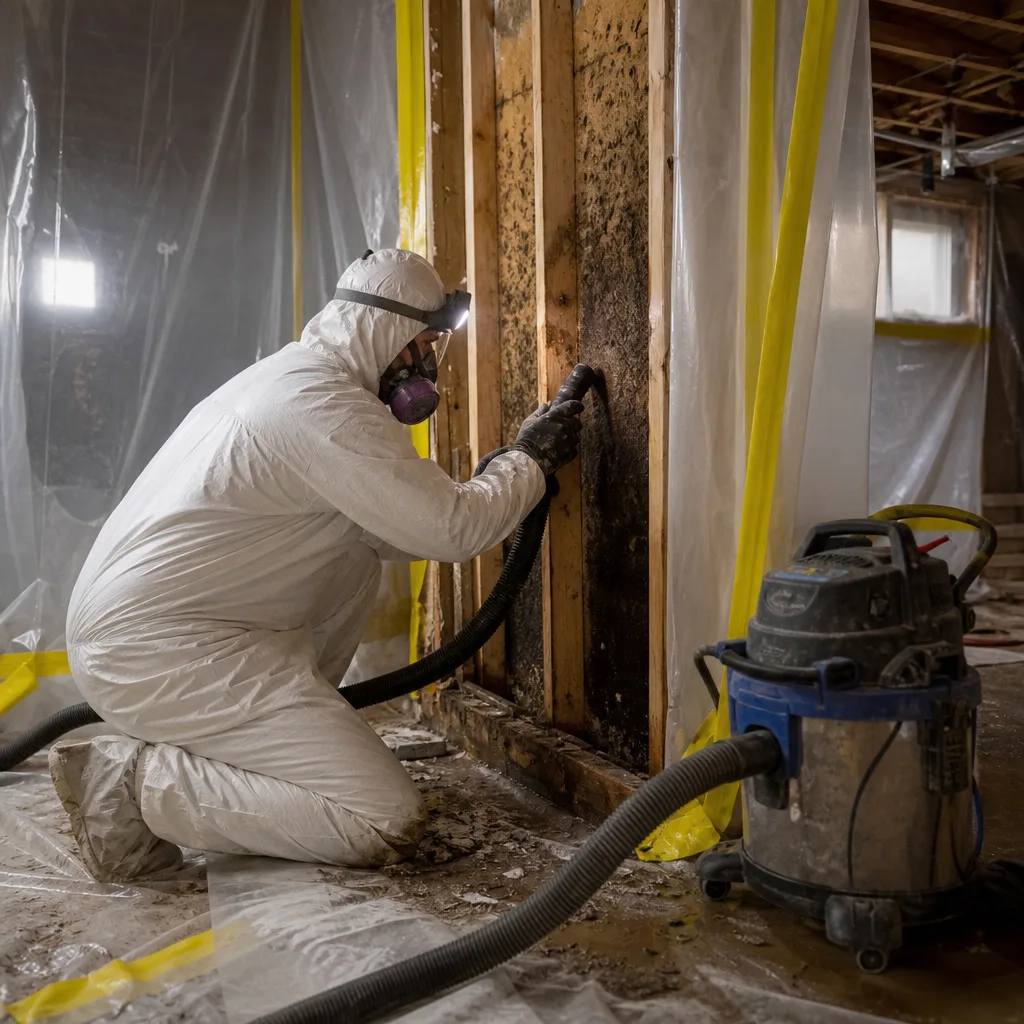
A mold removal specialist in Deer Park handles containment, source removal, antimicrobial treatment, and structural drying under negative air pressure where needed. Most single-room jobs in Deer Park homes run $1,800 – $4,200. Full attic or crawl space work runs higher, typically $5,000 – $8,500, especially in older slab homes where drainage and vapor barriers need attention. Every removal job includes a written price before we start and a photo record of the completed work.
Removing Mold Without Damaging Your Home
Shoe covers go on at the door. Drop cloths cover the floor before the first piece of equipment comes in. We ask before we move furniture or pull back carpet. The goal is to remove the mold and leave your home looking like we were never there, minus the problem.
Why Older Deer Park Homes Need a Different Approach
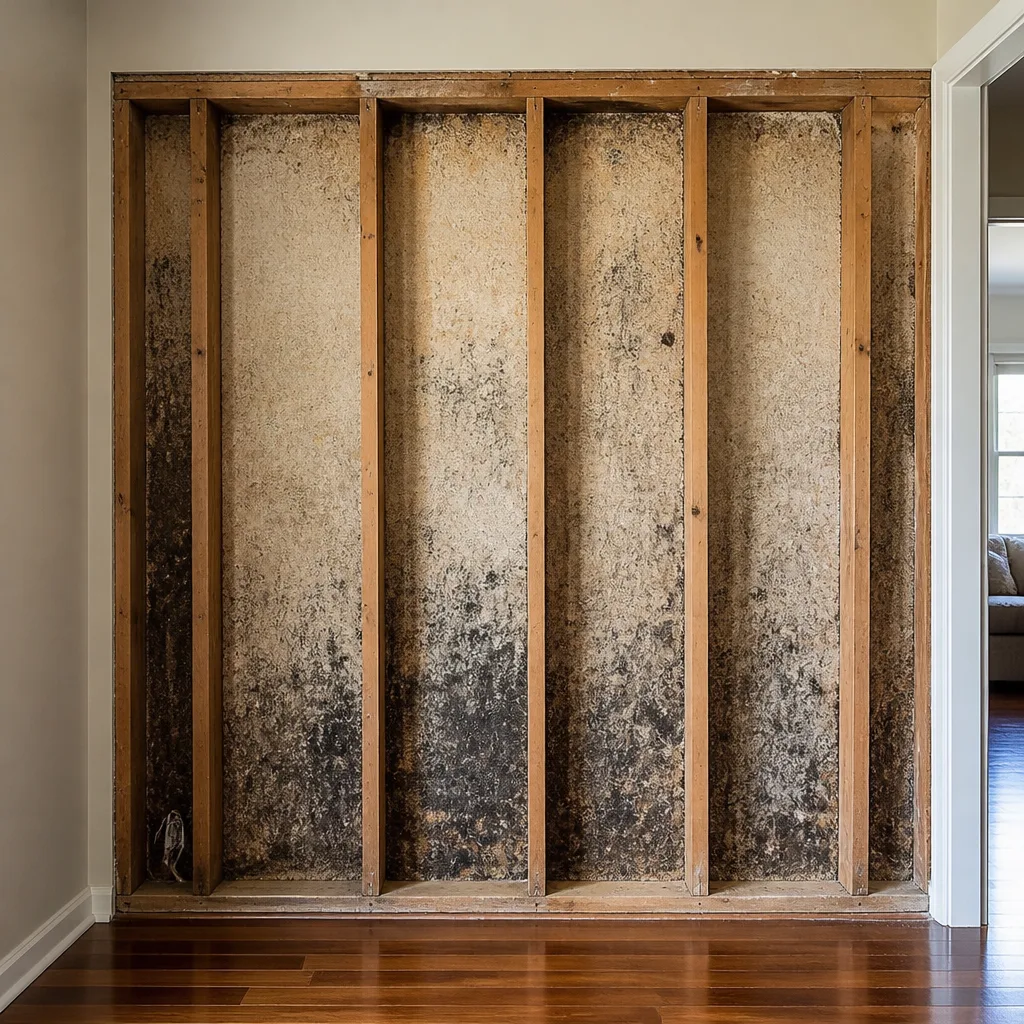
Homes built between the 1950s and 1980s often have brick veneer over wood framing. That wall assembly dries slowly in Deer Park’s year-round humidity. We use moisture meters and longer drying logs for these assemblies, because a one-size-fits-all approach leaves hidden moisture behind baseboard and crown molding. That’s how mold comes back three months later.
Trusted Brands We Service in Deer Park
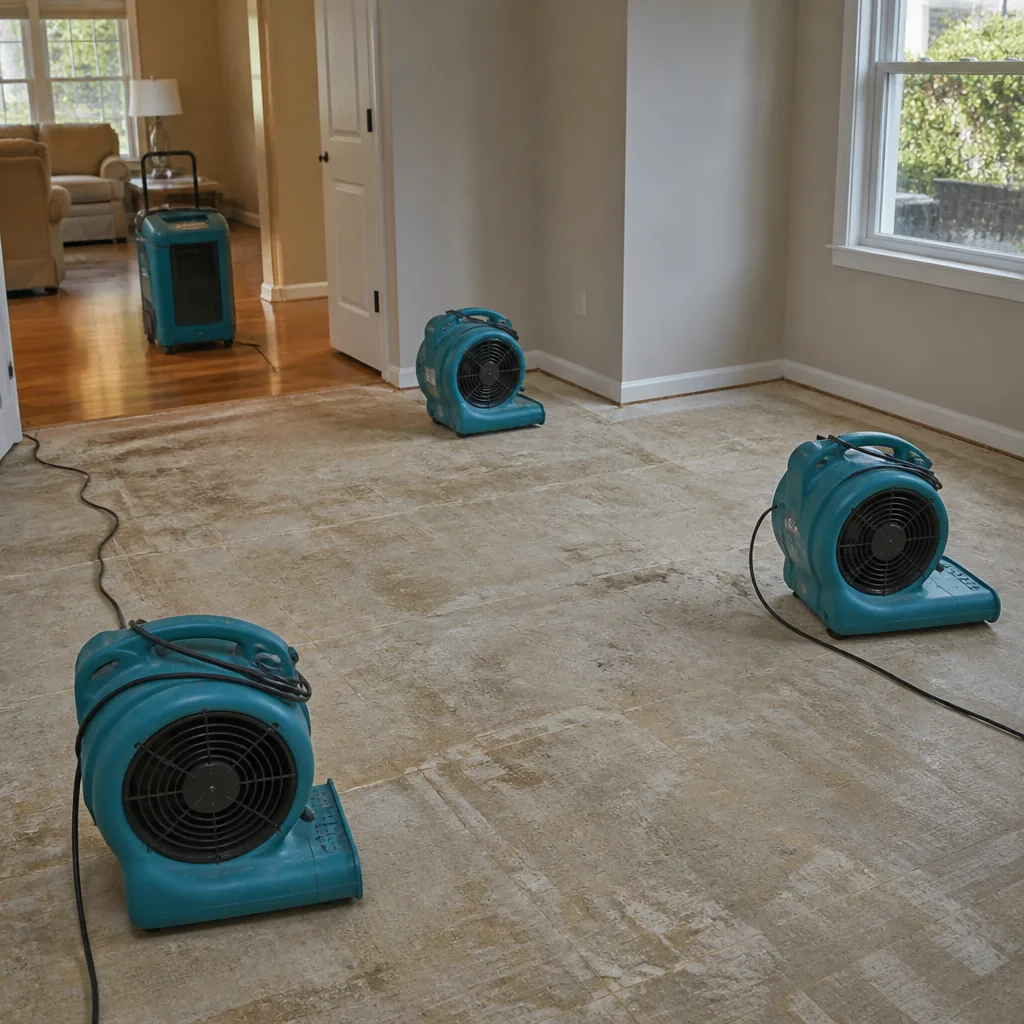
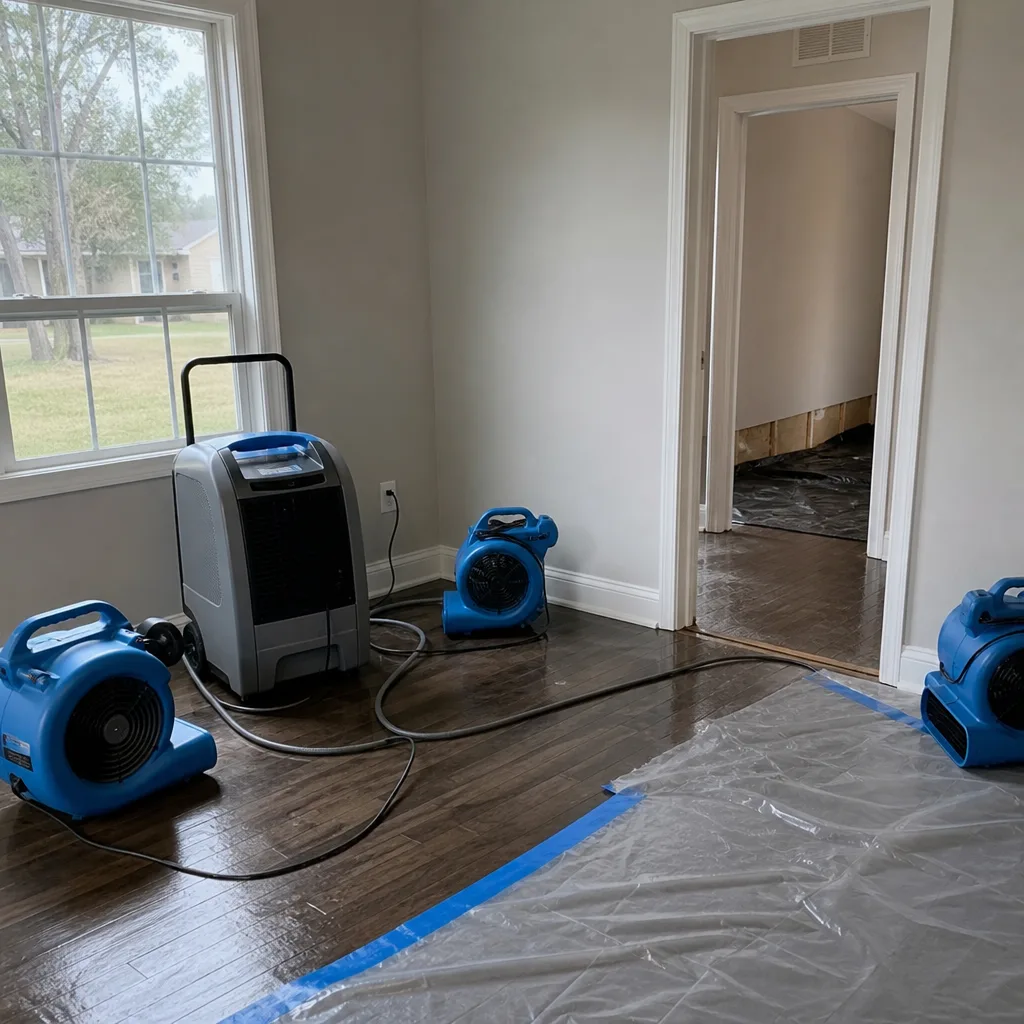
We run professional-grade drying equipment from Dri-Eaz, Phoenix, B-Air, and Injectidry on our Deer Park jobs. These are the same machines used by leading restoration specialists nationwide, and we keep common replacement parts on our trucks so a failed dehumidifier doesn’t stall your drying schedule. When a Deer Park home has a slab leak under the kitchen or a clay sewer backup in College Park, the equipment matters as much as the technician running it. Our crew is trained on every unit we deploy.
See the difference
 Before
 After
After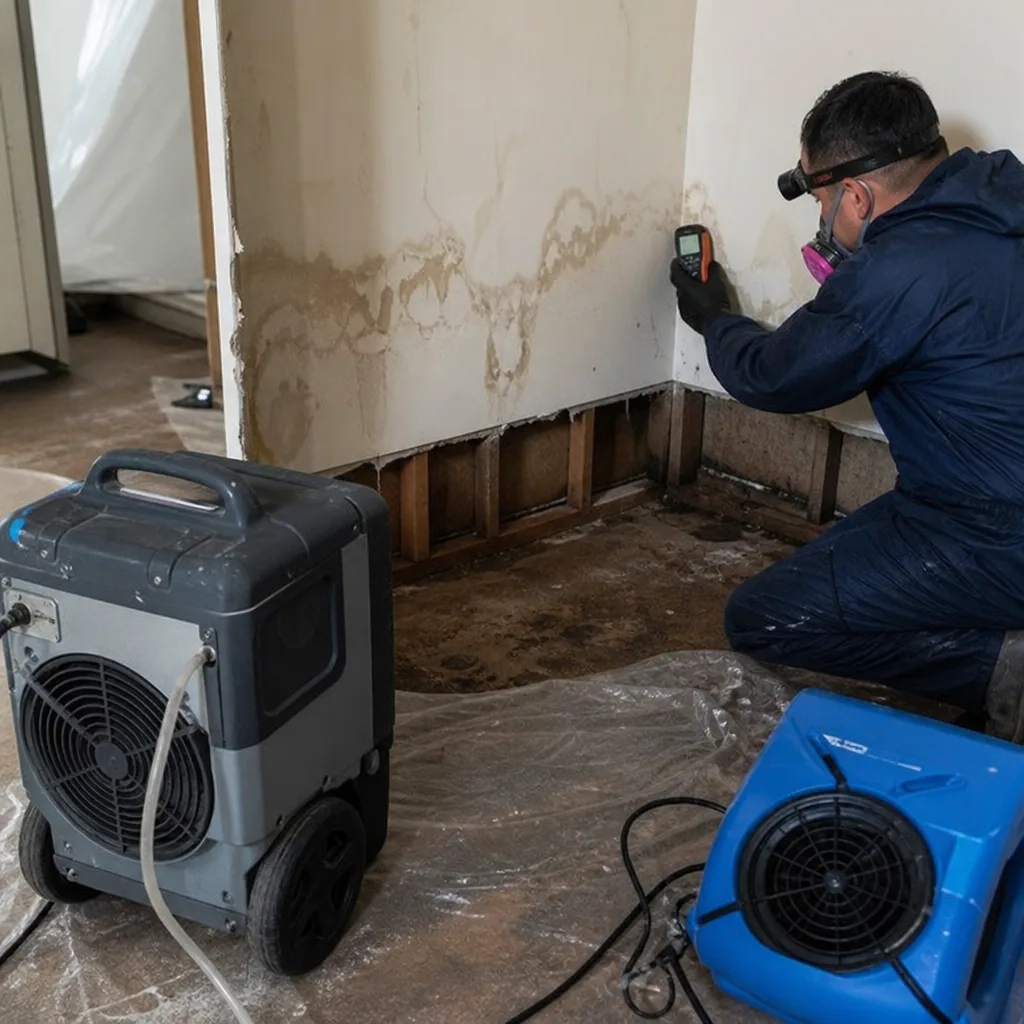 Before
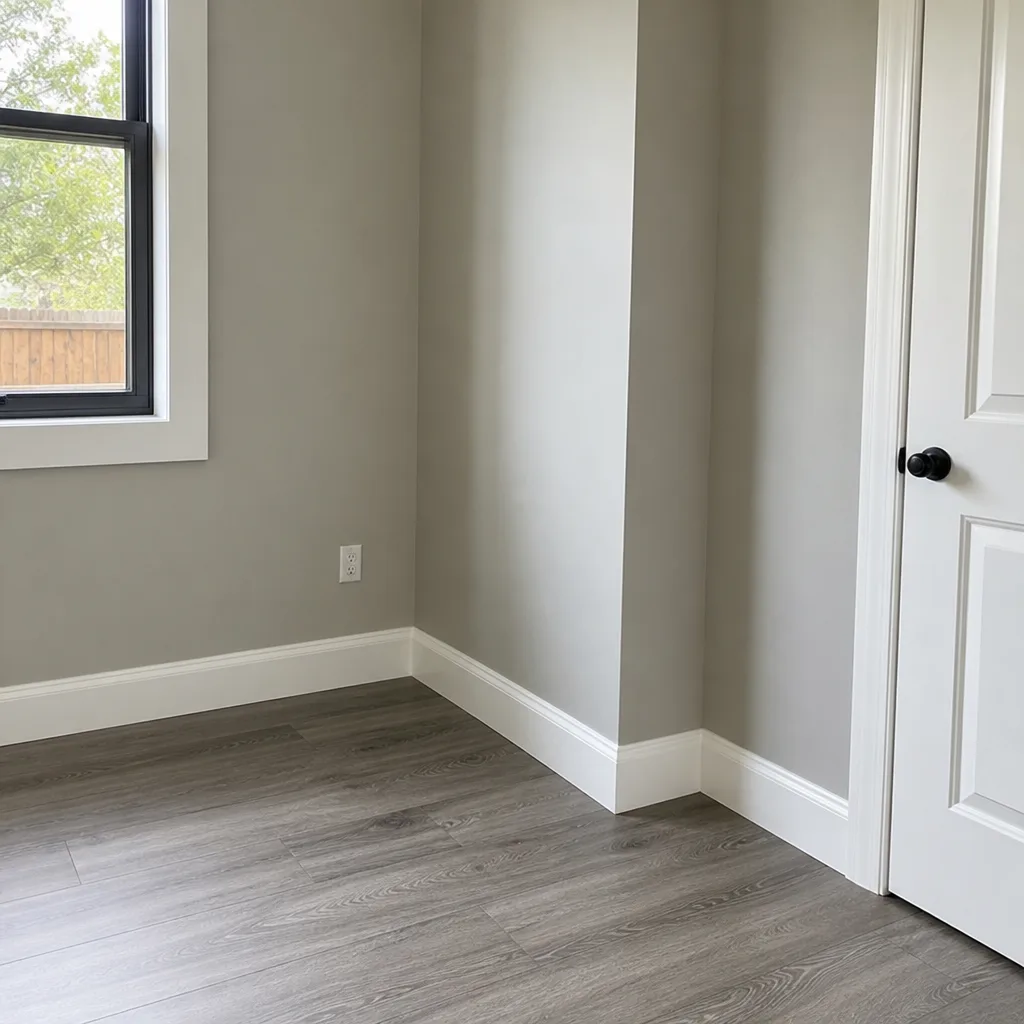 After
After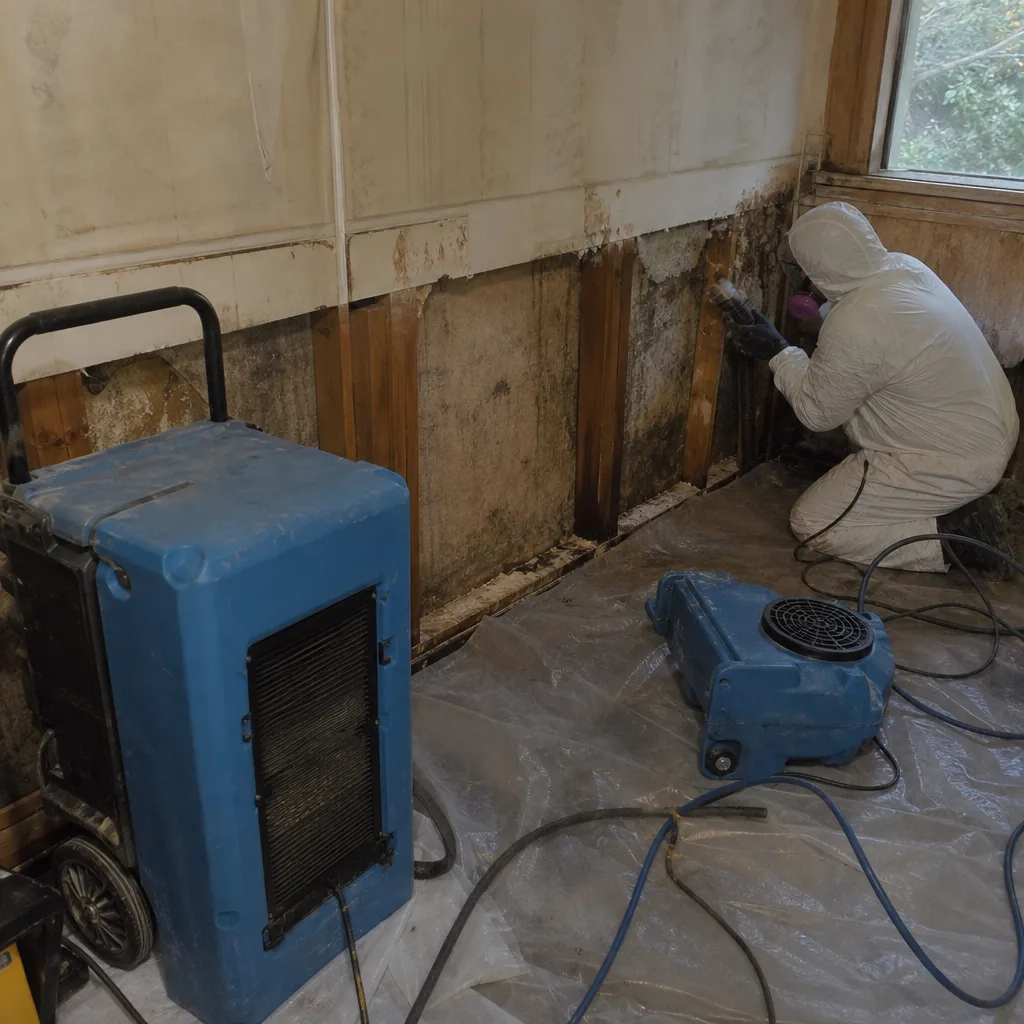 Before
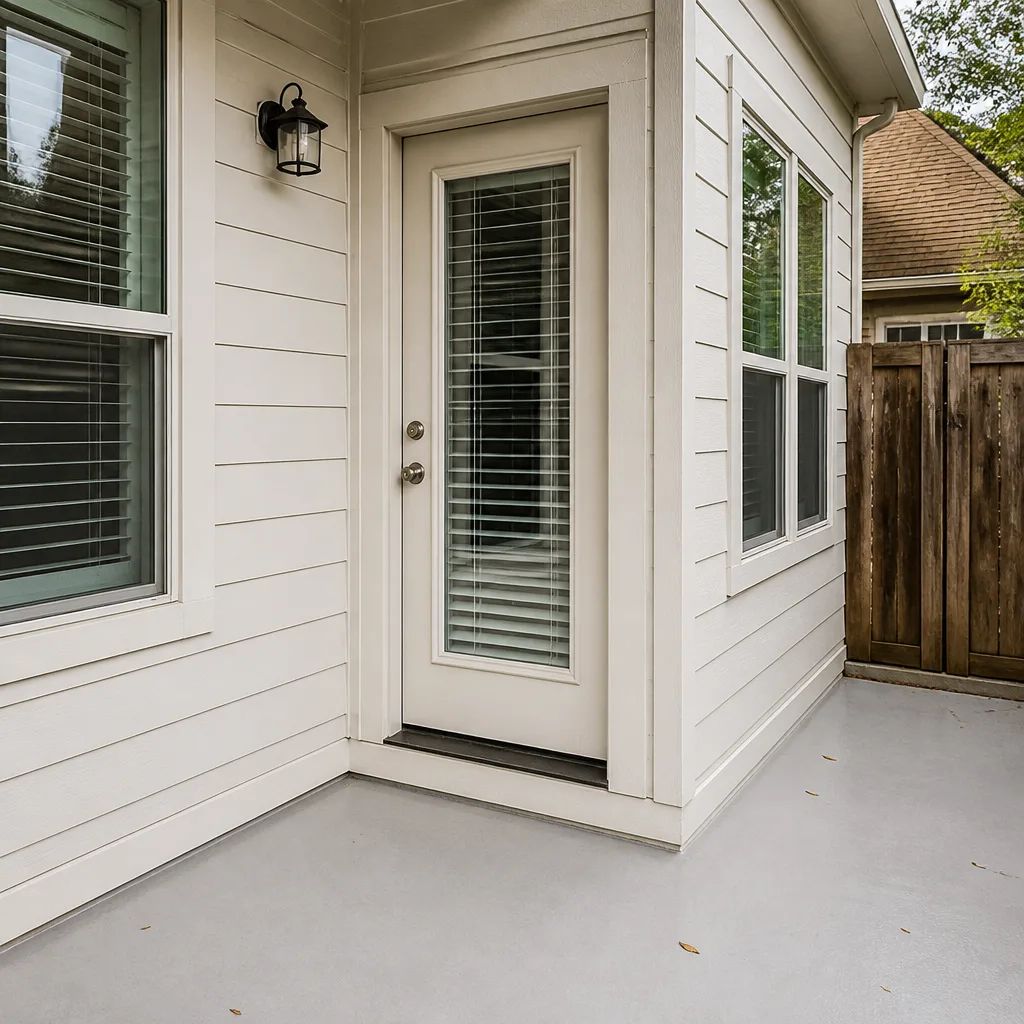 After
AfterCommon Mold Remediation Problems We See in Deer Park Homes
- Petrochemical residue bonded to mold surfaces. Deer Park’s location in the Houston Ship Channel corridor means airborne benzene and industrial particulate can settle on damp drywall and mix with mold growth. A contractor who skips specialized degreasing and air-washing may leave those residues inside wall cavities even after a clear mold test.
- Slab leaks from aging cast iron pipes. Many 1950s and 1960s homes in Deer Park still have original cast iron drain lines under the slab. Those pipes corrode and crack, sending water up through the concrete and into flooring and baseboards. Treating the visible mold without addressing the pipe means the mold cycle repeats.
- Slow-drying brick veneer walls. Deer Park’s high humidity slows drying in older masonry assemblies. If the drying log doesn’t account for that, moisture stays behind baseboards and crown molding. We see this most often in College Park and other neighborhoods with original brick exteriors.
- Clay sewer line backups after heavy storms. Older neighborhoods like College Park still have original clay sewer lines that back up during heavy rain events. Water seeps up through slab cracks and soaks lower wall cavities. That’s Category 2 water, and it needs more than a fan and a cleaning.
Pricing for Mold Remediation in Deer Park, TX
Here’s what Deer Park homeowners can expect. Mold inspection and testing: $350 – $700. Single-room remediation with containment: $1,800 – $4,200. Crawl space treatment with vapor barrier replacement: $2,500 – $6,000. Whole-home air quality restoration after a Ship Channel fallout event: $4,000 – $9,500. If cast iron plumbing repair or sewer line replacement is needed alongside remediation, that’s scoped separately with clear line items. We provide a written price before any work starts, every time. Call (325) 423-6800 for a free estimate, and you’ll have the number in hand before anyone picks up a tool.
When you compare costs against our neighbors, Deer Park’s pricing sits right in line with the rest of the Houston metro. What changes here is the scope: the petrochemical residue factor and the older housing stock mean a Deer Park job sometimes needs an extra containment step or a longer drying timeline. We’d rather quote you accurately up front than surprise you later. That’s the whole point of the written price. For more on our city-specific approach, see Deer Park mold services and what makes this area different.
We Also Serve Cities Near Deer Park
Our crews work throughout the Ship Channel corridor and surrounding communities, including Pasadena, South Houston, Galena Park, and League City. If you live just outside Deer Park proper, we can usually reach you with the same fast response and local knowledge. Call (325) 423-6800 and we’ll confirm your address and nearest available crew.
Serving Deer Park, TX - Our Local Coverage Area
We’re based in the Deer Park area and know this community well. Use the map below to see our service coverage - if you’re nearby, we can almost certainly help.
FAQs About Mold Remediation in Deer Park
Yes. Deer Park’s air carries industrial particulate and chemical residues from the petrochemical corridor that can bond to mold-contaminated surfaces. We add a degreasing and air-washing step to containment and treatment that crews in most other cities don’t routinely need. This removes the residue layer so the antimicrobial actually reaches the surface. If a contractor skips this step, you can pass a mold clearance test and still have sick-building symptoms from the chemical fallout. Call (325) 423-6800 and ask about our Deer Park-specific protocol.
We trace the water to its source first. If we find signs of a slab leak from aging cast iron pipes, we don’t just dry the surface and walk away. We map the moisture, identify where the pipe is failing, and coordinate with a licensed plumber before we close the walls. Then the affected slab edge and wall cavities get dried, treated, and rebuilt. Skip the pipe repair and the mold returns, guaranteed. Our moisture mapping catches what surface-level remediation misses.
Because most College Park homes were built in the 1950s through 1970s with brick veneer walls, original clay sewer lines, and cast iron drains under the slab. Those assemblies dry much slower than modern framed construction, especially in Deer Park’s humid climate. We adjust the drying log accordingly, adding days when needed and checking hidden cavities with moisture meters. In College Park, we’ve seen too many jobs fail because a crew used a generic drying schedule and pulled equipment too early.
If our inspection finds corroded or cracked cast iron drain lines under your slab, retrofit work belongs in the scope alongside mold remediation. A patch job on the pipe leads to another mold event within a year or two. We’ll tell you plainly what the plumbing scope is and what it costs, and we coordinate the work so the wall cavity isn’t closed up until the pipe is sound. The written price covers remediation and clearly separates any plumbing line items.
Often yes. Solid wood trim and baseboards from the 1950s – 1980s are usually salvageable if we get to them before deep rot sets in. We carefully remove them, dry them, treat the backs and the wall cavity behind them, and reinstall once the structure passes moisture readings. In our Deer Park jobs, we’ve saved original oak baseboards and window casing in College Park homes where a less careful crew would have thrown them out. If something can’t be saved, we show you why before we dispose of it.
Written by Rick Sumner, Owner at Tidemark Water Damage Houston, serving Deer Park homes with mold remediation, water damage restoration, and fire damage restoration since 2006.